


Remember the cry to “Defund the Police” that echoed across the left side of the aisle like political cheerleading that encouraged action before common sense could catch up? Different cities tried varying plans, but no matter how they sliced the cake, the results kept coming out half-baked: Less police meant more crime. Some districts decided to add social workers to their departments, but is replacing cops with mental health professionals really a good idea? Not for one man in Boston who was faced with the wrong end of a sword.
Replacing Cops With Social Workers
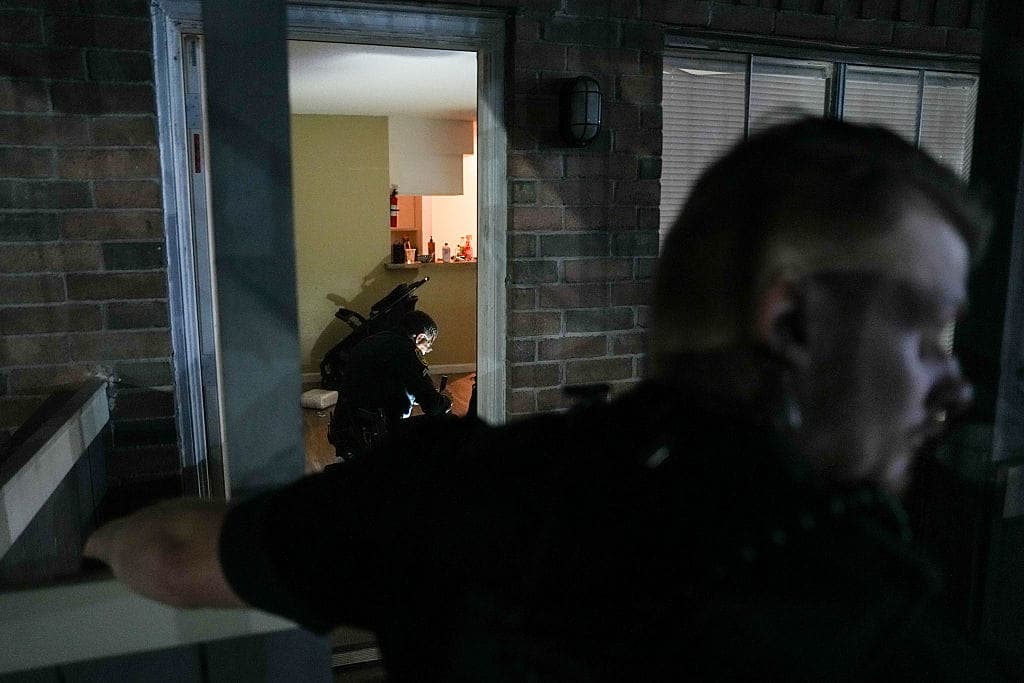
In 2020, just one month after the death of George Floyd, City Councilmember Michelle Wu (who later became mayor) supported a 10% budget cut to the Boston Police Department as well as an ordinance that would divert 911 calls that were considered nonviolent from police to social workers. Fast forward to 2026: Police officers and a mental health worker responded to a call from a man claiming four others were trying to hurt him. After talking with the individual through a closed door for a while, they decided it was safe to talk to him in person. However, when the man opened the door, he brandished a sword, stabbing one officer in the arm and knocking the health worker to the ground.
There are a couple of issues to consider here. One, defunding the police increased crime, and two, sending a mental health professional on police calls proved – in this case, at least – to be very dangerous.
Defund the police is not a new movement, but it gained traction in 2020 with Floyd’s death. Progressive lawmakers went on a crusade of replacing cops with mental health officers. According to a 2025 report from Major Cities Chiefs Association, a law enforcement group that tracks crime levels, from 2019 to 2021, across 70 of the largest cities in the nation, murders rose 44%. In 2021, there were more than 9,600 big city murders. In 2024, after liberals realized they needed more cops, there was a 39% drop in those crimes, down to a total of 6,900.
The Law Enforcement Legal Defense Fund reported in May 2025 that murders rose 54% from 2020 to 2022. Arrests and stops plummeted almost 40%. When lawmakers began to see the error of their ways, and added more cops, arrests and stops increased by 37% while homicides declined by 32%. The picture is clear; more police presence means less crime.
Trying to Revive Failed Programs
New York City Mayor Zohram Mamdani wants to invest billions of dollars into a program that sends mental health workers with police, or even replacing cops with these specialists. The proposal called for $1.1 billion to create the Department of Community Safety (DCS), which, according to the NYC.gov website, “The Office will focus on addressing the root causes of crime and violence, streamlining and expanding evidence-based crime prevention programs and strengthening wraparound services so no New Yorker is left behind.”
From Liberty Nation
 News, Trivia, Facts, Check Us Out
Stay informed.
Today’s news, the Constitution and American history, written for young readers.
Visit GenerationLiberty.com
Signed by Mamdani in March, the program is starting out by trying to expand B-HEARD that launched in 2021. The pilot program operates in a few select city neighborhoods, sending mental health officials on 911 calls. However, this program has not had a good success rate with 60% of calls being deemed ineligible and more than “35% of eligible calls from mental health professionals never got a response,” New York Post reported.
News, Trivia, Facts, Check Us Out
Stay informed.
Today’s news, the Constitution and American history, written for young readers.
Visit GenerationLiberty.com
Signed by Mamdani in March, the program is starting out by trying to expand B-HEARD that launched in 2021. The pilot program operates in a few select city neighborhoods, sending mental health officials on 911 calls. However, this program has not had a good success rate with 60% of calls being deemed ineligible and more than “35% of eligible calls from mental health professionals never got a response,” New York Post reported.
Emergency calls are unpredictable and potentially dangerous, especially when there might be a mental illness situation. Sending councilors trained in mental health but not law enforcement is a tragedy waiting to happen. During a March city council meeting, Police Commissioner Jessica Tish estimated that of the 911 calls received, about 2% would be removed from the department’s jurisdiction and given to mental health professionals. “You need to send the police when there’s a call for a violent person,” she said.
The Boston case is a stark reminder that good intentions don’t override reality. Luckily, no one was seriously hurt, but crisis calls are often volatile, unpredictable, and can turn violent in seconds. Police are trained to handle these kinds of situations. Mental health workers play an important role, but expecting them to step into dangerous, frontline scenarios without the training, tools, or authority of law enforcement puts lives at risk. Replacing cops with counselors doesn’t eliminate danger; it simply shifts it onto people who are far less equipped to deal with it. And when that gamble goes wrong, the consequences aren’t theoretical; they’re immediate, and they’re dangerous.

.jpg&w=1920&q=75)