
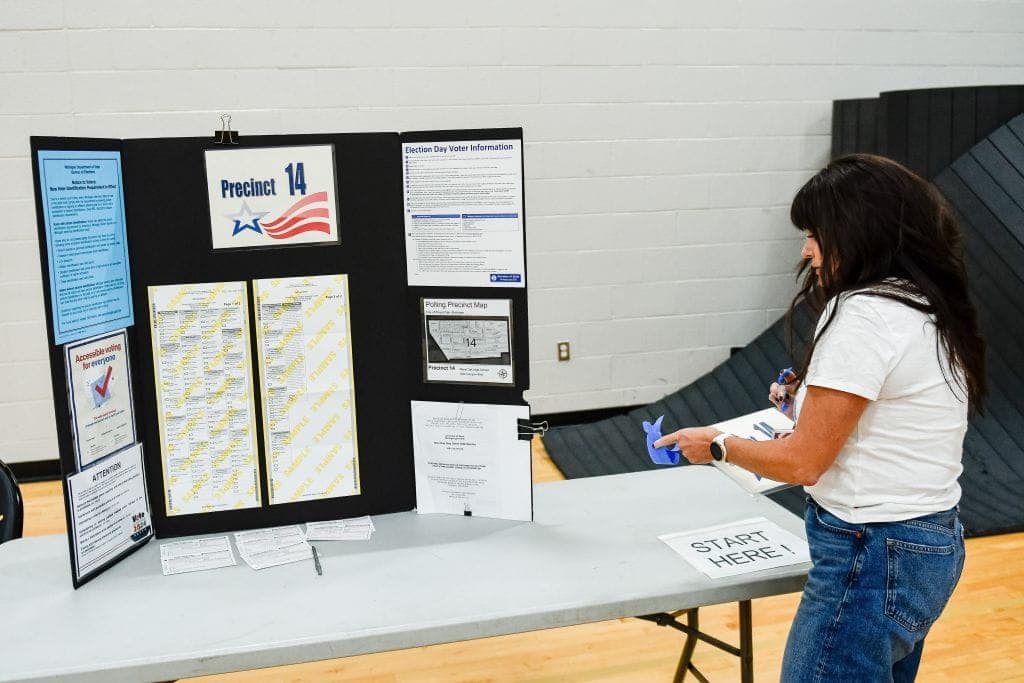

With just a few months remaining until Election Day, both major parties appear less concerned with the contests and more concerned with engineering midterm outcomes. Each side appeared to have a strategy when campaigning began, but now both are struggling with self-inflicted damage and internal turmoil, complicating their paths to victory in several key races. They’re fighting tooth and nail over who will control both houses of Congress in 2027, yet neither seems all that interested in appealing to voters. Instead, they appear to be gaming the system.
Midterm Madness
Election meddling seems to be turning into standard fare nowadays, and one prominent method is establishing obscure super PACs that spend large sums to elevate opposing candidates who might do poorly in a general election. These outside groups have emerged in several states and dumped a huge number of dollars into a handful of primaries in crucial swing districts. A new one recently surfaced called Michigan Sunrise PAC; it’s spending millions to elevate progressive William Lawrence in the Democratic primary to face GOP Rep. Tom Barrett in the state’s 7th Congressional District. Some of these groups have been tied to the GOP, drawing complaints from several Democrats despite their blatant use of the strategy during the 2022 midterm elections.
Some incumbents and super PACs haven’t even tried to cover their tracks when interfering with the opposition’s campaigns. For instance, the New York GOP sent mailers to increase the name recognition of a progressive candidate in the primary to take on Rep. Nick LaLota (R-NY). In Ohio, a group supporting Republican Rep. Max Miller sent texts promoting their preferred Democratic opponent. In California, the Republican-aligned Congressional Leadership Fund texted to elevate progressive Randy Villegas in the race for Rep. David Valadao’s (R) seat. In the 45th district, Rep. Derek Tran (D) unsuccessfully tried to boost a Republican viewed as less competitive.
Free with the Daily Briefing
85EssaysUnravel the Constitution
Hamilton, Madison & Jay’s complete case for America, free and searchable in the Publius Reader.
Free with the Daily Briefing. Unsubscribe anytime.
Then there’s Pennsylvania: The state’s Green Party claims unendorsed candidates are trying to get on the ballot under strange circumstances in two key districts where vulnerable GOP Reps. Ryan Mackenzie and Rob Bresnahan face tough challenges. One of those third-party candidates, Andrew Tupone, is a former Republican whom Democrats believe is only trying to siphon votes away from their nominee. Pennsylvania residents have reportedly been solicited by people paid to collect signatures for Tupone. “One petitioner said he was making $30 an hour,” explained Punchbowl News, “but wouldn’t say who was paying him, according to a person who spoke to him.”
There’s also some evidence in Alaska that a Democratic consultant helped with a ploy to launch a bid for a man named Dan Sullivan to challenge GOP Sen. Dan Sullivan. Some Republicans have accused the lesser known Sullivan of entering the race to confuse voters and help former Rep. Mary Peltola, the leading Democrat. The alleged decoy wasn’t even affiliated with the state GOP until two days before filing his Republican candidacy, so perhaps there’s some truth to the theory he’s running to disrupt, not to win.
These deceptive tactics all have one thing in common: None involve campaigning to persuade voters with policies and a strong message. Alienating voters in favor of cheap tricks might win some races, but at what cost?
Why It Matters
Americans already have little trust in government institutions, but now they seem to be losing faith in the political system as a whole. Half of Americans think US democracy is performing poorly, according to a recent Gallup survey. Around three-quarters say “the various institutions, processes, and systems that support US democracy” aren’t performing well. Only a quarter of Americans believe “the people’s role in the democratic process is working well.” Meanwhile, 68% of Republicans and 85% of Democrats are concerned about “wealthy people or organizations making large, anonymous donations to political causes.” And a similar number are worried about the consequences of gerrymandering.

The point here is that the shenanigans in some of these campaigns will likely increase voters’ concerns about the government and how it operates and could end up pushing people further away from the voting booth. “Public perceptions of these risks could have important implications for the 2026 midterms,” explained Gallup, “possibly deterring participation for some voters but giving others greater motivation to vote.”
Perhaps there’s a reason why socialists and far-left insurgents are having such success this year. It’s probably not because Americans are desperate for a communist America; it’s more likely that these candidates are addressing numerous voters’ top concerns and proposing policies to fix issues impacting them. Regardless of how crazy some of those ideas may be, they’re at least offering something other than the status quo and delivering a concrete message to voters. Democratic candidates, on the other hand, have mostly parroted establishment-approved talking points, which countless voters probably find as entertaining as a dial tone.
Overall, campaign meddling sends a bad message: It suggests many candidates on both sides are not confident they’ll win on merit alone. And once politicians start sidestepping voters altogether, no matter who wins, the people may get left behind.

.jpg&w=1920&q=75)
.jpg&w=1920&q=75)
.png&w=1920&q=75)