


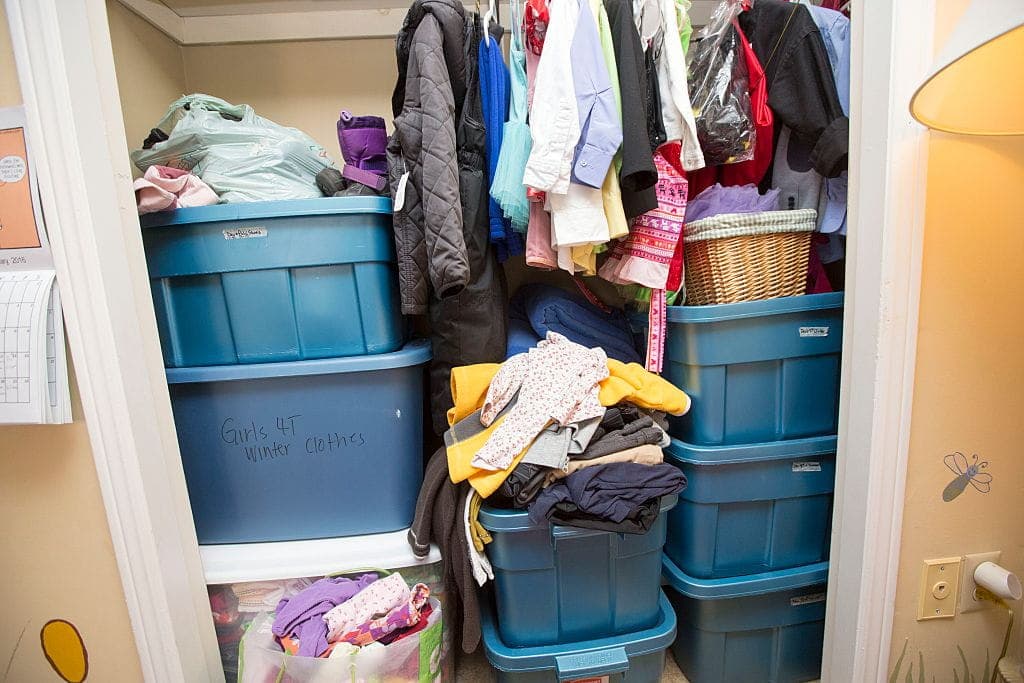

The seasons are changing, and now that spring is in the air, it’s time to do some good ole spring cleaning. After the winter blues kept you indoors and feeling a bit lazy, you might notice that your home has seen some neglect as well. Decluttering is good for your home, but research shows that it’s also good for your mental health.
A Messy Home Can Cause Health Issues
Take a look around your home. If decluttering hasn’t been a top priority lately, then you’ll probably notice things out of place, furniture that might need dusting, and that coffee stain on the carpet could certainly use some cleaning. During the colder months, though, most of us don’t feel energetic enough or think of deep cleaning and organizing as much of a priority.
Psychologist and Professor Joseph Ferrari told The Washington Post that “an overabundance of possessions can chip away at your quality of life in a few ways, including by impacting the livability of your space, your relationship and finances.” Think of it this way. The weekend weather is supposed to be nice for a change, warm without a cloud in the sky. A good time to invite friends and family over for a barbecue. But then you look around your home and decide it’s a bit too messy to invite people over, so you skip that social function.
 In Ferrari’s 2016 survey on the subject, he found that the more clutter people have around them, the less satisfied they are with their life. In another study, women whose homes they described as cluttered were “more likely to feel depressed and stressed than those who didn’t,” The Post explained.
Springtime represents new birth, so it shouldn’t be surprising that humans feel the need to make their surroundings fresh and comfortable. This is the time people may decide to do some remodeling, or tackle those repairs they’ve been waiting to do. Sarah Butler, a psychology professor and a member of the Institute for Challenging Disorganization research advisory council described this as a “mental heuristic, or shortcut, for chores that are on a long-term-to-do list but ‘don’t cause enough friction to move them to the top of the priority list,’” as reported by The Post. “Instead of having to decide when in your busy life is the right time to do those things, spring cleaning gives us a way to get from, ‘I’ll get to it eventually’ to ‘Okay, now it’s time.’”
Spring Fever doesn’t inspire everyone, though. Not all people are ready to just jump in and start decluttering their homes. “It can be very cognitively overwhelming,” Butler said. One of the biggest reasons is what she calls loss aversion, the tendency to feel the pain of losing something, such as taking things to donation centers or throwing them away. The next issue is the endowment effect, where we value something just because we own them. And, finally, there’s the sunk cost fallacy, the urge to keep something since we’ve already spent so much time or money on it.
Decluttering Is Good for Your Health
“Clutter isn’t just physical – it’s mental,” wrote Pinot’s Palette. “When we’re surrounded by too much stuff, our brains have a harder time focusing.” Furthermore, “Studies in neuroscience and psychology have shown that clutter overloads our senses and increases stress by creating a constant visual reminder of unfinished tasks.” A Princeton University Neuroscience Institute study found that when there are excess objects around us, they compete for attention and make it more difficult to concentrate and process information.
But all is not lost. Cleaning and decluttering can have great health benefits. It can lead to a boost in happiness, for example. It gives us a sense of accomplishment, making us feel more motivated to tackle other tasks. It also reduces anxiety and stress because a neat and tidy space promotes relaxation and even lowers the stress hormone cortisol. Now that the home is organized, there’s less distractions so that we can focus better. Cleaning the home and putting everything in their place has also been linked to improving sleep quality since our minds are more restful and fulfilled.
“At its core, decluttering is an act of self-care. It’s about clearing space for peace, joy, and new opportunities,” according to Pinot’s Palette. “When you tidy your environment, you’re also tidying your mental space, making room for clarity, creativity, and happiness.”
From Liberty Nation
 News, Trivia, Facts, Check Us Out
Stay informed.
Today’s news, the Constitution and American history, written for young readers.
Visit GenerationLiberty.com
Still, there are some obstacles people face besides finding that motivation. For one thing, decluttering means you might end up deciding whether to get rid of certain items, which can be difficult because they may hold some emotional attachments. That shirt you haven’t worn for twenty years that just hangs in the back of the closet or hides at the bottom of a drawer might remind you of a music concert you went to or a contest you won, for example. Getting rid of that might mean you are losing a part of your past. “But decluttering doesn’t mean forgetting – it means prioritizing what truly matters,” Pinot’s Palette explained.
News, Trivia, Facts, Check Us Out
Stay informed.
Today’s news, the Constitution and American history, written for young readers.
Visit GenerationLiberty.com
Still, there are some obstacles people face besides finding that motivation. For one thing, decluttering means you might end up deciding whether to get rid of certain items, which can be difficult because they may hold some emotional attachments. That shirt you haven’t worn for twenty years that just hangs in the back of the closet or hides at the bottom of a drawer might remind you of a music concert you went to or a contest you won, for example. Getting rid of that might mean you are losing a part of your past. “But decluttering doesn’t mean forgetting – it means prioritizing what truly matters,” Pinot’s Palette explained.
To help in your decluttering endeavors, consider the Marie Kondo method which suggest you ask yourself, “Does this spark joy?” If the item in question no longer serves a purpose, let it go. You can also use the 20/20 Rule – if an item costs less than $20 and can be replaced in 20 minutes, it’s safe to donate it or toss it in the garbage. Finally, try the One-Year Rule – If you haven’t used it in twelve months, you probably don’t need it anymore.
At some point, all that “stuff” stops being harmless and starts taking up more than just physical space. It crowds your focus, chips away at your mood, and quietly turns small tasks into bigger ones. The good news is that it doesn’t take a full home makeover to feel the difference. Even a little decluttering can lift that mental weight and make your space feel livable again. So whether it’s one drawer or an entire room, clearing it out isn’t just about appearances. It’s about giving yourself a cleaner slate, inside and out.



.jpg&w=1920&q=75)