



Is inflation heading back to under 3%, or is it poised to stay above 3% for the foreseeable future? The July CPI (Consumer Price Index) report was uninteresting – as some view it as a lagging indicator since the United States and Iran broke their fragile ceasefire deal late last month, sending crude oil and gasoline prices higher. As a result, everyone had to sift through the numbers to explore another narrative, mainly determining whether tariffs are influencing inflation.
July CPI Flyover
Last month's annual inflation rate eased to 3.4%, from 3.5% in June, according to the Bureau of Labor Statistics. The 12-month core inflation rate, which strips out volatile energy and food categories, dipped to 2.5%, from 2.6% in the previous month. On a monthly basis, headline and core inflation rose 0.1% and 0.2%, respectively.
All of the readings were in line with economists' expectations.
The two main points from the July CPI snapshot: A drop in energy prices slowed the year-over-year inflation rate, and a modest rise in shelter costs contributed to much of the monthly increase. As economic observers brace for the August and September CPI reports, experts and armchair economists can spend time combing through tariff-sensitive items.
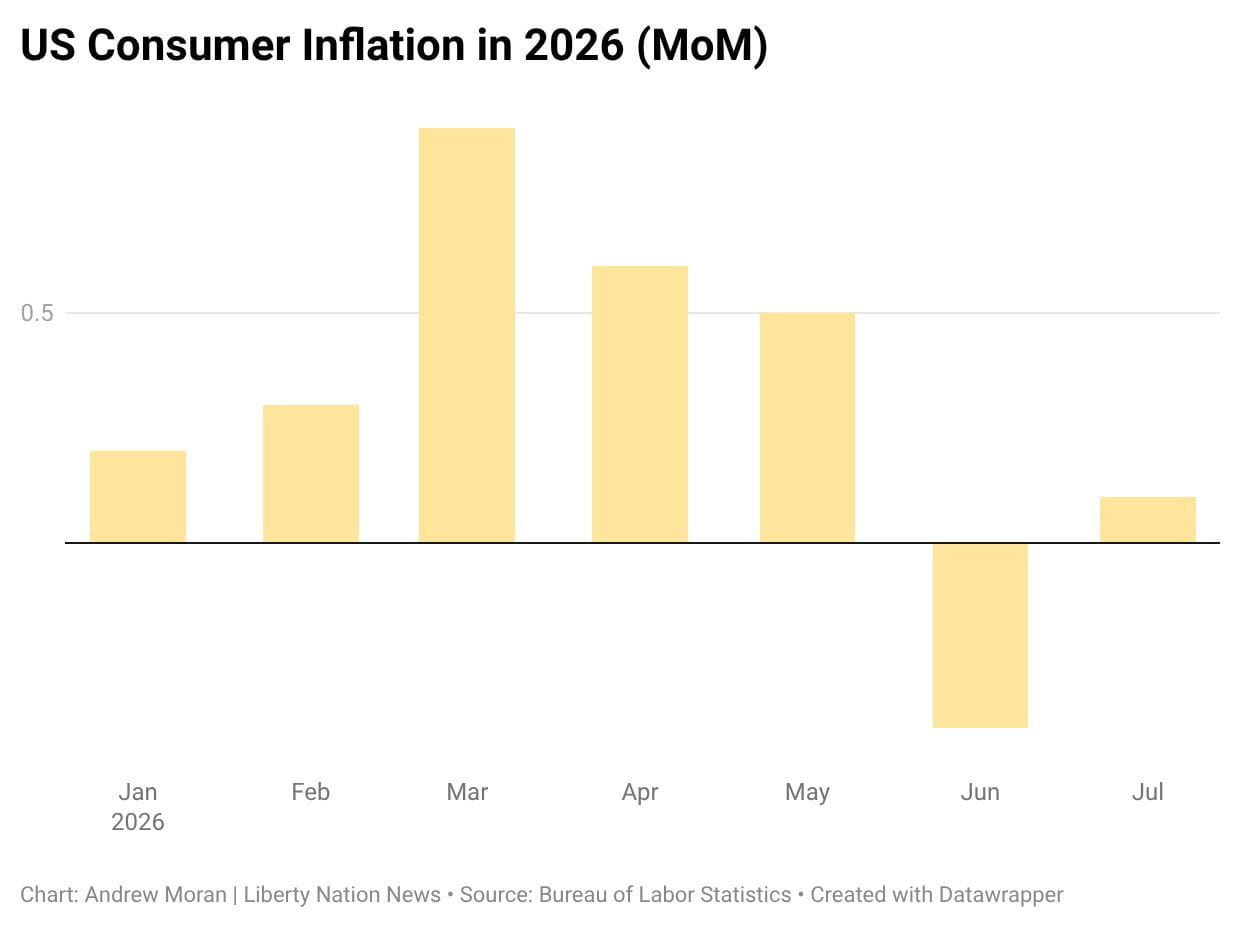
This could add to the argument that the Federal Reserve should keep interest rates on hold, especially after the disappointing July jobs report. But the central bank will have a fresh batch of inflation data prior to the Federal Open Market Committee’s meeting in mid-September.
Summertime Tarifflation
Virtually all of President Donald Trump’s tariff policies have been implemented. Some distance from the administration’s initial announcements has facilitated a better analysis of how these expansive levies are impacting consumer and industrial products. The July CPI data raised some concerns about an acceleration of tarifflation.


Free with the Daily Briefing
85EssaysUnravel the Constitution
Hamilton, Madison & Jay’s complete case for America, free and searchable in the Publius Reader.
Free with the Daily Briefing. Unsubscribe anytime.
First, the good news. New vehicles and apparel costs rose just 0.1% last month, while canned fruits and vegetables declined 1.2%. Now, the bad news. Appliances climbed 0.8%, televisions jumped 1.7%, toys rose 0.8%, smartphones increased 1.1%, and other information technology commodities (think artificial intelligence) surged 1.4%.
Are geopolitical tensions causing this jump, or are the president’s tariffs? It might be difficult to ascertain, but considering that all tariff-sensitive products increased last month, the odds are that import taxes are traveling through the global supply chain.
Based on surveys of US firms, the situation is complicated. Some of the higher costs could be related to the Iranian conflict, and others could be due to tariffs. The Federal Reserve’s latest Beige Book, a periodic report covering economic conditions of the central bank’s 12 districts, reported:
“Non-labor input costs increased for a variety of industries — including services, construction, and manufacturing — and reflected in part higher costs for energy, transportation, and raw materials. Some contacts tied these cost increases to the conflict in the Middle East; others mentioned tariffs. Consumer prices continued to rise, and a few Districts said contacts saw greater price sensitivity among their customers.”
At the same time, businesses have been reluctant to pass on these higher costs to price-conscious consumers. But while companies have been employing various means to prevent sticker shock – sacrificing profit margins, cutting budgets, or trimming staffing levels – they may have no other alternatives.
Much Ado About Tariffin’
The economic literature suggests that tariffs provide a one-time pass-through effect on imported goods. In other words, they should not be causing persistent price inflation. Still, they are likely playing a role in keeping inflation above the Federal Reserve’s 2% target. Prior to the Middle East war, 12-month inflation excluding tariffs was estimated to be 2.3%.

.jpg%20Supreme%20Court&w=1920&q=75)