

Like the Boston Red Sox’s miracle run, nobody saw the weak July jobs report coming. The US labor market has been a source of strength for much of the year: Layoffs are low, hiring plans are picking up momentum, and the unemployment rate is historically low. Yet last month’s employment numbers provided a bleak assessment of the economy, offering terrible timing for President Donald Trump and the Republicans ahead of the midterms.
Inside the July Jobs Report
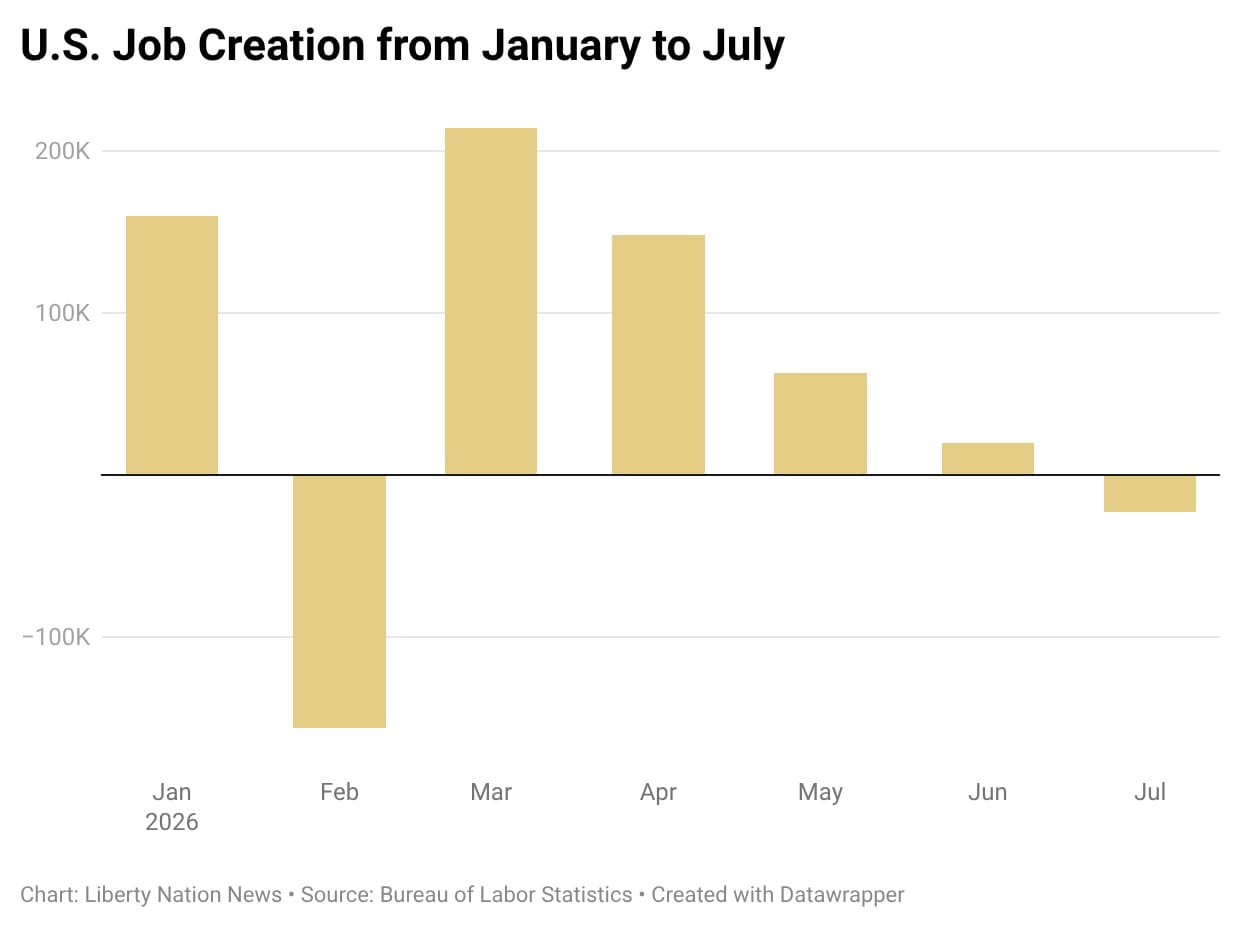
The Bureau of Labor Statistics published July’s non-farm payrolls report. The economy lost 23,000 jobs. This came in below the consensus forecast of an 80,000 gain. What’s more, the previous month’s reading was adjusted lower by 37,000 to 20,000. May’s was also cut in half to 63,000.
“The July employment report solidified that the labor market is not out of the woods quite yet,” said Nicole Bachaud, a labor economist at ZipRecruiter, according to CNBC.
Last month’s losses were concentrated in local government education (53,000), leisure and hospitality (40,000), and retail (19,000). According to White House economist Kevin Hassett, if you were to strip out these industries, then the economy created 100,000 jobs. While it might seem like spin, there could be a modicum of truth to these remarks.
First, when summer vacation arrives, teachers apply for unemployment benefits. While the bureau attempts to adjust its numbers for this factor, the unusual spike could suggest something else. It could reflect that local school districts are trimming the fat and adjusting to changing dynamics, mainly in the form of shrinking enrollment.
Second, now that the FIFA World Cup has come and gone, businesses are reducing headcount, and it could be seen that the leisure and hospitality category includes workers in restaurants, performing arts, sports, amusement, and recreation. But if this is a source of protest, then there should have been complaints in the spring when the leisure and hospitality industry added to payrolls.


Free with the Daily Briefing
85EssaysUnravel the Constitution
Hamilton, Madison & Jay’s complete case for America, free and searchable in the Publius Reader.
Free with the Daily Briefing. Unsubscribe anytime.
Meanwhile, the national unemployment rate remains around historically low levels. The July number dipped to a lower-than-expected 4.1%, from 4.2% in June. On the surface, this is terrific news. But a deeper dive reveals that it is driven entirely by a shrinking workforce: The labor force participation rate slipped to 61.4%, the lowest since 1976 (excluding the pandemic years of 2020 and 2021). Because of lower immigration and Baby Boomers leaving the employment arena, economists think the unemployment rate will stay low as the breakeven rate hovers close to zero.
Another piece of bad news is that average hourly earnings appear to be stuck at a time of elevated inflation. Average hourly wages ticked up 0.1% monthly (below expectations) and slowed to 3.2% year-over-year (also falling short of estimates). This means real (inflation-adjusted) wages will be negative if the consumer price index (CPI) comes in at 3.4%.
August and September
Hassett indicated to reporters after the July jobs report that it will be critical to look toward the August and September numbers. Economists have yet to release their expectations for August, but it will likely be anemic. September’s payrolls will be the true test of the US labor market as the economy comes back from its backyard barbecues, baseball games, and road trips. If it can return to the March-June period, the Federal Reserve can rest easy. If the numbers replicate February and July, economists might be a little bit hot under the collar.

.jpg&w=1920&q=75)