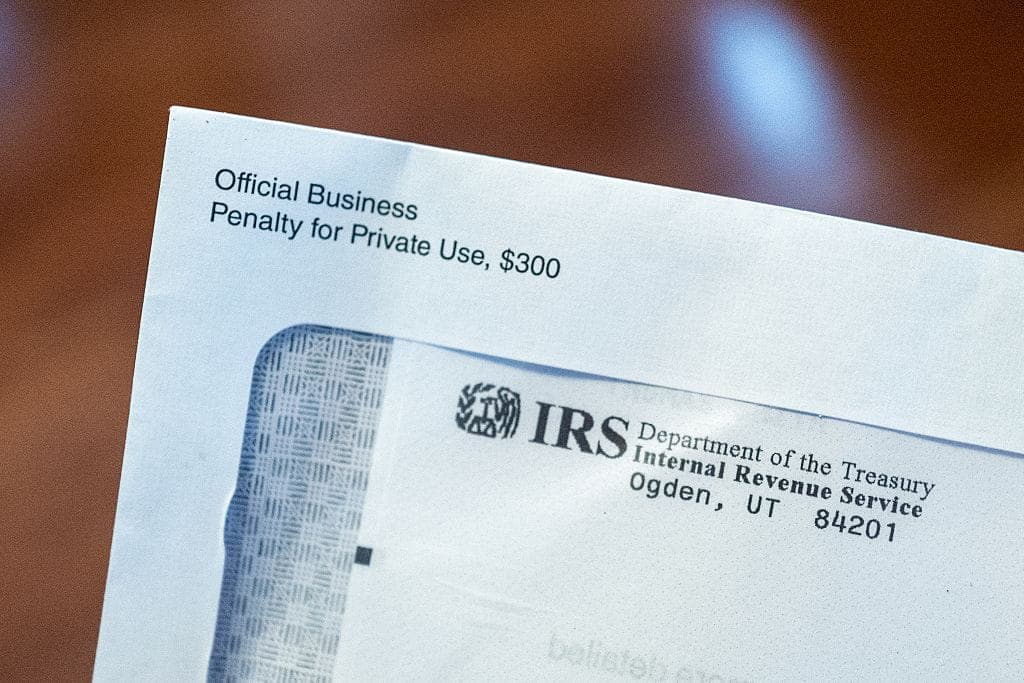

Well, it's Tax Day...again. This is the annual deadline for most individuals to file their personal income tax return and pay any balance owing for the previous calendar year. It just hurts. But as Supreme Court Justice Oliver Wendell Holmes Jr. said in a 1927 dissenting opinion: "Taxes are what we pay for civilized society." Uh, sure. The silver lining of this time of year is that at least more Americans are able to keep more of their hard-earned money in 2026.
Tax Refunds on Tax Day
The Internal Revenue Service (IRS) released the latest 2026 filing season data as of April 3. To date, 99.802 million returns have been submitted, and 69.818 million refunds have been issued. The former is down almost 2%, while the latter is up more than 3%.
Of course, taxpayers everywhere want to know the dollars and cents. First, the total amount refunded has surged 14.5% to $241.744 billion, up from roughly $211 billion the previous year. Not too bad. Second, the average refund amount has risen 11.1% to nearly $3,500, up from $3,116 in 2025. Cool, cool.
An underwhelming Tax Day? Some seem to think so. A new Bipartisan Policy Center poll suggests that many Americans viewed the 2026 tax filing season as disappointing, with their funds little changed from the previous year.
This could be because the White House had estimated in January that the average taxpayer could receive another $1,000, prompting many to file early. While there is still time for the tax-collecting agency to update its figures, the administration’s forecasts have so far fallen short.
Still, every little bit counts at a time when affordability challenges persist across the country.
A lot of this is a result of President Donald Trump’s signature One Big Beautiful Bill that contains a broad array of tax goodies, from deducting auto loan interest to scrapping taxes on tips and overtime. What’s more, the legislation lowers the tax rates and income limits across the board.
Surveys suggest households will use this money to pay down credit card debt or sock it away for a rainy day. Unfortunately, the reality is that the windfall on Tax Day will be dedicated to cushioning some of the pain at the pump as motorists contend with higher gasoline prices.
White House Still Optimistic
One year later, the Trump administration is still ebullient over the One Big Beautiful Bill. The Council of Economic Advisers released the 450-page 2026 Economic Report of the President this week, upgrading some of its projections for the years ahead.

Most notably, White House economists say the bill will increase real gross domestic product (GDP) by 4.9% over the next four years, higher than the initial forecast of 4.6%. The ten-year budget window indicates GDP growth will be as much as 2.7% higher.
Real (inflation-adjusted) business investment could increase by more than 10%, up from the first estimate of 7.3%. The ten-year window projects 8.5% growth. These gains will lead to real wage growth of between $4,000 and $7,200 per worker over the next four years. Annual take-home pay for a family with two children will also go up by as much as $10,900.
TCJA Redux
Despite a rosy outlook from all the president’s men and women, a chorus of economists has been skeptical that these gains will be realized. Many expect little contribution to the nation’s bottom line, anemic wage gains, and lackluster business investment. Who’s right? Well, the economic observers were wrong about the 2017 Tax Cuts and Jobs Act (TCJA).
It is no secret that the administration is betting big on the artificial intelligence (AI) buildout that could replicate the dot-com boom of the 1990s and rebalance international trade.
The nation will not know until 2028 or 2029. Even if the administration falls short of its expectations, what’s the worst that can happen? More Americans keep their money, and businesses can use the windfall to sustain or expand operations. The federal government was just going to set the money on fire anyway on transgender shows in Latin America and shoes for Ethiopians.