
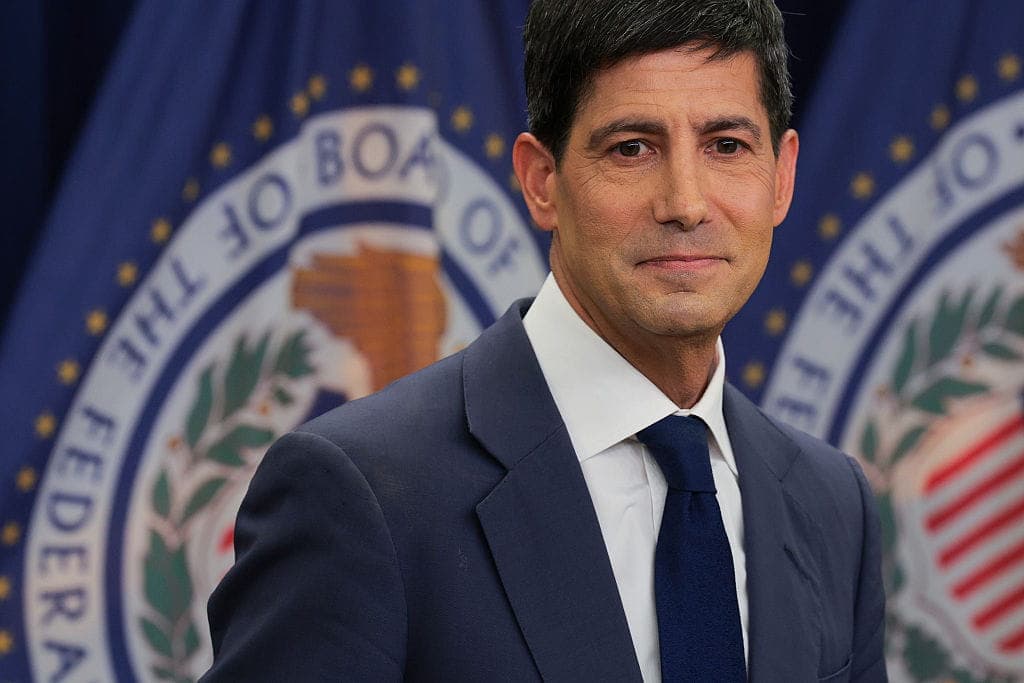

It was morning at the Federal Reserve. Chairman Kevin Warsh held his first policy meeting and press conference since rejoining the US central bank. Reporters laughed, Wall Street booed, and President Donald Trump shrugged when the Warsh-led institution completed its June 16-17 Federal Open Market Committee (FOMC) powwow. The American people got a sneak peek at the monetary policy the 17th chairman has in store for the next four years.
Warshonomics Goes to the Federal Reserve
As widely anticipated, the Federal Reserve left interest rates unchanged for the fourth consecutive meeting, with authorities voting overwhelmingly (12-0) to leave the benchmark federal funds rate in the current target range of 3.5% to 3.75%.
Everyone wanted to know what Warsh had to say, and they certainly got a lot from a man who wants occupants inside the Eccles Building to talk less and think more.
At 2 p.m. on June 17, the Fed released its post-meeting statement. For the business press running on a tight deadline, it was a relief as it contained just 130 words. By comparison, the Fed typically publishes statements of approximately 400 words. Warsh acknowledged this to the media, noting that the communication states just the facts.
Put simply, according to the chairman, “it’s a bit shorter, a bit simpler, and it dispenses with some older language.”
Warsh also put the kibosh on forward guidance, a communications tool that was slowly adopted by former Chairman Alan Greenspan in the early 2000s, fully implemented under Ben Bernanke during the global financial crisis, and a standard tool for Jerome Powell since 2018. This was unsurprising as he had signaled its doom for months.
“That statement just gives you the facts, as best we can judge it,” he stated. “Absent, also, is so-called forward guidance, which we agreed was not well suited to the current policy conjuncture.”
During the press conference, Chair Warsh announced five monetary policy task forces to address the Fed's communications, balance sheet, data sources, productivity and employment, and inflation frameworks. More information will be released in the coming days, and a rough outline will be published by the year's end.
“Each task force will serve an objective shared by everyone in the system, shared by everyone around that table that I sat with over the last couple of days, a Federal Reserve that is clear-eyed about its mission, fit for purpose, and focused on the future,” he said.
Warsh promised regime change in the conduct of policy and personnel, and he is so far following through on that pledge. Will reforms deliver cheers or jeers?
Thinking What the Fed Thinks
US stocks tanked in the middle of the trading week. The blue-chip Dow Jones Industrial Average fell 500 points, the tech-heavy Nasdaq Composite Index plunged 350 points, and the broad-market S&P 500 erased 1.21%. Most notably, yields on US Treasury securities rocketed, with the two-year, which tracks Fed policy expectations, surging to almost 4.2%.
Ultimately, this marked the worst performance for the S&P 500 on the first “Fed Day” under a new chair since 1994. Ouch.
The chief reason is that investors are betting that the Federal Reserve will adopt a hawkish stance and raise interest rates. Futures markets suggest traders are pricing in at least one quarter-point rate hike as early as October. Experts think traders are reacting to the end of an easy money era.

“He is absolutely telling you that he plans on delivering on price stability," Jeffrey Gundlach, DoubleLine Capital CEO, told CNBC's Closing Bell shortly after the press conference. "So that means ... we’re not going to have such easy money policy as everybody thought maybe Chairman Warsh would do back in the first quarter of this year, when everyone was counting on rate cuts."
Perhaps it was fatigue, but President Trump appeared indifferent to what happened.
"It's all right," Trump told reporters at the G7 summit, adding that it’s “hard to believe” the Fed is considering rate hikes. “It just keeps the country down and it's so, it's so, unusual. But we have a very good guy over there right now so I'm guided by what he wants,” the president stated.
Make the Fed Great Again?
It is hard to believe that investors paid little attention to the Federal Reserve back in the day. Since the Great Recession, traders have combed through every statement, interview, and meeting to determine what the Fed will do next. Based on what happened on June 17, those days could be over once Warsh institutes his reforms.
Warsh made crucial comments that might have been missed as he dazzled the press:
“Financial market prices are probably the most important source of information to guide central bankers, but when all the financial markets are doing is reflecting back what we've said, then we're taking the most important source of information and we're being blind to it."
Short of abolition, intervening little and printing less could make the Fed great again.

.jpg%20Redistricting&w=1920&q=75)