

The aftershocks following the astonishing capture of Venezuela strongman Nicolás Maduro by elite US forces are just beginning to settle in. Nowhere are the shocks felt more powerfully than in that itch of a country the US has not been able to scratch for decades – Cuba. Flags in Havana were lowered on Monday in honor of the 32 Cuban security officers killed in the US operation in Caracas this weekend. Toppling the illegitimate Venezuelan government certainly puts Cuba on notice, but experts have differing opinions on the likelihood that Cuba’s long-running communist government will finally bite the dust. This question is followed by another: Will the land of Castro need a little nudge over the cliff, or will taking Maduro down be enough to do the job? Liberty Nation News caught up with J. Michael Waller, Senior Analyst for Strategy at the Center for Security Policy, a Washington-based think tank that focuses on national security, to get his expert opinion on what the Cuban political landscape looks like at this point. "It's down for the count,” Waller remarked, then continued, " I think there's a plan for the United States to replace the communist regime in Cuba. I have no idea what that plan might be yet, but really the logic tells you that it's down for the count because the Cuban economy was so heavily dependent on the Venezuelan regime, and its energy needs were overwhelmingly met by the Venezuelan regime. And once that is taken away, it's only a matter of time before everything collapses inside Cuba.” President Trump commented over the weekend that the possibility of a change in the Cuban government would be a bonus, making the Venezuelan operation a twofer. “I don’t think we need any action,” Trump said on Air Force One. “Cuba looks like it’s ready to fall.” TheNew York Times stated the obvious in a January 5 article about the island nation that has been a thorn in the side of the US. “The Cuban government finds itself in a precarious situation with the capture of Mr. Maduro, a crucial political and economic partner, as it faces an economic crisis at home and growing political dissatisfaction.” When asked what a fall of the current government would look like, Waller sketched out a plan for Cuba to throw off the yoke of communism by allowing internal forces to marshal the needed firepower for another Cuban revolution: “I think if you have a combination of really good public diplomacy in political warfare to encourage the Cuban people to go after the regime, and then you provide incentives with some back channel negotiations with certain regime elements and set the regime against itself, then you have a very good chance of helping the Cuban people themselves take control of levers of power over time.”Cuba: It May Need a Push While Trump said he believes Cuba won’t need any help when it comes to regime change, Secretary of State Marco Rubio countered with the idea that a useful push at just the right time can and should be considered. On NBC’s “Meet the Press,” Rubio asserted, “If I lived in Havana and I was in the government, I’d be concerned.” Still, an argument could be made that those who fight have taken flight from the island nation. Since 2021, approximately 10% of the population has found a way out of Castro’s Cuba, according to US Customs and Border Protection data. The Pearl of the Antilles, as Cuba is sometimes called, is a hot mess, and one wonders if the native people have much of a fight left in them. Former US official Ricardo Zúñiga, who worked with both Presidents Obama and Trump, told The Times, “There’s a belief among Republicans like Rubio that once Venezuelan oil is cut off, the Cuban economy will collapse and trigger a popular uprising.” Then he countered, “What we’ve seen in Cuba is there appears to be no limit to how bad the situation can get, without an uprising.” Both The Washington Post and The New York Times sought the University of Miami’s director of Cuban studies, Michael J. Bustamante, to comment on the likelihood of Cuba’s communist government taking a dive. “If you’re asking if the Cuban government will just collapse on its own because the economic pain is bound to increase. I’m very skeptical.” Still, it’s never a good idea to count out the president when he wants to accomplish something, and freeing Cuba would undoubtedly be another feather in his cap. As Waller pointed out, “He sounded very confident in his Air Force One conversation with reporters that the regime would be down for the count. He likened it to a boxing match. However, in a boxing match, you have to punch out the other guy to make him down for the count. So we're really not punching Cuba or the communist regime, at least, we are simply depriving it of its main source of sustenance.” The question of Cuba has been tucked not so far back in the minds of Central and South American experts for decades. A once prosperous vacation spot has become – as President Trump would put it – nothing short of a hell hole. Fidel Castro’s communist vision has brought such staggering misery and hopelessness that many Cubans risk life and limb to flee the country in handmade boats of Styrofoam and particle board. While it is true that The Pearl of the Antilles does not have as much to offer the US as Venezuela does with its rich oil fields, the Trump administration may see it as right and proper that if all that is needed to do away with the scourge of communism is to give it a little push then it could be worth the effort. If for no other reason than for the sake of humanity.
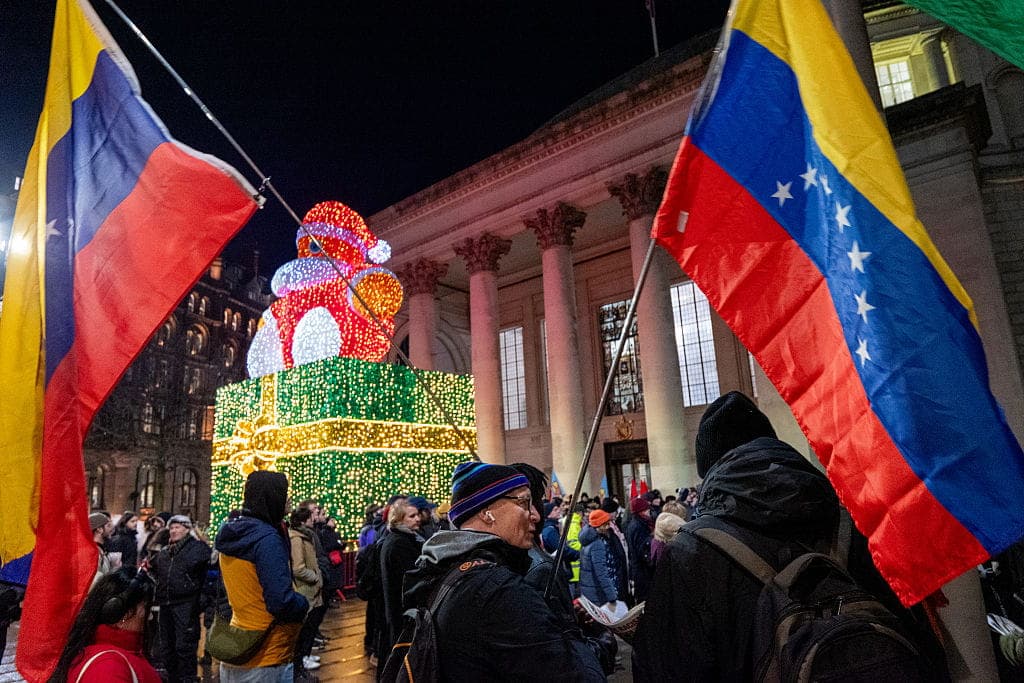
(Photo by Gary Roberts/SOPA Images/LightRocket via Getty Images)
Experts weigh in.
Jan 7, 2026

Leesa is the Executive Editor and Co-founder of Liberty Nation. She served as Editor-in-Chief of Liberty Nation from 2017 – 2024. Leesa spent over a decade in the broadcast news industry as a television news anchor, reporter, and producer at NBC, CBS, and FOX (formerly Metromedia) affiliates in Charlotte, Pittsburgh, and Washington, DC.

Free with the Daily Briefing
85Essays
Unravel the Constitution
About the Author

Leesa K. Donner
Executive Editor
Leesa is the Executive Editor and Co-founder of Liberty Nation. She served as Editor-in-Chief of Liberty Nation from 2017 – 2024. Leesa spent over a decade in the broadcast news industry as a television news anchor, reporter, and producer at NBC, CBS, and FOX (formerly Metromedia) affiliates in Charlotte, Pittsburgh, and Washington, DC.
View All ArticlesSpread the truth - share this article
See more Liberty Nation stories in Google's Top Stories.
Read More
Continue reading stories that matter
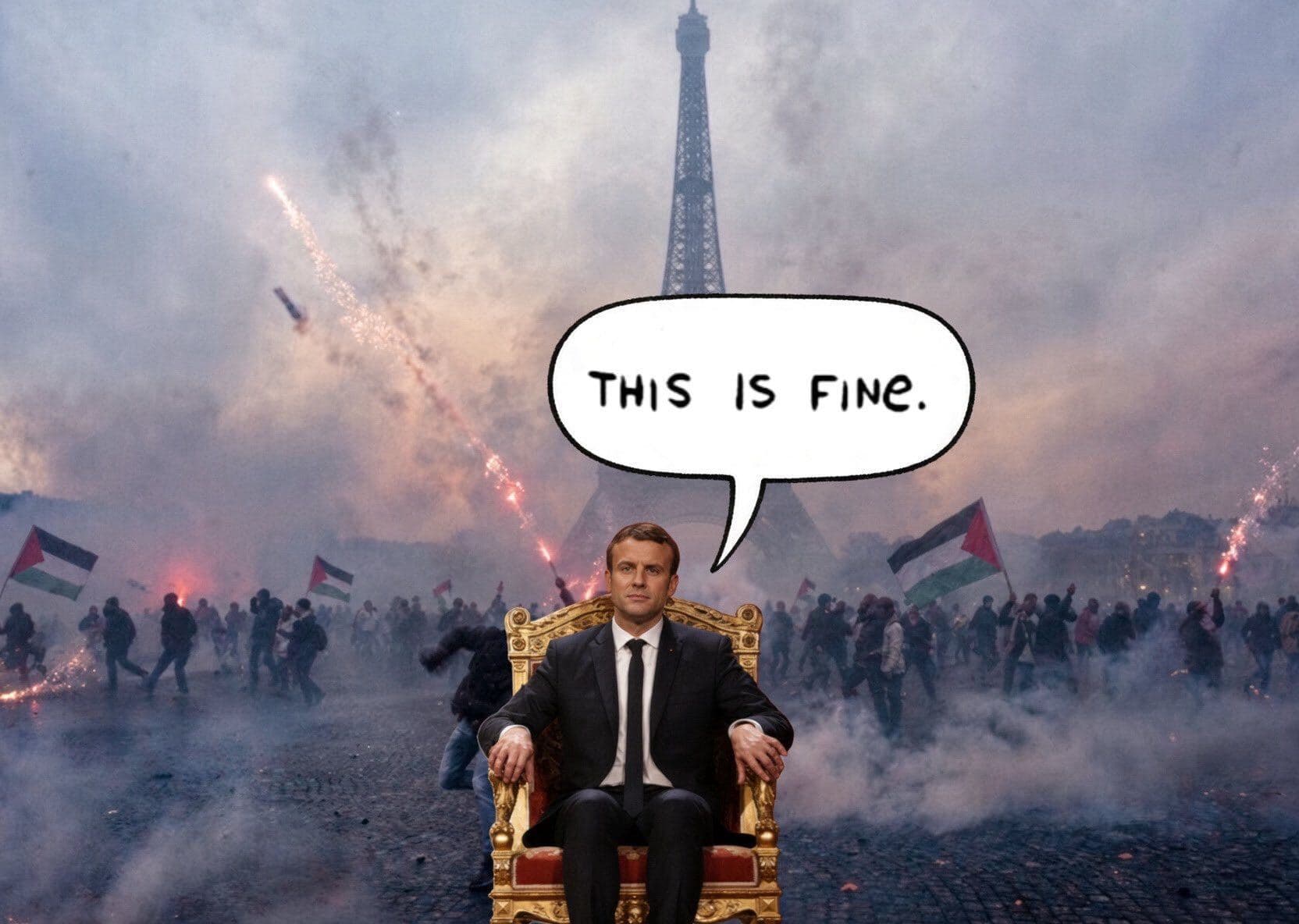
Daily Political Memes
Another Day ... Another Meme....
Liberty Nation Authors-Oct 21, 2026
.jpg&w=1920&q=75)
Federal Voter Fraud Bust in California Belies Blue State Narrative
Time to move that goalpost again?...
James Fite-Oct 20, 2026
.jpg&w=1920&q=75)
SNAP Participants Get Huge Discounts on More Than Just Food
When did food assistance become fun assistance?...
Elizabeth Lawrence-Oct 20, 2026