

Baby Boomers – people born between 1946 and 1964 – have ostensibly become public enemy No. 1. Well, at least over in the Xverse. Combing through the social media platform yields analyses and comments calling out seniors for bankrupting the system, for owning virtually all of America’s wealth, and for leaving nothing behind for younger generations. The data does show that Boomers have done incredibly well, but proposals from Gen Z and Millennials are far from realistic.
Booming Baby Boomers
In Charles Dickens’ Oliver Twist, the boys in the workhouse are starving. Their daily meals are so meager that they have to decide who will dare ask for more food. Oliver, unlucky enough to “win,” approaches the workhouse master after dinner and quietly delivers the now‑famous line: “Please, sir, I want some more.” The adults in charge are horrified and punish the boy.
This is how young people portray themselves and depict Baby Boomers. A new report is likely to stir the pot between 20-somethings and 70-somethings.

The Wall Street Journal recently published a story titled "Over 65? Congratulations, You Own the Economy." The article undoubtedly added fuel to generational warfare in the online world: "The elderly are physically and financially healthier than ever. So why do their needs keep taking priority over younger generations?"
In the age of envy and perpetual grievances, it is easy to see why young people are upset with their older peers. Baby Boomers are worth $85 trillion, the wealthiest generation in the nation’s history.
A deeper dive into the statistics suggests how good seniors have it compared to everyone else.
Despite representing approximately one-quarter of the population, seniors control about 40% of all household equity and mutual fund assets, up from 22% two decades ago. Their share of net worth was 32%, up from 20% in 2007. Almost 80% of individuals aged 65 and older own their homes. About a third of senior homeowners say they will never sell their humble three-bedroom abodes.
These numbers picture an affluent generation. Nevertheless, the federal government spends far more on people aged 65 and older than on those in the prime of their lives. In fact, Washington is projected to spend about 11% of its $7 trillion budget on senior programs. With the rainy-day Social Security and Medicare funds running dry, today’s generation will need to foot the bill, especially as Baby Boomers are healthier and living longer.
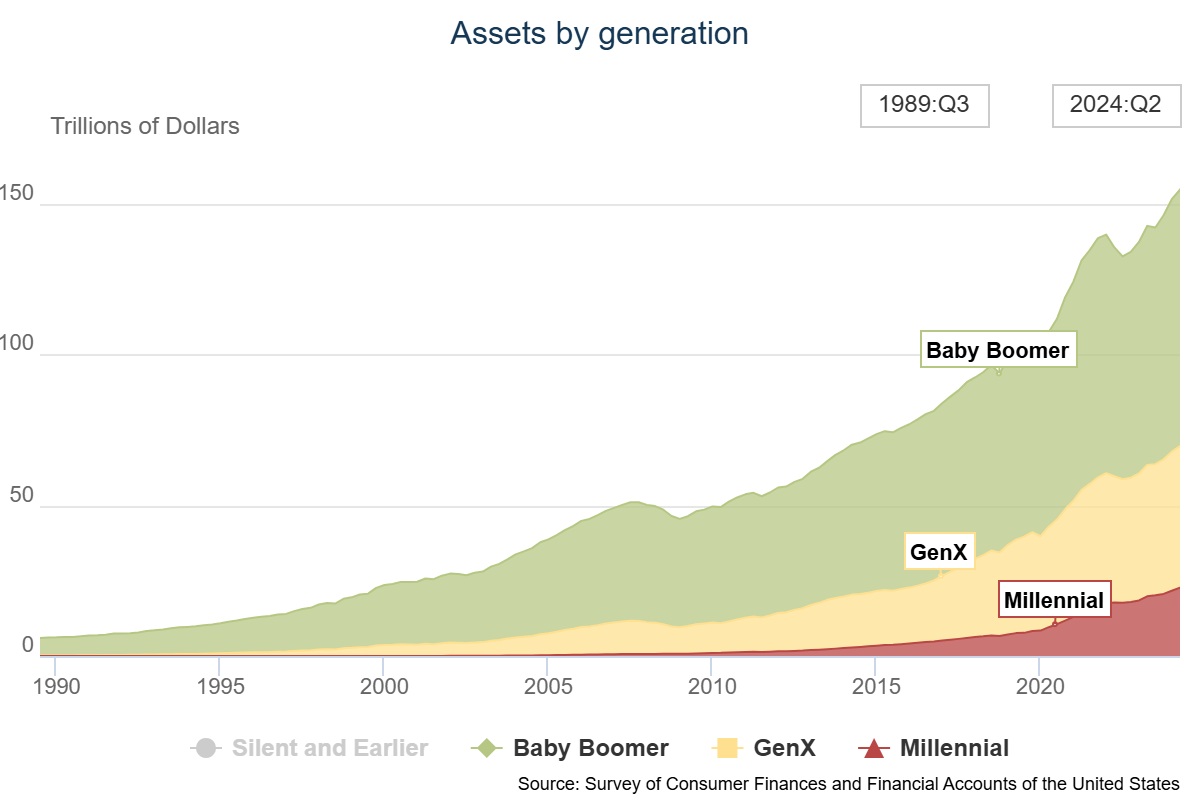
By contrast, those in their 20s, 30s, and 40s are saddled with student loan debt, earn less than Boomers did at the same age, and struggle to own assets as they are overpriced.
Millennials and Gen Z will contend that Boomers committed generational plunder. They put wars on credit cards, artificially slashed interest rates that drove up asset prices, crashed the economy a few times, and raised the national debt to a level that will never be paid down.
The youth are mad as hell, and they’re not going to take it anymore. Aside from opening their windows and howling at the moon, however, nobody has presented reasonable solutions.
Reforming the System
Should Washington take away seniors’ Social Security because little Susan is upset that she paid $50,000 for a liberal arts degree? Should states take an 80-year-old’s property to house Johnny and his family? Should cities dedicate more of their budgets to young families than to senior citizens?
Let’s be honest: Bill Smith Sr. was also forced to pay into the system in his prime working years and is now tapping into these programs. By the time Homer Thompson from Gen Z reaches 70, he will emulate this behavior – if there is anything left behind after the entitlements collapse.