


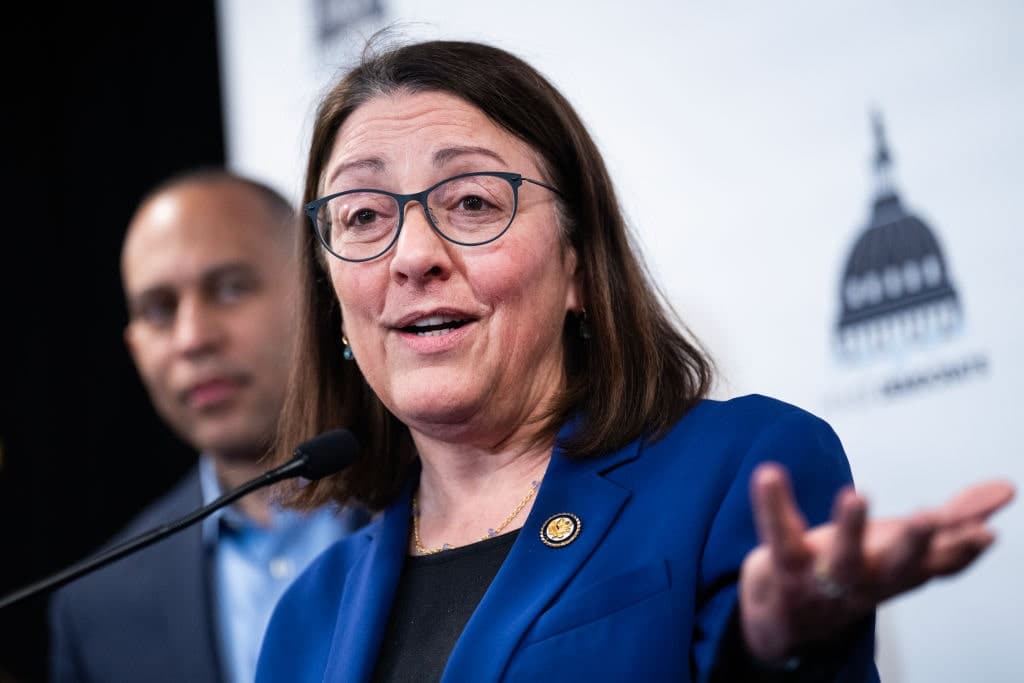

The Democratic Congressional Campaign Committee (DCCC) has ordered its brain trust to figure out how to lure those elusive rural and minority voters out of fields and restaurants to vote blue. Good luck. And the slogan it came up with? Our Power, Our Country. This is the latest tool in the arsenal to win the House come midterms in both defensive and offensive strategies. The endgame is to attract Asian American, Native Hawaiian/Pacific Islander (AANHPI), black, Latino, and rural voters – and then get them to a polling place to cast a ballot for a Democrat.
Several questions come to mind: How will this catchy concept be implemented? Who or what is financing the DCCC’s country-spanning lollapalooza? And is it using some basic internet searches to analyze the demographics they are trying to reach?
How Is This Different?
Each House battleground district – or any district that is vulnerable – is on the hit list. The group has hired staffers and made ad buys designed to mobilize the designated voters. There is nothing new or exciting about that campaign tactic. The Democratic Party had a renewed sense of hope after Abigail Spanberger, a questionable white Democrat, beat a well-qualified black woman in Virginia’s gubernatorial race. Spanberger made a targeted effort in her state’s rural communities to bash Donald Trump. New Jersey was another success story for the Democrats. Mikie Sherrill chased down the Latino population, taking back a few of the Hispanic demographic points that Donald Trump won in 2024.
Will Our Power, Our Country penetrate vast rural areas in Kansas, Indiana, Texas, South Dakota, and Iowa? Probably not. It would take more resources than available to round up the ranchers and farmers who live in the middle of 1,000 acres-plus. The campaign will stick with the big cities, unlikely to spend any time or money in an area that is 100 miles from the nearest Walmart.
But there is a plan. According to the recent DCCC press release, national political director Brooke Butler offered an update:
“The very first ads the DCCC ran this midterm cycle were targeted for AANHPI voters and ran in Korean, Chinese, and Vietnamese newspapers, making clear just how serious we are about taking action earlier than ever to engage voters of color effectively to win back the House.”
Note: Chinese and Korean populations live mostly on the left and right coasts and likely are already Democratic voters. And just FYI to the DCCC: The Korean population in South Dakota is in the low 100s.
The press release specifically states: “The investment is also the first time the DCCC has had a program dedicated to engaging rural voters specifically.” How are they doing that? Research. Both dominant parties do that consistently, so what’s new?
Ca-Ching
The DCCC is reporting the initiative will be an eight-figure investment, although the exact total is still under wraps. What is known so far is that no organized outside money, such as from PACs, is contributing. But the DCCC has a healthy general fund and also solicits and accepts contributions from individuals, who can donate up to tens of thousands of dollars per year. There might be some angry folks out there, but don’t expect any monetary support from the Harris-Walz campaign.
After the 2024 election, the DCCC reported it had raised $339,935,853. It spent $331,933,274, leaving a balance of $8,002,579. To have an eight-figure investment tagged for farmers, ranchers, remote rural folks, and people of color means that someone has deep pockets. Or no Middle America people will see hide nor hair of the Our Power, Our Country staffers venturing into the fields any time soon.
DCCC May Lose
The American voter has to give it to the DCCC and the Democratic Party for advertising how they will help the rural, black, Hispanic, and random low-demographic folks spread across this great nation. But you won’t find a huge percentage of Asians anywhere but in San Francisco, New York City, and Los Angeles. Once immigrated, these communities laid a foundation and prospered. Outreach will likely stay on the coasts.
As for the black community, as Joe Biden once said, “If you don’t vote for me you ain’t black.” But the community is slowly coming around to see the lack of progress promised by the Democratic Party. If the GOP and President Trump can assure progress is on the way and have a bigger victory prior to the 2026 midterms, the DCCC may have to rethink whom it’s trying to fool.

.jpg&w=1920&q=75)
.jpg&w=1920&q=75)
.jpg&w=1920&q=75)