

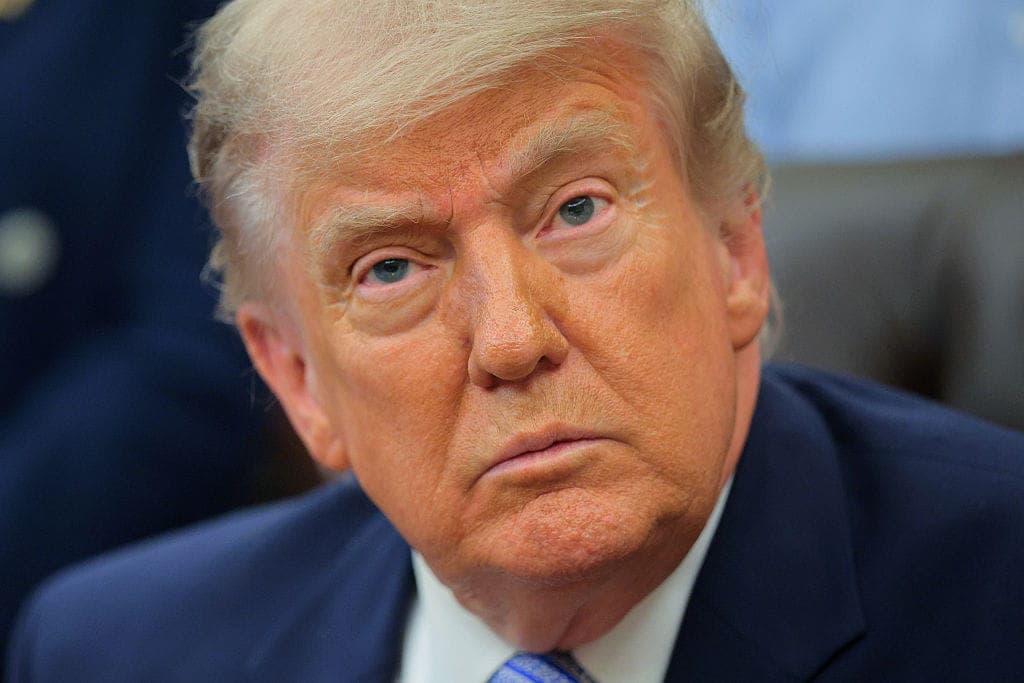

President Donald Trump, in a May 29 Truth Social post, made crystal clear what must happen for peace to be restored between the US and Iran. There is absolutely no fuzz on Trump’s stated conditions. If Iran does not agree or waffles in any way, there is no deal. The president has explained many times what the consequences will be. American forces will resume their air attacks in order to finish the job, destroying the over 3,500 remaining targets. Meanwhile, there is a memorandum of understanding (MOU) for a 60-day ceasefire being considered by Washington and Tehran.
Inchstone Progress Toward a Peace Deal
Though significant progress in negotiations with Iran always seems just out of reach, inchstones toward a meaningful end state for the talks seem to be on the table. However, President Donald Trump has made clear his conditions for any agreement and posted those requirements on Truth Social. He said:
“Iran must agree that they will never have a Nuclear Weapon or Bomb. The Hormuz Strait must be immediately open, no tolls, for unrestricted shipping traffic, in both directions. All water mines (bombs), if any, will be terminated (we have removed, through detonation, numerous such mines with our great underwater mine sweepers.”
The president also asserted that the remaining nuclear material, or “Nuclear Dust” as Trump calls it, would be “unearthed by the United States…and DESTROYED.” The operation would be accomplished in coordination with the International Atomic Energy Agency and representatives from Iran.
That’s what the US wants from any negotiations. From what we know, the Iranians continue to come back with the claim that they have a right to enrich uranium, that the Strait of Hormuz is part of Iran’s sovereign territory, and that they will control it. The MOU is a new wrinkle in the negotiations dance that has been going on since early April. In the meantime, according to Axios, “US and Iranian negotiators have reached an agreement on a 60-day memorandum of understanding to extend the ceasefire and launch negotiations on Iran's nuclear program, but President Trump has yet to give his final approval, two US officials and a regional source involved in the mediation efforts tell Axios.” The same US officials “claimed the Iranians later came back and said they had the necessary approvals and were prepared to sign. Iran has not confirmed that.” Again, as in the past, we are getting a positive readout from the US side on the negotiations, but not from the Iranians.
From Liberty Nation News, Trivia, Facts, Check Us Out
Stay informed.
Today’s news, the Constitution and American history, written for young readers.
Visit GenerationLiberty.com
News, Trivia, Facts, Check Us Out
Stay informed.
Today’s news, the Constitution and American history, written for young readers.
Visit GenerationLiberty.com
The more realistic take on the negotiations and on the progress being made came from Vice President J. D. Vance. According to Newsmax, “Vice President JD Vance on Thursday [May 28] told reporters that Washington was ‘not there yet’ with Iran on an agreement but that the parties were close, adding that the US was in a position where it could substantially set back Tehran's nuclear program.”
Layman’s Perspective: Progress Is Glacial
From a layman’s perspective, if there is progress, it is glacial in its momentum. What observers see is that on February 28, the US and Israel launched air attacks (US forces code-named the operation Epic Fury) against Iran to remove its leadership and render its ballistic missile, drone, and cruise missile production and inventory useless. The air attacks also targeted air defense sites, military infrastructure, and military leadership. On April 7-8, the US and Iran agreed to a conditional two-week ceasefire, mediated by Pakistan, to allow talks to begin. Talks proved fruitless. The US implemented a blockade of the Hormuz Strait on April 13, and to date, more than 108 oil tankers and cargo vessels have been turned around. On April 21, President Trump announced an indefinite extension of the ceasefire to allow negotiations to take place. Between late April and mid-May, there were sporadic talks with Pakistan as an intermediary. The focus remained on Iran’s nuclear program, sanctions, and reopening the Strait of Hormuz. President Trump warned that US air attacks will resume if US demands are not met. No useful progress had been made.

Then, on May 28, US and Iranian negotiators announced a tentative MOU for a 60-day extension of the ceasefire, which would include opening the Strait of Hormuz to all transit, Iran clearing all mines in the Strait, easing some of the US blockade restrictions, and beginning new talks on Iran’s nuclear stockpile of highly enriched uranium. President Trump is considering the deal and on Friday announced plans to lift the blockade – but he has not given the final approval, as Iran has been silent on the agreement. If Tehran approves the MOU, it will not be the civilian leadership that agrees. The Islamic Revolutionary Guard Corps (IRGC) will have the final say. To date, the IRGC has rejected every potential agreement. There is no indication that it will agree to this most recent MOU.
~
The views expressed are those of the author and not of any other affiliate.



.jpg%20noncitizen%20voting&w=1920&q=75)
.jpg%20Hillary%20Clinton&w=1920&q=75)