

Throughout the United States, public schools are struggling to stay afloat. Continuously fighting rough waters caused by the pandemic, the American education system is drowning. With shortages of teachers and staff, students falling behind, and limited funding, the public system cannot seem to find dry land. However, one idea, dubbed an Education Savings Account (ESA), may function as a lifeboat for parents and students trying to avoid going down with the ship. These accounts provide instructional opportunities to families of all races, incomes, and zip codes. ESAs may not fix the problems within the public system, but they could be the answer for students that are not reaching their full potential.
The Public School System is Treading Water
For years, the public school system was a practical option for students who either could not afford private learning or lived in rural areas where the local facility was the only available choice. Since the pandemic, these institutions have faced multiple issues such as staff shortages, lowered enrollment, chronically absent students, drawbacks from extended home learning, controversial parental involvement, and financial struggles. Combined, these issues force parents to find alternative learning centers for their children while public schools and their exhausted administration are left treading water.
For those that think more money is the solution, think again. America spends more money on education than any other country globally, and it has yet to yield satisfactory results. In a 2017 study conducted by Pew Research involving 72 countries, the US ranked a pitiful 38th in math and 24th in science.
Private schools are an excellent choice for those who can afford them, but many low-income families are left without options due to the inflated cost. This is how the idea for Education Savings Accounts was born.
What is an ESA?
ESA’s are funds made available to families, regardless of income or address, to use towards different educational needs. The money is provided by taxpayers and is deducted from the amount public schools receive from the government for each attending student. That number varies depending on location, but on average, the range per student is between $9,500 and $27,000. ESAs are formed by taking a portion of that money and putting it into a private account for parents to use for their children’s education, including private school tuition, online learning, and services for children with disabilities.
In 2011, Arizona was the first state to trial an ESA program. Legislation that would allow low-income families to be eligible was passed in the Grand Canyon State in February of 2021. Since the start, seven more states have adopted some form of an ESA program, including Florida, North Carolina, Mississippi, Tennessee, Indiana, New Hampshire, and West Virginia. Additionally, several other states are beginning to follow suit.
Pros and Cons of ESAs

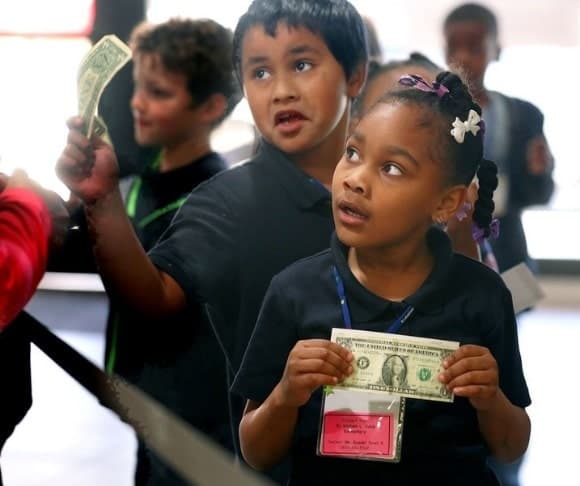
(Photo by Liz Hafalia/San Francisco Chronicle via Getty Images)
Advocates cite a number of benefits associated with ESAs. First, the funds are helpful to students who have special needs that public schools are not prepared to manage, such as kids with learning disabilities. Parents can use the money to enroll their children in specialized learning centers. The program is also valuable for families unable to afford the tuition costs at private institutions and those adversely affected by the coronavirus pandemic. Finally, both public and private schools benefit from the use of ESAs. The money allotted to each student is put back into both systems, helping them survive the budgetary crisis many of them face.
There is an opposing idea that public schools lose substantial money due to decreased enrollment. However, this is untrue. ESAs only take a percentage of the amount provided by the government for each student. The remainder is put back to the administration in which the child was previously enrolled, even though they are not attending that facility anymore. In actuality, public facilities are gaining revenue rather than losing.
Read more from Kirsten Brooker.