


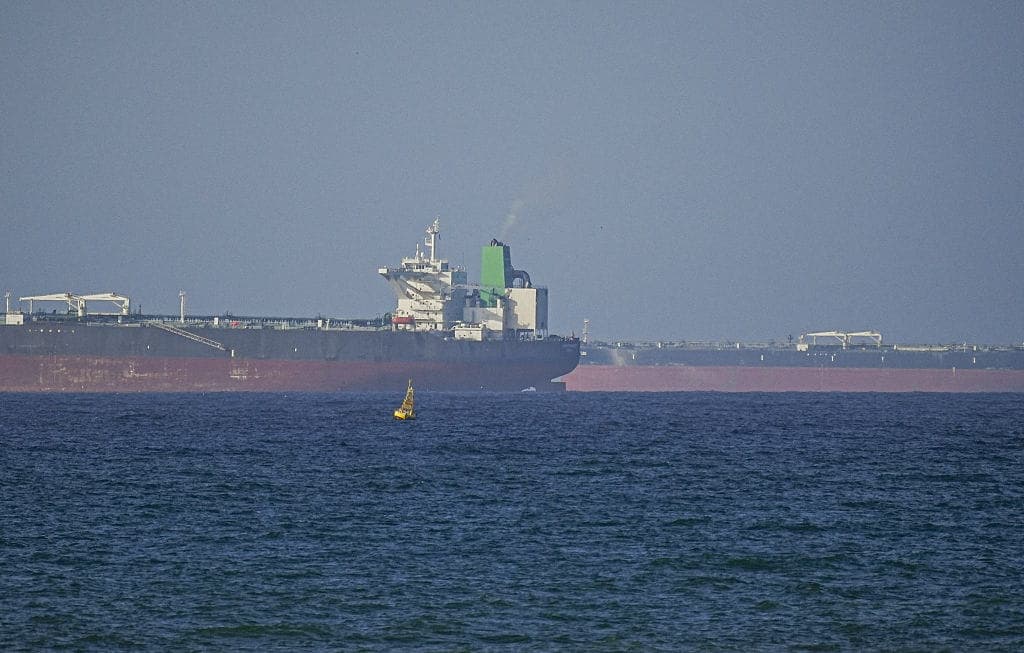

The US military seized an Iranian cargo ship on Sunday after it tried to defy President Donald Trump’s naval blockade. The development comes after government officials from Iran said Friday that the Strait of Hormuz was open - but the military said on Saturday it was closed. What’s going on over there, and who’s calling the shots? Confusion and chaos seem the order of the day in the Middle East, but Trump isn’t waiting for them to figure it out.
Dire Straits
As Liberty Nation News National Security Correspondent and former Deputy Undersecretary of Defense, Comptroller, Dave Patterson wrote last week, “when the talks between the US and Iran failed, the Trump administration took direct action.” The US Navy set up a blockade of the Strait of Hormuz and all Iranian ports. This quickly produced the desired results – or so we thought.
On April 14, Israel and Lebanon agreed to a ten-day ceasefire, and on Friday, April 17, Iran Foreign Minister Seyed Abbas Araghchi announced the strait was open to all vessels. President Trump was pleased, posting on Truth Social in all caps: “IRAN HAS JUST ANNOUNCED THAT THE STRAIT OF IRAN IS FULLY OPEN AND READY FOR FULL PASSAGE. THANK YOU!” The market was thrilled, as well. Oil prices dropped 11%.
And on Saturday morning, the Islamic Revolutionary Guard Corps (IRGC), Iran’s military, announced that the strait was closed until the US lifts its blockade – and even went so far as to fire on a tanker in the area. Meanwhile, at least one Iranian ship attempted to run the blockade in the Gulf of Oman. President Trump posted on Truth Social: “Today, an Iranian-flagged cargo ship named TOUSKA, nearly 900 feet long and weighing almost as much as an aircraft carrier, tried to get past our Naval Blockade, and it did not go well for them.”
“The U.S. Navy Guided Missile Destroyer USS SPRUANCE intercepted the TOUSKA in the Gulf of Oman, and gave them fair warning to stop.” he continued. “The Iranian crew refused to listen, so our Navy ship stopped them right in their tracks by blowing a hole in the engineroom. Right now, U.S. Marines have custody of the vessel. The TOUSKA is under U.S. Treasury Sanctions because of their prior history of illegal activity. We have full custody of the ship, and are seeing what’s on board!”
This latest action comes amid accusations against Iran for violating the ceasefire agreements by blocking passage through the Strait of Hormuz.
Instability in Iran
So, who is actually in charge in Iran right now? It’s hard to say for certain, but it sure seems like the IRGC has, in a very practical sense, the reins. The military certainly appears to control the strait, and Foreign Minister Araghchi and Speaker of Parliament Mohammad Bagher Ghalibaf may not hold quite the authority they once did.
Iran International reported strife between them and IRGC Commander-in-Chief Ahmad Vahidi earlier this month, with the latter trying to undermine the authority of the priors. Then, after Araghchi opened the strait (apparently against the will of the IRGC commander), Iran’s state media issued a rare and severe criticism.
Just minutes after the foreign minister’s announcement on Friday, Trump responded. Shortly thereafter, the Tasnim News Agency called Araghchi’s post a “bad and incomplete tweet that created a misleading ambiguity about the reopening of the Straite of Hormuz.”
Mehr News said the minister’s tweet “provided the best opportunity for Trump to go beyond reality, declare himself the winner of the war and celebrate victory.”
In other words, the Strait of Hormuz was “never open,” and Araghchi’s claim otherwise was all a big misunderstanding.
On Sunday, April 19, Speaker Ghalibaf reiterated Iran’s intention to restrict shipping and denied that the country would participate in the new round of peace talks Trump has planned for today in Pakistan. Iran’s military headquarters responded to the capture of its tanker by calling it a violation of the ceasefire and “maritime piracy” – despite their own attacks and reclosing of the strait. “Iran will respond soon,” the military said.
Such instability should come as no surprise, however, all things considered. Nearly 50 high-ranking Iranian officials – including one, perhaps two, Supreme Leaders – have been killed since Operation Epic Fury began.
But this most recent action in the strait seems to have galvanized Iran into one faction yet again, as now even Araghchi is accusing America of “bad intentions and lack of seriousness in diplomacy.” So, what will become of the Strait of Hormuz? When asked by the BBC when Iran might be willing to give up control of the critical waterway, Ebrahim Azizi, a top lawmaker in Iran and former IRGC commander answered: “Never.”
“It’s our inalienable right,” he declared. But President Trump has made it clear the strait will be opened – whether by Iran or the US Navy. Iranian lawmakers may well claim to have authority over the Strait of Hormuz, and the IRGC can try to enforce it – but like the attempt at running the blockade on Sunday, that probably won’t go well for them.

.jpg&w=1920&q=75)
.jpg&w=1920&q=75)
.jpg&w=1920&q=75)