
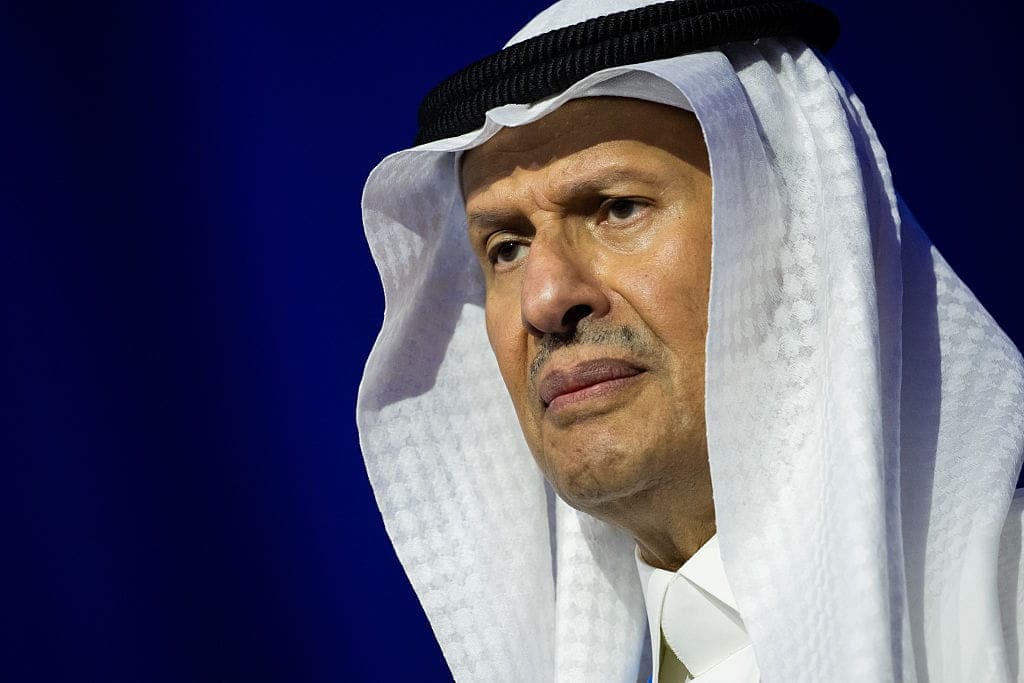

President Donald Trump’s Department of Energy has signed a 30-year civil nuclear deal with Saudi Arabia. The nuclear accord, referred to as the Section 123 agreement, is accompanied by a bilateral safeguards document that establishes mechanisms to manage non-proliferation risks. US Energy Secretary Chris Wright and Saudi Energy Minister Prince Abdulaziz bin Salman jointly signed the agreement on July 22, 2026. President Trump believes the deal will be approved, but there is one last hurdle to leap first. The deal is contingent on Saudi Arabia becoming a member of the Abraham Accords.
US And Saudi Arabia Sign Landmark Deal
On Thursday, July 23, President Trump announced the landmark nuclear deal in a Truth Social post. What was unique about the post was that it didn’t just reveal the nuclear deal with Saudi Arabia but tied the ratification to one of President Trump’s principal geopolitical objectives for his term in office. He wants Saudi Arabia to join the Abraham Accords. Trump posted:
“The Civil Nuclear Deal (There will be no enrichment of material!) being made between the United States Department of Energy and Saudi Arabia, which pertains only to non-military use, such as the ones that Iran and UAE (and others) already have, will be approved, but is totally subject to Saudi Arabia joining the very respected and successful Abraham Accords.”
As The Washington Times reported, “The condition is key because Saudi-Israeli normalization is a major goal for Mr. Trump but a thorny issue for the kingdom, which sees Israeli treatment of Palestinians as a major problem and impediment to better relations.” The kingdom’s government has consistently maintained it supports a two-state solution for Israel and its Palestinian neighbors. A solution that Israel has soundly rejected. Israel’s point is that it is currently surrounded by countries that believe Israel should not exist. Combining West Bank Palestinians and Gazans into a country where the population has demonstrated a maniacal opposition to Israel’s existence would establish an unacceptable risk for Israel.
Getting past the Abraham Accords issue, the nuclear agreement has significant upsides. The agreement with Saudi Arabia establishes a cooperative arrangement in which the US will place US companies at the center of reactor construction, and any enrichment processes will be placed within a “black box.” The black box concept, as it applies in this instance, means that all sensitive technology is managed solely by American companies. Highly proprietary and classified technology, as well as enrichment knowledge, would not be transferred to the Saudis. Furthermore, the day-to-day operations of the nuclear facility would be managed by the American company. In short, the “black box” concept allows the Saudis to benefit from the output without having access to the sensitive technology and processes inside.
American Companies in Charge Lowers Risk
Having American nuclear companies as the centerpiece of Saudi nuclear power generation also allows Saudi investment to underwrite the sustainment of the US nuclear industrial base. That nuclear supply chain will be needed to power US-based artificial intelligence support facilities. As The Wall Street Journal observed, “Westinghouse Electric and its AP1000 reactor would be among the biggest beneficiaries of the deal. The AP1000 reactor produces about 1,100 megawatts of electricity—enough to power a midsize city or a major artificial-intelligence data center.” Westinghouse, the US company associated with the deal, would be the go-to company with a multi-billion-dollar program for a very long time.
From a geopolitical perspective, the US-Saudi Arabia nuclear deal would provide the US with a competitive advantage. The Associated Press reported: “Secretary of State Marco Rubio told reporters Thursday in the Philippine capital of Manila that the agreement would make certain that Saudi Arabia works with American companies instead of ‘competitors’ to build its civil nuclear program. China, South Korea, France, and Russia are among alternative partners that Riyadh could look to.”
The deal still must undergo congressional review, but few believe Congress will present an obstacle. Not long after Secretary Wright signed the document, it was sent to Congress. Congress has 90 days of continuous session to review the document. If Congress takes no action, the 123 Agreement will be in force. Congress would have to pass a joint resolution of disapproval to stop the agreement, a move that would no doubt receive a presidential veto. Should it come to that, Congress would need a two-thirds majority to override it. That’s highly unlikely.
Working out the fine print on Saudi Arabia signing on to the Abraham Accords seems to be the biggest impediment to a joint US-Saudi Arabia deal. It seems like inking the deal now with the promise of working toward a “pathway,” not an actual solution, to solve the Israeli-Palestinian conundrum is possible. After all, it has been the roadmap of choice for the last few decades.
~
The views expressed are those of the author and not of any other affiliate.


.jpg&w=1920&q=75)