

It has been 14 weeks since the United States and Israel launched a joint operation to bomb Iran. For more than three months, financial markets have braced for a US-Iran deal, only for those hopes to be dashed. Any time there is a chance for peace negotiations to resolve the war, traders find out that someone attacked something and that leaders on both sides are unhappy with the terms of a proposed agreement.
The May 28 US-Iran Deal
A barrel of US crude oil plunged below $90 on the New York Mercantile Exchange. The leading US stock market benchmark averages shot up. US Treasury yields declined, and the buck weakened.
Wall Street reacted to various reports that Washington and Tehran had agreed to a 60-day memorandum of understanding to extend their ceasefire and begin talks on Iran’s nuclear programs. A White House official confirmed to Axios that Iran “mostly agreed” to the terms. Other reports indicated that the tentative agreement required President Donald Trump's signature.
Treasury Secretary Scott Bessent neither confirmed nor denied the reports. He told the press that any deal requires reopening the Strait of Hormuz, restricting the enrichment of uranium, and agreeing to no nuclear weapons. Without those three components, there likely wouldn't be a temporary agreement.
"The teams have been going back and forth, and President Trump has made it very clear," Bessent said at a May 28 press briefing. "He talked about it at the cabinet meeting that he has several red lines, and Iran has to turn over their highly enriched uranium. They cannot pursue a nuclear weapon."

Hours later, state media outlet Fars reported that Tehran's armed forces fired missiles at unidentified targets in southern Iran. This came one day after the regime launched a ballistic missile toward Kuwait, something the US Central Command called an "egregious ceasefire violation."
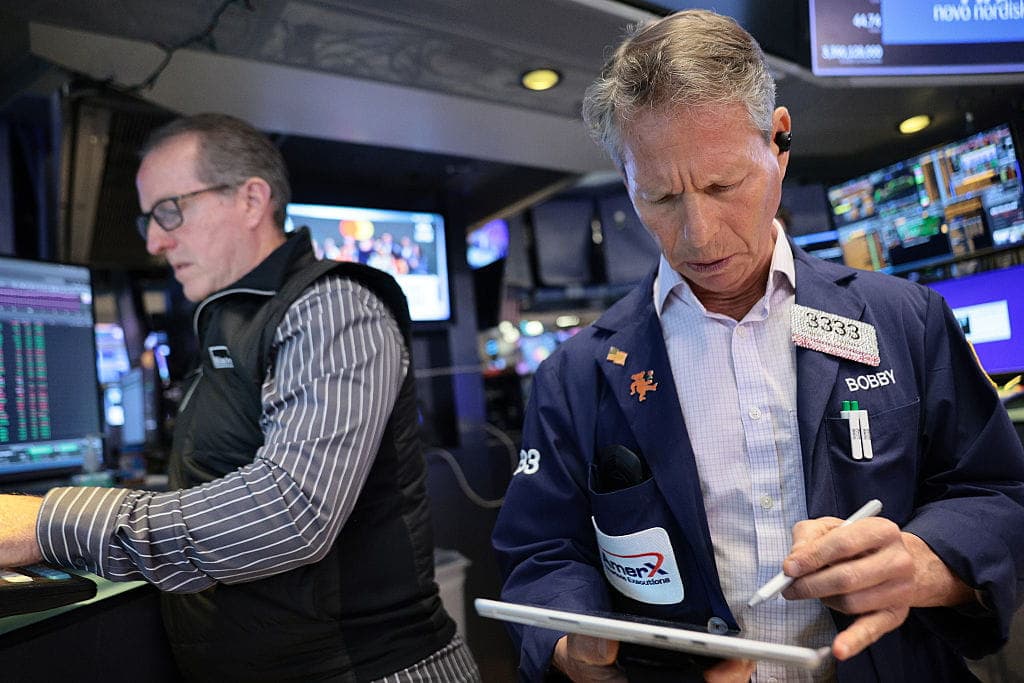
By the end of the day, financial markets did not know how to act. In after-hours trading, an eerie calm washed over the New York Stock Exchange. The major indexes were flat, bond yields were flat, and oil prices dipped. Investors will now pay attention to the doom-and-gloom prognostications for international crude supplies.
Worst-Case Scenarios
Exxon Mobil echoed the International Energy Agency's (IEA) warning: Oil inventories will fall to record levels in the coming weeks, sending prices higher and curbing demand. Neil Chapman, the energy juggernaut's senior vice president, said at a conference hosted by Bernstein in New York that "we're approaching unheard of inventory levels."
“I mean really, really low levels. You can debate whether that’s going to hit those really low levels in two weeks or three weeks. Once you get to that point, then you’ll see prices shoot up," Chapman said, adding that the price of physical Brent could spike to as much as $160 a barrel when stockpiles plummet to all-time lows. "When the price gets to a certain level, demand destruction brings it back into balance,” he said.
From Liberty Nation News, Trivia, Facts, Check Us Out
Stay informed.
Today’s news, the Constitution and American history, written for young readers.
Visit GenerationLiberty.com
News, Trivia, Facts, Check Us Out
Stay informed.
Today’s news, the Constitution and American history, written for young readers.
Visit GenerationLiberty.com
Is Exxon trying to pump up the price? Skepticism is warranted, as many energy experts had forecast $150 to $200 a barrel by now. At the same time, earlier this month, the IEA noted that worldwide stocks are depleting rapidly, two months after the group's members agreed to release a record 400 million barrels into global markets to cushion the blow of the massive supply disruption.
Indeed, while international energy markets are still experiencing the first-round effects of the war in Iran, they will inevitably have to contend with the secondary impact. But the White House appears confident this will not be the case, with Bessent arguing that the world will be well supplied on the other end of the ordeal, whether due to massive output or emergency reserve injections.
Market watchers will try to price in both the best-case and worst-case scenarios.
Seeing the Effects
Recent domestic economic data suggest the United States could be witnessing the harmful effects of a war far outside of America’s borders. The first-quarter US GDP growth rate was revised lower to 1.6%, from the initial 2% estimate. The Federal Reserve’s preferred inflation measure – the personal consumption expenditures (PCE) price index – reached a three-year high. The Atlanta Fed’s widely watched GDPNow Model was adjusted lower for the second quarter.
The Iranian conflict could upend Trump’s agenda, which would not bode well for the Republicans heading into the midterm elections later this year. Would a US-Iran deal save the GOP?

.jpg&w=1920&q=75)
.jpg&w=1920&q=75)