



The fallout from the Iranian conflict has resulted in a new world order in oil markets. Prior to the war in the Middle East, multiple factors significantly influenced a sizable share of international energy, including the Strait of Hormuz and the Organization of Petroleum Exporting Countries (OPEC). Almost five months later, it appears these dynamics are shifting, as the United States has lit the match that will blow up the current arrangement.
Overhauling Oil Markets
Iraqi Prime Minister Ali Falih Kadhim al-Zaidi visited Washington, DC, on July 14, wheeling and dealing with some of America’s largest energy companies. Scores of oil-related agreements were signed between Baghdad and Chevron, ConocoPhillips, Halliburton, and others, covering oil and gas exploration, development, and production. The Chamber of Commerce estimated that the value of these deals totaled about $60 billion.
Baghdad was not finished as Iraq and Syria inked a US-brokered agreement last week to restore an oil pipeline that had been shuttered since 2003. The US Energy Information Administration forecasts that capacity could reach 700,000 barrels per day (bpd). “There is so much room to drive improvement in Iraq, to raise oil production, to reduce dependencies on hostile neighbors, to bring freedom, prosperity and abundant energy to the nation of Iraq,” Energy Secretary Chris Wright said before the signing.
The United Arab Emirates plans to double its export capacity by building a new port and a container terminal on its east coast, effectively bypassing the Strait of Hormuz. This comes shortly after Abu Dhabi resigned from OPEC and is now producing a record amount of crude oil, exceeding 5 million barrels.
Saudi Arabia is reportedly considering expanding its pipeline to the Red Sea by roughly 2 million bpd, which could lift total flows to about 7 million bpd.
In total, analysts estimate that the Gulf producers could bolster their daily pipeline capacity to more than 14 million barrels by the end of 2028. But while these are meant to circumvent the narrow waterway that handles about 20% of the world’s oil supply, they remain vulnerable to Iran, which has struck the energy infrastructure of regional neighbors.
“The problem isn’t the waterway,” Bob McNally, founder of Rapidan Energy, said in a July 13 interview with CNBC’s Power Lunch. “It’s that Iran can use weapons to attack loading facilities, pumping stations, the end stations, these terminals, and the storage units of these pipelines.”
Still, as the world has seen since late February, closing the strait can upend global energy markets by blocking the transport of millions of barrels of crude, petroleum products, liquefied natural gas (LNG), and various consumer and capital goods.
America Leading the Charge
Was this as the administration intended? Or did the White House slip into a favorable accident? Nobody knows what goes on behind closed doors at 1600 Pennsylvania Ave., but the United States has ostensibly been aiming to give the world's oil markets a facelift.
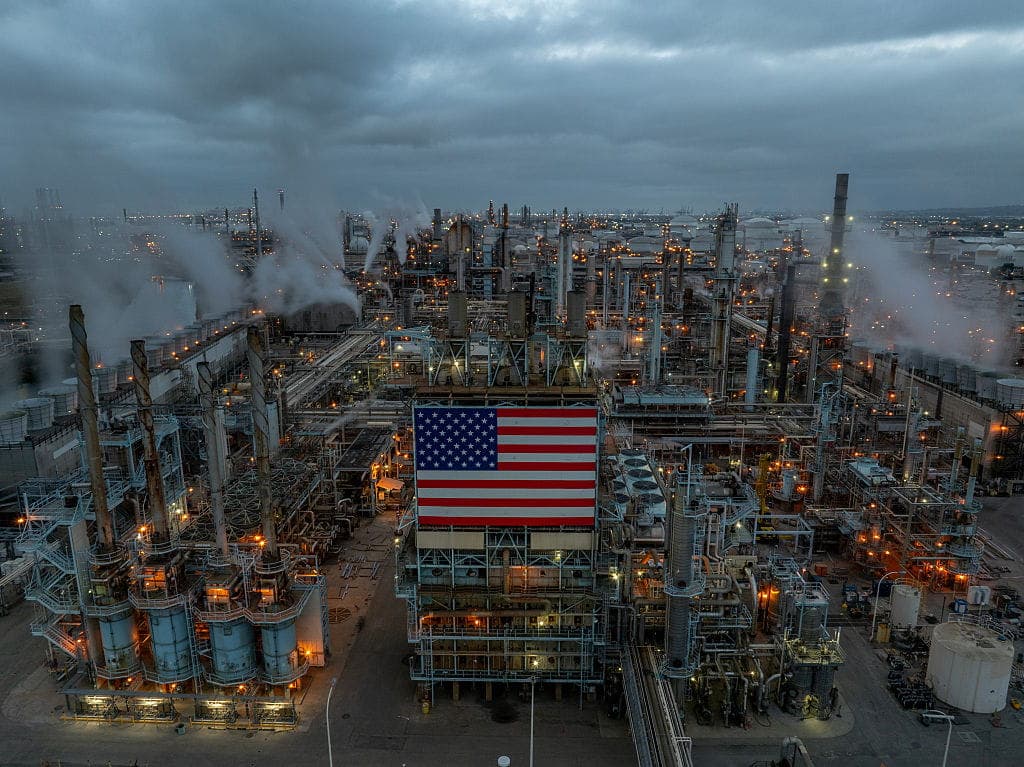
In addition to expanding domestic output to almost 14 million bpd, industry data show that US energy firms have been expanding production capabilities. Additionally, the United States recently launched its first oil refinery in 50 years, with facilities already operating at or near maximum capacity as they process heavy crude.

On the geopolitical front, the regime change operation in Venezuela earlier this year also gave America access to about 300 billion barrels of oil in its backyard. Caracas, with assistance from US energy giants, has already witnessed its daily output expand more than 1 million, up from around 700,000 prior to the invasion.
The United States quietly inked a military cooperation arrangement with Indonesia this past spring. This was a notable and strategic move because the deal also grants Washington access to its airspace for standard transit and emergency operations. It is a critical move for oil because it would give the US military access to the Strait of Malacca, the world’s largest oil chokepoint, which handles about a quarter of international maritime energy trade, amounting to 23 million bpd.
Should US-China tensions worsen, it could prove critical, as 80% of Beijing’s oil imports pass through the waterway between Indonesia and Malaysia.
A Trail of Bodies
Heading into the 2028 presidential election, political pundits will discuss whether President Donald Trump broke his promise to MAGA by engaging in a foreign war with no end in sight. But the conflict, with or without a resolution, has removed the decades-old proverbial thorns in the sides of international oil markets, namely OPEC and the Strait of Hormuz. On the other side of this war, to paraphrase former President George H.W. Bush, the United States will lead the new world order — of global energy.

.jpg&w=1920&q=75)
.jpg&w=1920&q=75)