


The world is approaching the five-year mark of Russia's invasion of Ukraine. The Eastern European conflict does not appear to be coming to a close anytime soon, much like the war in Iran. Nobody knows what a peace deal looks like at this stage, but despite Brussels thumping its chest and condemning Russian President Vladimir Putin, the European Union is still addicted to Russian energy. Still, Ukrainian President Volodymyr Zelensky is signaling his eagerness for a peace plan.
Got Any More of That Russian Energy?
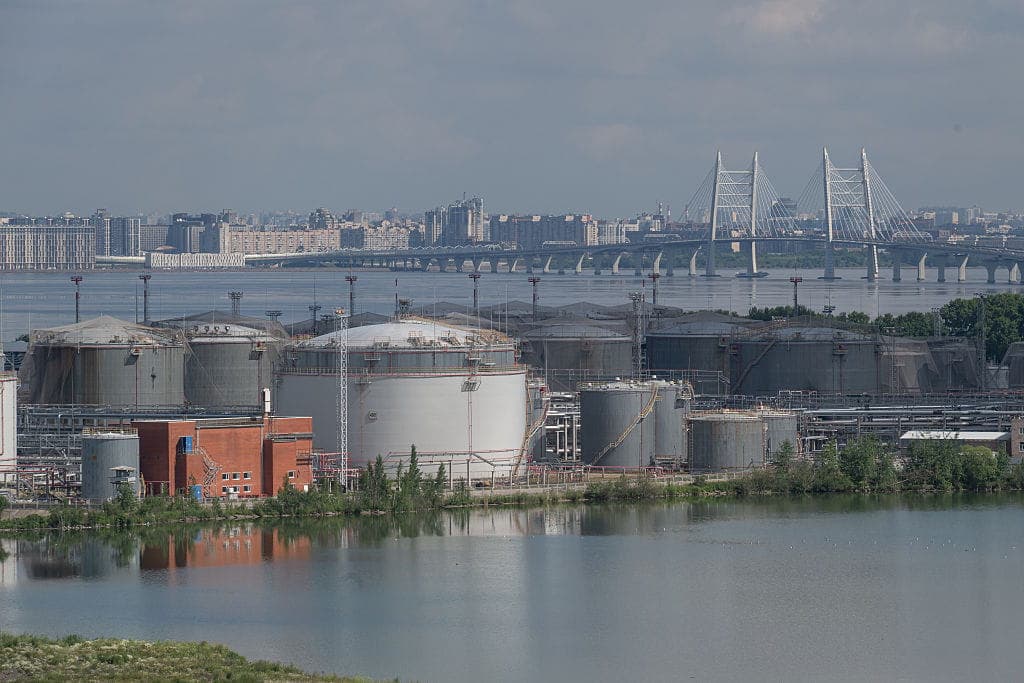
The Centre for Research on Energy and Clean Air (CREA), using multiple data sources, has been releasing monthly information on who bought Russian energy after the European Union's bans in December 2025. It turns out that the 27-member bloc has been one of Moscow's largest customers, even surpassing China for certain products.
From December 2022 until the end of September 2026, the EU bought 5% of Russia's crude oil exports. Europe remains the largest buyer of liquefied natural gas (LNG) and pipeline gas, accounting for 48% and 32% of Russia's exports, respectively, more than China, Japan, South Korea, and Turkey. Coal and oil-derived products are the only products the EU did not import directly from Russia.
Almost five years later, the EU is now the third-largest importer of Russian fossil fuels, overtaking Turkey. However, the EU obtains 12% of its gas imports from Russia, down from 45% before 2022.
Still, the latest findings are disappointing news for those who have sought to starve Moscow. The data show that the country’s LNG export revenues, for example, reached a near-four-year high. Additionally, estimates suggest Russia’s oil and gas tax revenues are projected to rise 10% year-over-year this month, to roughly $12 billion
Comically, the European Commission pushed back against the Kremlin's claim that Brussels paid Russia $321 billion for energy since 2022. Instead, EU officials say Europe paid just $209 billion.
Meanwhile, President Donald Trump has drawn criticism for his diesel deal earlier this month.
The Hypocrisy Game
On Oct. 9, Trump said he struck a deal with Putin to obtain diesel from Russia, despite the country's export ban. In a Truth Social post, the US president said Moscow agreed to immediately supply 300,000 tons of diesel to the United States and global markets, followed by an extra 500,000 tons in November and a million tons shortly after.
Trump announced days later that he is suspending several Russian sanctions to keep Moscow at the negotiating table. Secretary of State Marco Rubio clarified that the pause is for 60 days.
Lawmakers in Washington, Kyiv, and Brussels sharply rebuked both decisions.
Free with the Daily Briefing
85EssaysUnravel the Constitution
Hamilton, Madison & Jay’s complete case for America, free and searchable in the Publius Reader.
Free with the Daily Briefing. Unsubscribe anytime.
House members plan to introduce legislation to stop Trump from removing sanctions on Russian energy. Zelensky, meanwhile, warned the US diesel deal will cause cash to "start flowing back into Russia."
European Commission spokesperson Paula Pinho told reporters, according to Interfax-Ukraine, that the commission regrets the White House's decision to temporarily lift sanctions on Russian diesel fuel. “We remain convinced, as President [Ursula] von der Leyen also reiterated, that coordinated action on sanctions on both sides of the Atlantic can play a decisive role in ending this war,” she said.
Audit findings suggest the European Parliament and the Council of the European Union will likely miss this year's deadline to ban Russian LNG, Reuters reported. In December, these bodies agreed to phase out imports of Russian gas by the end of 2026 and restrict Russian pipeline gas by the fall of 2027.
Based on the latest data, geopolitical strife, and policymaking challenges, this is unlikely to happen, especially with Europe struggling to replenish its gas storage ahead of winter.
Trump’s Last Laugh
In a September 2018 address to the United Nations General Assembly, Trump warned of German dependence on Russian energy. Although some delegates laughed at his speech, the president was eventually proven correct. Germany, like the rest of Europe, tried to outsource its emissions to Russia and rely on green energy – technology that has repeatedly failed to power the continent – and now the region is paying the price.