Social media censors Chinese “whistleblower,” while Amazon wants to track bodies and minds.
Laura Valkovic
Sep 29, 2020
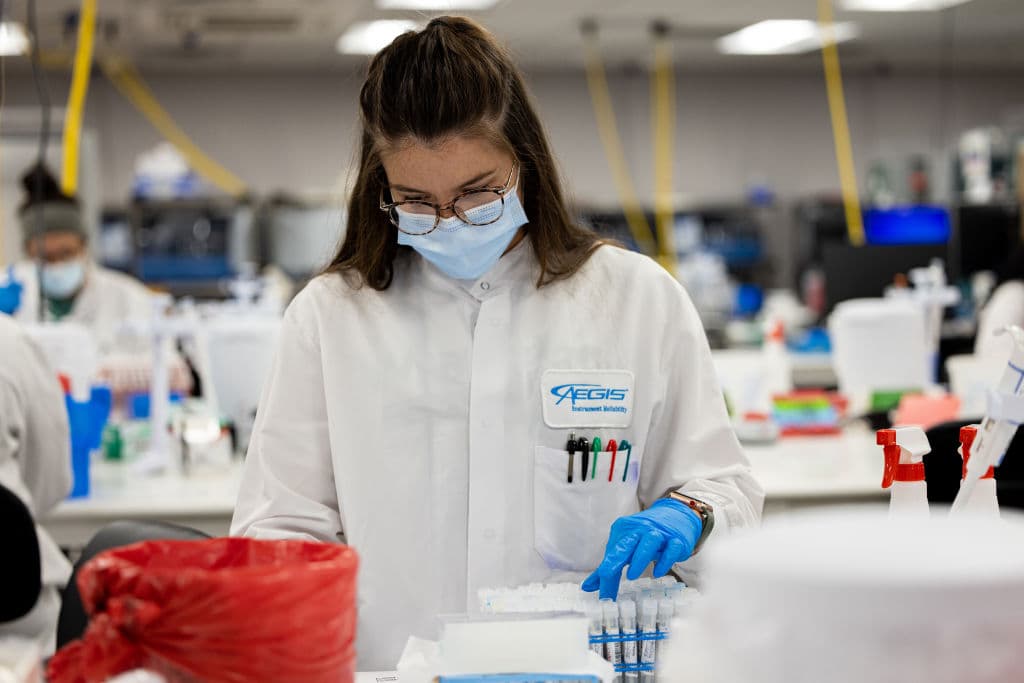
NASHVILLE, UNITED STATES – AUGUST 04: Microbiologists with the AEGIS Sciences Corporation process Covid-19 and Monkeypox tests at its facility in Nashville, Tennessee, United States on August 04, 2022. (Photo by Nathan Posner/Anadolu Agency via Getty Images)
Social media censors Chinese “whistleblower,” while Amazon wants to track bodies and minds.
Science & Technology Correspondent at LibertyNation.com. Eclectic in interests and political philosophies, Laura came to journalism after years of working as an educator. Her background as a historian has informed her research and writing styles, as well as her approach to current affairs. Born and raised in Australia, Laura currently resides in Great Britain.
Laura Valkovic
Sep 29, 2020
Editor’s Note – As the technological realm becomes more pervasive, whom can we trust? Each week, Liberty Nation brings new insight into the fraudulent use of personal data, breaches of privacy, and attempts to filter our perception.
Stories about the origins of the Coronavirus are flying around. Did it come from bats being sold as food? Was it engineered as a bioweapon? Did it escape from a scientific laboratory? With so many theories about a worldwide phenomenon that has severely disrupted the existing social order, who gets to decide what is real news and what is fake? Whatever the true story turns out to be, the social media titans have made up their minds on the only acceptable narrative – and they are sticking to their guns.
Restricting the Coronavirus Facts
When Chinese virologist Yan Limeng came forward recently with a claim that COVID-19 was manufactured and deliberately released from the Wuhan research laboratory, it had heads turning. Is she a credible source, and is her research valid? Either way, her allegations deviate from the World Health Organization’s narrative, so Silicon Valley is simply not willing to let her voice ring out.
Yan recently appeared on Fox News in an interview with Tucker Carlson, stating that the virus “is not from nature. It is a manmade virus created in the lab” – engineered by modifying a harmless bat virus to “target human[s].” Even further, she stated that the Chinese government released the virus “intentionally” to cause “such damage” across the world. Prior to the Carlson interview, Yan and three colleagues published a paper on Zenodo, a website that promotes and hosts “open science.” The researcher also claims a second paper is forthcoming.
Immediately after stepping into the public with her allegations, quickly gaining almost 60,000 followers on Twitter, the virologist was suspended from that platform. The site has not given a reason for the suspension, stating only a generic “Twitter suspends accounts which violate the Twitter Rules.” This is not the only attempt Twitter has made to control the Coronavirus narrative, having attached warning labels to “false” COVID claims since March as well as removing tweets and briefly even banning the Trump campaign for alleged fake news about the virus.
Facebook and its subsidiary platform Instagram have labeled the Carlson video as “false information” with a warning that it “repeats information about COVID-19 that independent fact-checkers say is false.” Viewers are then given a choice between watching the offending footage or reading more from so-called fact-checking websites. Carlson blasted the social media filter as “censorship,” stating on his Fox show:
“The coronavirus pandemic has touched the life of every American. And justifiably, people want to know where it came from. But Facebook still doesn’t want you to know that. So Facebook suppressed the video, presumably on behalf of the Chinese government. Facebook executives made it harder for users to watch our segment.”
He added in a message on the social media site: “Facebook is working hard to make sure you’re unable to see our latest post regarding a coronavirus whistleblower. They don’t want you sharing the video, and they are limiting the number of people who can view it. This is censorship,”
Carlson on Sept. 24 also shared a screenshot from Facebook. It showed that his program’s page has been subject to “reduced distribution” due to “repeated sharing of false news” – a move he suggested was designed to stifle the voices of him and his guests ahead of the November election.
Yan has now made a few television appearances. Whatever the veracity of her claims – or those of any other television guest – should social media companies really be the gatekeepers deciding what pieces of information get public approval, and which ones are labeled fake? But these days, that is par for the course.
Tracking Bodies and Minds
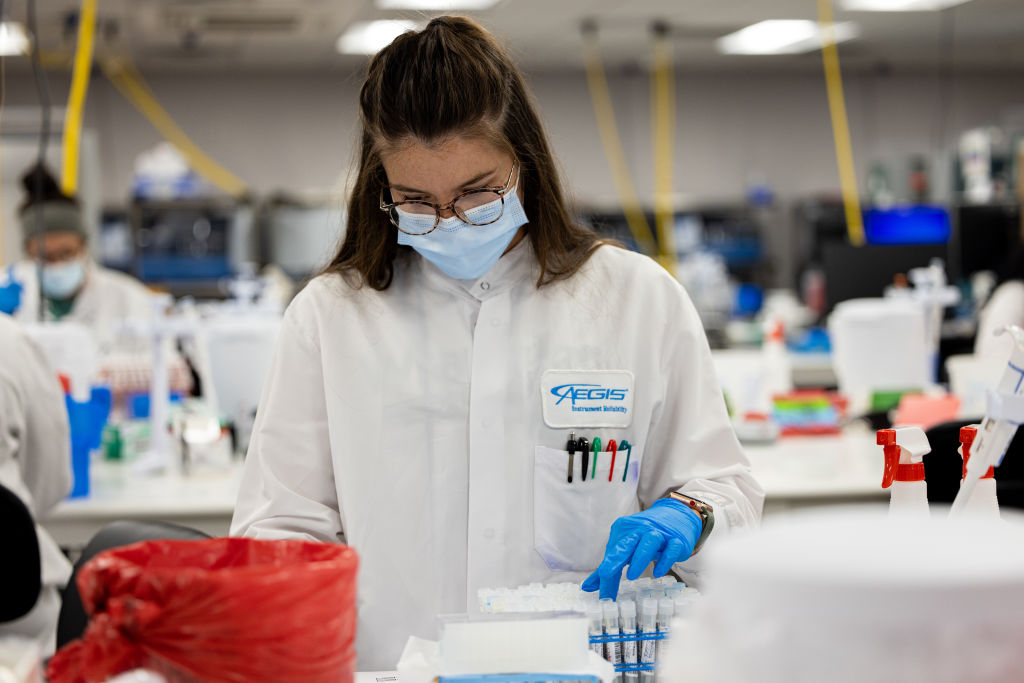
NASHVILLE, UNITED STATES - AUGUST 04: Microbiologists with the AEGIS Sciences Corporation process Covid-19 and Monkeypox tests at its facility in Nashville, Tennessee, United States on August 04, 2022. (Photo by Nathan Posner/Anadolu Agency via Getty Images)
In a Coronavirus world, health is more topical than ever. But Big Tech isn’t just interested in virus tracking. Collecting basic, everyday health data is an increasingly key part of the Silicon Valley model.
Not that Amazon is intent on collecting huge amounts of data on everybody, but one new product has some concerned. The company’s upcoming Halo fitness tracker – to be worn on the wrist – will measure a range of not just physical but also emotional attributes. It is a seemingly simple band with a sensor that links to a phone via Bluetooth.
For those who choose to wear such a device, it will track physiological data, including quality and quantity of sleep. It also tracks body activity, such as how long you have been sedentary or active, how many steps you take, and what type they are (walking, running, and so on). It gives you a weekly activity score. That’s all old hat by now, though – what are the novel features?
The device can also measure users’ body composition – using a phone camera to take body scan photos and then create a personalized 3D model of one’s physique. Users can also create an image of their “ideal” body using a slider that adds or subtracts fat.
But it’s not all physical – the Halo will also be tracking mental health. The wristband can measure users’ tone of voice, and the emotions behind this, throughout the day. As reported by The Verge:
“[T]he band will intermittently listen to your voice and judge it on metrics like positivity and energy ... It picks up on the pitch, intensity, rhythm, and tempo of your voice and then categorizes them into ‘notable moments’ that you can go back and review throughout the day. Some of the emotional states include words like hopeful, elated, hesitant, bored, apologetic, happy, worried, confused, and affectionate.”
In terms of privacy, various assurances have been made. Features are opt-in and can be turned off at any time. Data can be deleted at any time and body scans are removed after spending 12 hours in the cloud. Voice recordings are not uploaded onto the cloud, though it appears the data revealed by those recordings are. Any information collected by the device can be shared as anonymous, aggregated data with third parties – these include entities partnering with Amazon, such as Weight Watchers, health labs including the Mayo Clinic, and insurer John Hancock. Users can also share their health information with compatible health services. Indeed, one wonders how long it will be before health care demands such intrusive data – and until treatment and prices depend on people’s results.
Amazon’s designs on the health care industry have been apparent for some time – in fact, the major names in Silicon Valley have all been edging into the medical field. Perhaps barring the contents of our subconscious minds, there is no more fundamental form of data on the global population than direct access to our bodies and emotions. Now, that’s valuable information.
That’s all for this week from Tech Tyranny. Check back next Monday to find out what’s happening in the digital realm and how it impacts you.
~
Read more from Laura Valkovic.
Get Your Top Election Coverage Right Here on Liberty Nation
Science & Technology Correspondent at LibertyNation.com. Eclectic in interests and political philosophies, Laura came to journalism after years of working as an educator. Her background as a historian has informed her research and writing styles, as well as her approach to current affairs. Born and raised in Australia, Laura currently resides in Great Britain.






.jpg&w=1920&q=75)
.jpg%20Midterm&w=1920&q=75)