
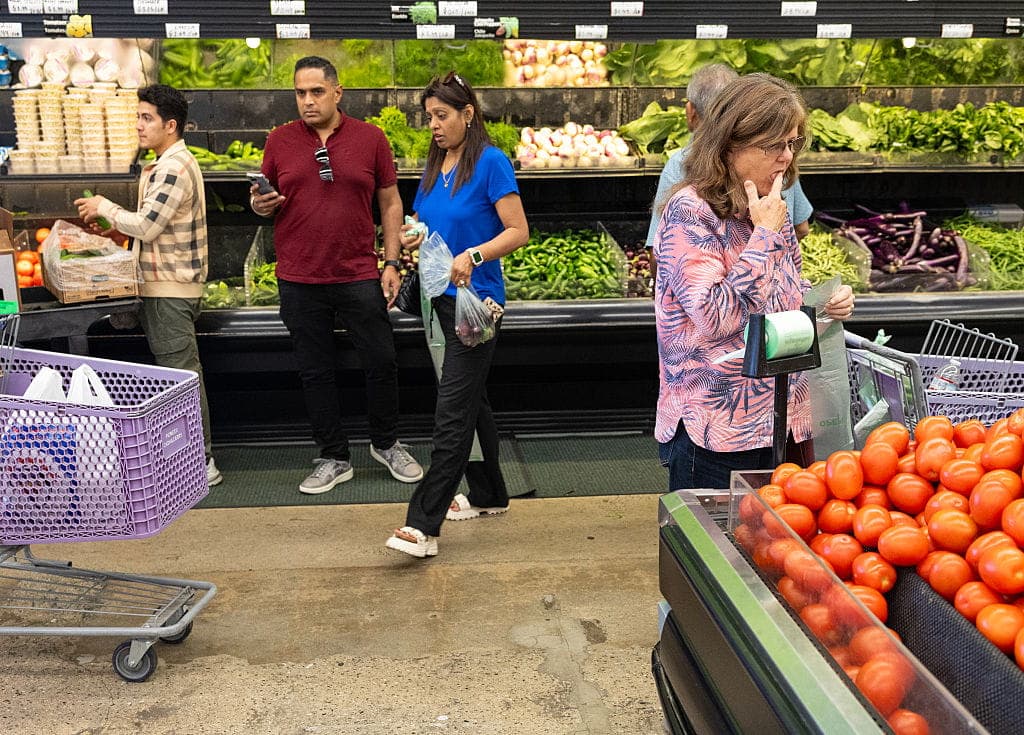

The four old men of the winter apocalypse have arrived. From Minnesota to Texas to New England, America has been blanketed by a massive snowstorm, gripping much of the nation with ice, snow, sub-zero temperatures, and a longing for global warming. As usual, the public is in panic mode, flooding supermarkets to take every last gallon of milk and roll of paper towels. Policymakers believe price gouging laws prevent this guaranteed behavior, but such regulations have a tendency to backfire.
Price Gouging Your Eyes Out
Prior to the snowstorm making its way across the United States, video clips emerged on social media of consumers descending on grocery stores to fill their shopping carts with a lifetime supply of milk jugs, tuna cans, and dog food. By the time others arrived at these establishments, the shelves were as bare as a Venezuelan corner store. It was mass madness!
Many questions typically arise after viewing these videos. Why are folks not prepared in advance? Why do people need so much toilet paper? Why do governments prohibit price gouging anyway?
The laws of economics always appear during these events. Unfortunately, politicians, bureaucrats, and activists never learn from these affairs. Perhaps they will the next time there is chaos – though that outcome is about as likely as Al Gore’s proclamation of the ice caps vanishing or Rep. Alexandria Ocasio-Cortez’s (D-NY) prognostication of the world ending by 2031.
Econ 101
Before and after a tornado, hurricane, or killer storm from the Great White North, there will inevitably be a surge in demand for goods, be it bread or mayonnaise. Prices will respond by soaring, signaling heavy consumption and the need to rejuvenate inventories. Unfortunately, over the years, governments have intervened by capping prices or preventing signals from reaching the broader marketplace.

At first glance, it appears to be a benevolent endeavor: John Smith and Susie Jones are being protected from greedy entrepreneurs, mom-and-pop gas stations, and Big Meat. However, the trade-offs are always prevalent, typically in the form of shortages and equal misery.
This eliminates the private-sector incentive structure, exacerbating the scarcity of goods. At the same time, in discussions about price gouging, one element of the equation that is often omitted is the consumer.
When prices remain the same for everyday products amid panic in the streets, consumer behavior will also remain the same. However, if price gouging were permitted in the marketplace, supplies would continue to be plentiful as individuals would likely refrain from maintaining the same habits.
For example, if a crate of water were to go up from $4.99 to $25.99, shoppers will either buy less or conserve more. They will not start participating in the water cup challenge or perform a deep cleaning with buckets of water.
Government Finger Wagging
State Attorney General Letitia James warned New York businesses on January 23 not to engage in price gouging ahead of the winter storm. Oklahoma Attorney General Gentner Drummond warned that energy companies and retailers would be punished if they were found to be price gouging. A state of emergency was declared in Virginia, leading to the activation of price gouging laws. Ditto for Kentucky, Missouri, and North Carolina.
Like price controls, these laws deny basic economics and market dynamics. Despite the library of papers and empirical evidence, this is one action committed by the state that persists. It lends credence to what legendary economist Milton Friedman said: “Governments never learn. Only people do.” Even then, the public also agrees with the government to impose these measures.
Perhaps the Department of Education needs to make economics great again in schools!
.jpg&w=1920&q=75)