
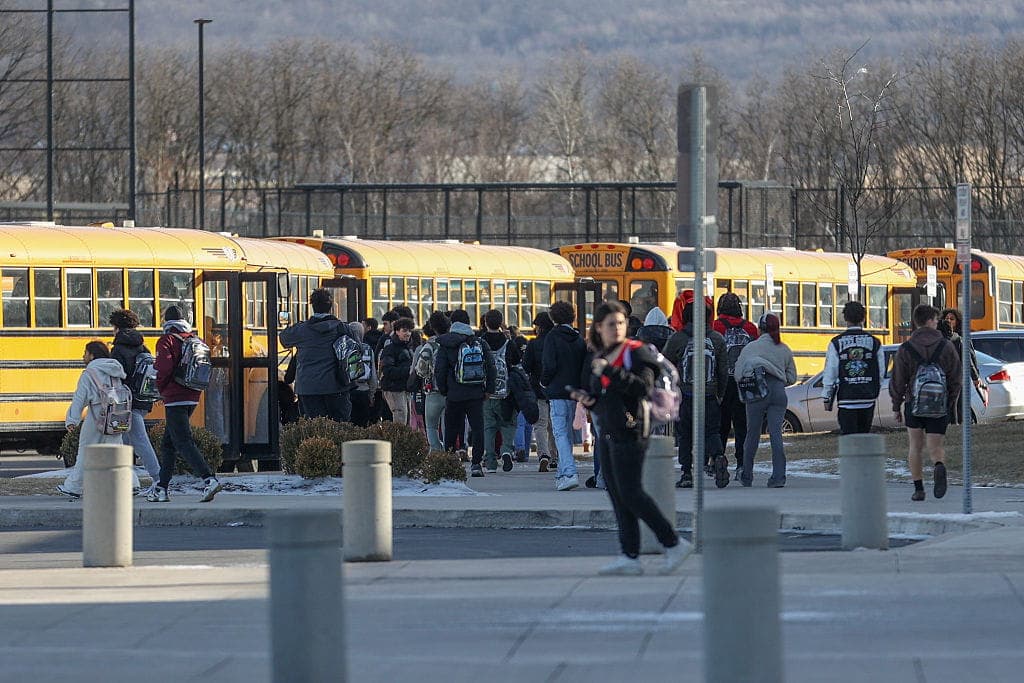

Approximately 30,000 students in Pennsylvania could lose their scholarships as elected Democrats rush their latest attack on school choice. House Bill 2632 would reduce scholarship funding by over $100 million over two years and cut scholarship organization credits. Left-wing lawmakers also pushed HB 2634 through, which could slash public charter schools by an estimated $500 million.
The sudden attack by Democrats – including Gov. Josh Shapiro – on school choice comes despite widespread support for such policies among residents of the Keystone State.
School Choice ‘Poison Pill’
The bill would also establish new regulations on all private schools and compel the Auditor General to conduct audits on schools outside of the public system – but the same standard would not be required of public schools. The partisan legislation – introduced on June 12 and advanced within days without any Republican support – would eliminate the Educational Improvement Tax Credit (EITC) and Opportunity Scholarship Tax Credit (OSTC) and replace them with the Education Options Tax Credit (EOTC).

The EITC was established in 2001 and assists approximately 71% of students. Roughly 10% are qualified for the OSTC, created in 2012, the Daily Signal reported. Unlike its predecessors, the new EOTC would “allow the state to collect 2% of all private donations made to scholarship funds” to supply government agencies.
By scheduling the voting meeting at the call of the chair, Democrats were able to bypass the standard 24-hour transparency notice. “House Democrats have passed an education poison pill, preparing to rip away transformative school choice from tens of thousands of students. The cuts proposed in this bill are punitive and destructive,” said Andrew Lewis, president and CEO of the Commonwealth Foundation, a Pennsylvania-based free-market think tank.

But supporters of the legislation insist it would create accountability. Rep. Nikki Rivera, a Democrat, said the Independent Fiscal Office found that it’s impossible to assess whether the programs are effective because of incomplete data. “While EITC funding has quadrupled over the last decade, key reporting gaps have left lawmakers and taxpayers unable to assess whether public funds have reached the students and schools they were intended to aid,” Rivera said. “That should concern everyone.”
The Pennsylvania legislature is split: Democrats have a 102-100 seat majority in the House, while Republicans have a 27-23 seat majority in the Senate.
Not-So-Moderate Josh Shapiro
Adding fuel to the Democrats’ school-choice fire, Gov. Josh Shapiro’s proposed Fiscal Year 2026-2027 budget – released earlier this year – includes charter school budget cuts disguised as reform:
“Building on historic reforms in last year’s budget, the 2026-27 budget further aligns cyber charter funding to actual costs, saving school districts an estimated $75 million annually and bringing total savings from these reforms to $250 million per year. Accountability measures ensure students have regular contact with teachers and remain safe and engaged online."
EdChoice, a nonpartisan nonprofit focused on issues involving the K–12 education system, recently found that more than half of all adults support charter schools, and just 14 percent oppose them. Residents of Pennsylvania overwhelmingly approve of charter schools, as well, with 74% supporting the educational institutions.
As National Review points out, Shapiro presented himself as a moderate Democrat when he first ran for governor in 2022, but his recent actions on school choice are widely seen as a far-left betrayal of the Pennsylvania electorate.

.jpg&w=1920&q=75)
.jpg&w=1920&q=75)
.jpg&w=1920&q=75)