

.jpg%20Rubio&w=1920&q=75)

It’s no secret that morale in the United States is suffering as Americans deal with high prices at the pump and the pantry. In fact, it’s in such bad shape that a whopping 68% of Americans believe the United States is in decline, according to a Wall Street Journal survey released earlier this year. It’s hard to escape that bleak picture when nearly every legacy media outlet and a host of political influencers are painting it around the clock.
But for a brief moment in Greece on Wednesday, Secretary of State Marco Rubio offered a different view of the United States and the entire Western world, rejecting the nihilism that has become so pervasive and delivering a message of hope to Westerners everywhere:
“[The history of Greece] shows us that ours is the inheritance of great heroes, and that we should be proud – that we should be intensely proud – of where we come from. We should marvel at what our forefathers carved out of this countryside. The story of our civilization is the greatest story ever known to man. And it began here, with the first men and women of the West. From them – from them – we can rediscover the virtues, the courage, and the strength to confront the dangers that we face in our time.”
The secretary’s optimism about the future, however, was tempered by warnings about the West’s current trajectory.
Rubio and a Western Warning
Rubio argued that many modern ideologies encourage safety and comfort over risk and ambition: “Too often these days, we build downwards. We design our standards to ensure no one will lose; we preoccupy ourselves more with the comfort of the worst than the potential of the best.” The secretary asserted that the West caters to the average, ordinary, and mediocre.
“The word ‘nationalism’ became a dirty word,” Rubio continued. “And so we tore down our monuments; we condemned our own history. And in too many places, we taught our children to be ashamed of the countries they would inherit. In the process, we opened our borders and outsourced our industry, and allowed our militaries to wither and to decay.”
Rubio’s argument can be seen playing out at some of the most basic levels of Western society, including in the classroom. According to a report by the Thomas B. Fordham Institute, an education policy advocacy group, more than half of teachers say they work in K–12 schools or districts that have adopted at least one form of equitable grading. Those practices might include eliminating zeros, meaning the lowest possible grade could be 50% or something similar; allowing late work without a penalty; and giving students the option to retake tests. Throw in some Howard Zinn “history,” and you’ve got the makings of a self-loathing, mediocre Westerner before he even hits puberty.
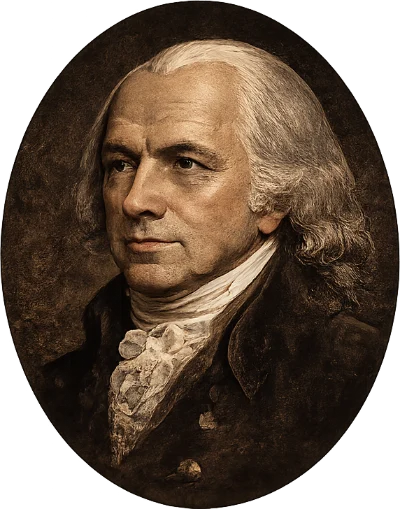
And just look at the state of the Smithsonian. A Domestic Policy Council report released earlier this year found the museum “refused to celebrate the Nation and its history” and that its leadership has “explicitly adopted an ideological framework that no longer treats the American story as a shared national inheritance to be taught or celebrated, but as a political instrument to divide, dispirit, and discourage our citizens.”
But it doesn’t have to be this way, and Rubio argued that the US is already leading the West’s return to greatness through the “unapologetic pursuit of national power.” Of course, it will take time, and the rest of the Western world must choose its own path.
“And now, today, we find ourselves at a crossroads. Because the next decade and the decisions we make will write the story of the next century. The course we take will determine whether the West maintains its place at the head of the world or resigns itself to a future of atrophy and servitude and decline,” Rubio warned. “We will either choose to act now or lose the choice to act at all.”
The West may indeed be in the midst of a difficult moment, but it still has one powerful advantage: Westerners themselves, who, as Rubio put it, are “the product of a distinct character” shaped by heroism, honor, and duty. At the heart of Rubio’s speech was a message echoing the words often invoked by Socrates, etched in stone at the Temple of Apollo at Delphi: “Know thyself.”