


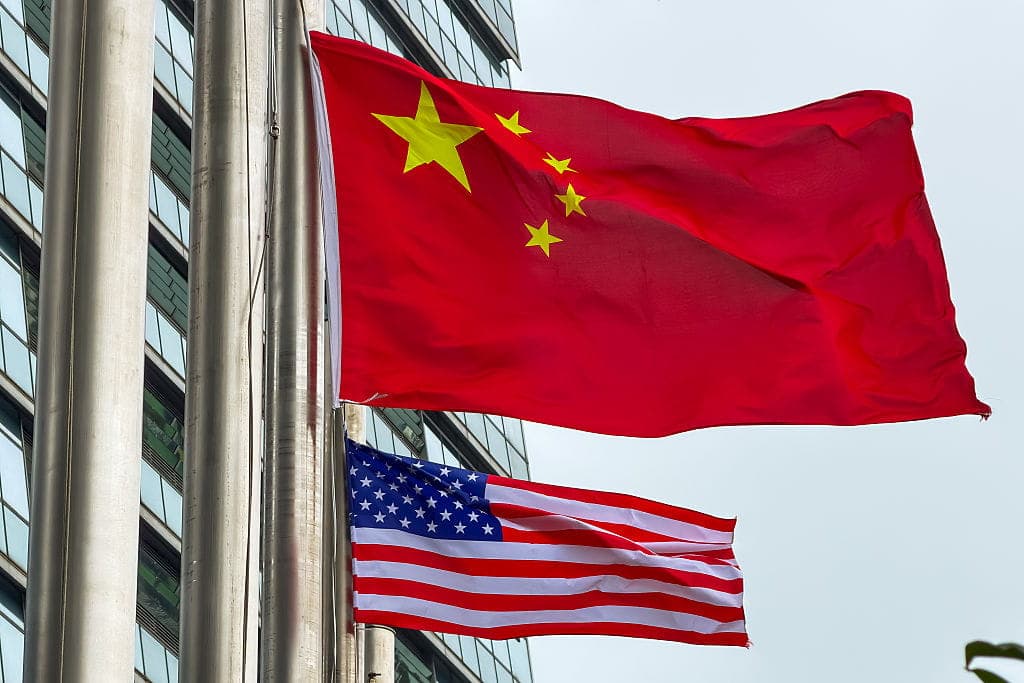

Some may find it hard to believe, but according to a new Pew Research poll, China is seen more favorably than America. Of course, there’s a good deal of politics at play, but there may also be more behind the scenes – the power of Hollywood.
America vs China
The July survey consisted of more than 42,000 people in 36 countries, and for the first time in 20 years since Pew started polling this topic, China came out on top. The US is viewed more positively than China in only six countries: India, Israel, Japan, Philippines, Poland, and South Korea. Even America’s closest neighbors, Mexico and Canada, favor China.
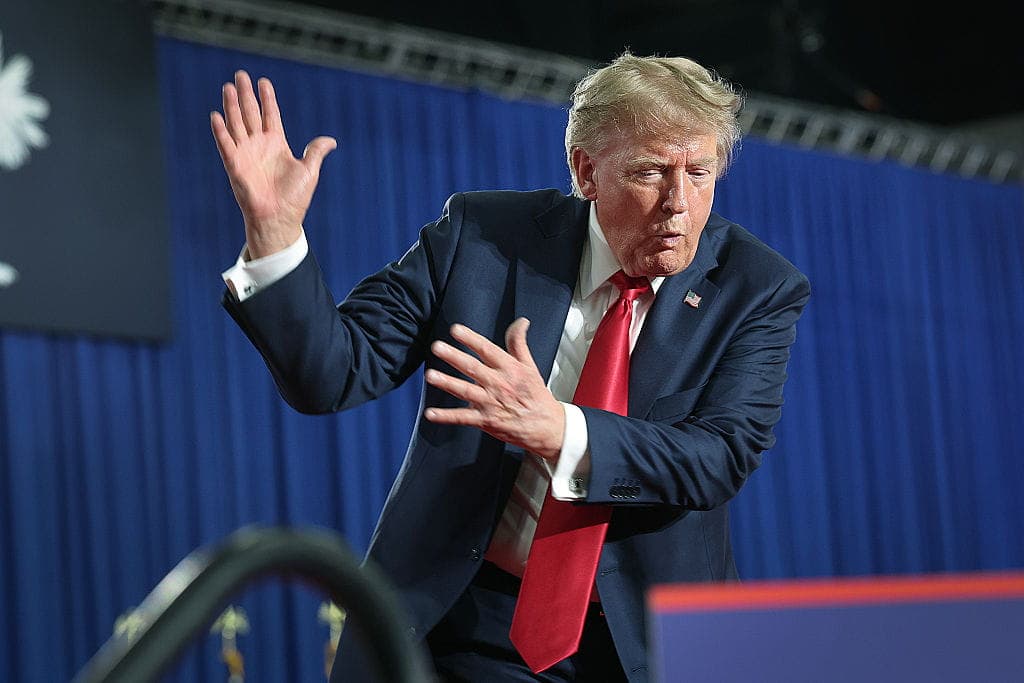
What has caused the US to be overshadowed by a communist country? A big portion of it, according to Pew, is the loss of trust in America, including its president. As the Council of Foreign Relations explained, “across the twenty countries Pew has tracked annually since 2023, median confidence in Chinese President Xi Jinping now exceeds confidence in U.S. President Donald Trump by ten points.”
In Sweeden, 83% considered the US a reliable partner in 2022, but this year that dropped dramatically to just 31%. Canada’s trust fell, too, from 83% to 35%. It’s not all because socialism is good and Orange Man is bad. Several things have helped China improve its image. For instance, its culture and products such as video games and social media trends have gained international popularity. Of course, there’s also China’s technical achievements, including electric vehicles and high-speed rail.
Other political issues had a hand in the turnover, though, including a negative feeling toward tariffs and the war in Iran. But politics is only one aspect. According to Chris Fenton’s op ed in RealClear Politics, Americans, especially Tinsel Town, have been hyping up the Red Dragon while continuing to highlight America’s faults.
It’s All About the Money
What does China have to do with Hollywood? Quite a bit, according to Fenton. In fact, he feels their influence and pressure are powerful, and that’s why people and countries are looking more favorably on the red country. He wrote:
“The single most influential reason China looks better to the world than the United States is that Western media, Hollywood, journalists, multinational corporations, sports leagues, politicians, and cultural institutions have been systematically unable, or unwilling, to portray China in any meaningfully negative light. Beijing made the rules clear: Criticize us, depict our system honestly, or even hint at Taiwan’s separate status, and you lose access to the world’s largest consumer market. The penalty for disobedience is banishment.”
Fenton based this on his 17 years serving as president of a studio’s motion picture division where he helped pioneer the opening of China’s market to Hollywood. “We told ourselves we were spreading American soft power, building domestic GDP, and creating cultural glue between superpowers,” he explained, but the opposite was true.
Free with the Daily Briefing
85EssaysUnravel the Constitution
Hamilton, Madison & Jay’s complete case for America, free and searchable in the Publius Reader.
Free with the Daily Briefing. Unsubscribe anytime.
According to him, several movie scripts were changed so as to not offend China. He used various examples such as Looper, which originally placed Bruce Willis and Joseph Gordon Levitt to France, but instead the plot was changed so that it took place inn Shanghai, and the script “even added lines that made China the envy of the world.” Another example was Iron Man 3, which he said “received heavy Chinese brand integration and a heroic, best-in-the-world Chinese scientist.” Red Dawn originally had China as the invader, “Sony and MGM reshot it – under the angry demands of Beijing – replacing the PLA with North Korea’s military as the enemy.” And Top Gun: Maverick received special treatment as well. Paramount removed Taiwan and Japan flags from Tom Cruise’s jacket “—not just for Chinese screens, but for the entire world,” he said. “These were not isolated creative choices. They were the price of admission.”
And it’s not just Hollywood. As Fenton explained further, Houston Rockets General Manager Daryl Morey found himself in trouble in 2019 when he tweeted support for Hong Kong. “The NBA faced an immediate and severe market freeze. Players and executives quickly learned the lesson: Stay silent on Beijing’s red lines or watch billions of dollars vanish.” Marriott had to change its global maps and websites after listing Taiwan and Tibet as separate entities: “its Chinese sites were shut down until the company publicly affirmed Beijing’s territorial claims.” Furthermore:
“Industry leaders like JP Morgan, Burberry, Marriott, American Airlines, and GM and individuals ranging from John Cena to Brad Pitt to Marco Rubio have all absorbed the same message. Speak freely about Xinjiang, Hong Kong, Taiwan, or the CCP’s authoritarian practices, and the market door closes.”
Beijing demands complete global narrative control, and sensitive topics like Chinese villains, human-rights abuses, and politics aren’t tolerated. The US is a different story. Media, entertainment, and politics “relentlessly highlight our polarization, inequality, foreign policy missteps, and institutional failures,” Fenton opined. “That openness is a strength of open societies, but it becomes a strategic liability when the competing power systematically suppresses equivalent scrutiny. The Pew and Gallup numbers are not primarily the product of China’s soft-power genius or America’s recent policy volatility. They are the predictable outcome of a decades-long information asymmetry that we ourselves enforced through commercial fear.”

Truth or not, hearing negative remarks about the US takes its toll. It’s called the illusory truth effect, when repeatedly hearing or seeing a claim makes it seem more believable. A 2024 review in Current Opinion in Psychology found that repetition increases belief not only in ordinary statements but also in misinformation, fake-news headlines, and conspiracy claims. Repetition can increase belief even when a claim conflicts with someone's previous knowledge.
In another study, published by PubMed, experiments were conducted that involved statements being presented as many as 27 times. No surprise that those statements were judged more truthful. But the largest jump in perceived truth happened earlier, after encountering a statement for only the second time.
There was a time when Americans were deeply suspicious of communism, China, and its authoritarian leaders. Those attitudes haven't disappeared, but they have softened as China's global image has improved and America's has taken a beating. Perhaps that's not entirely surprising. When people repeatedly hear what's wrong with America while seeing a carefully polished version of China, eventually some of it may stick. After all, perception isn't always reality, but psychology suggests that repetition can blur the line between the two.

.jpg&w=1920&q=75)
.jpg&w=1920&q=75)