

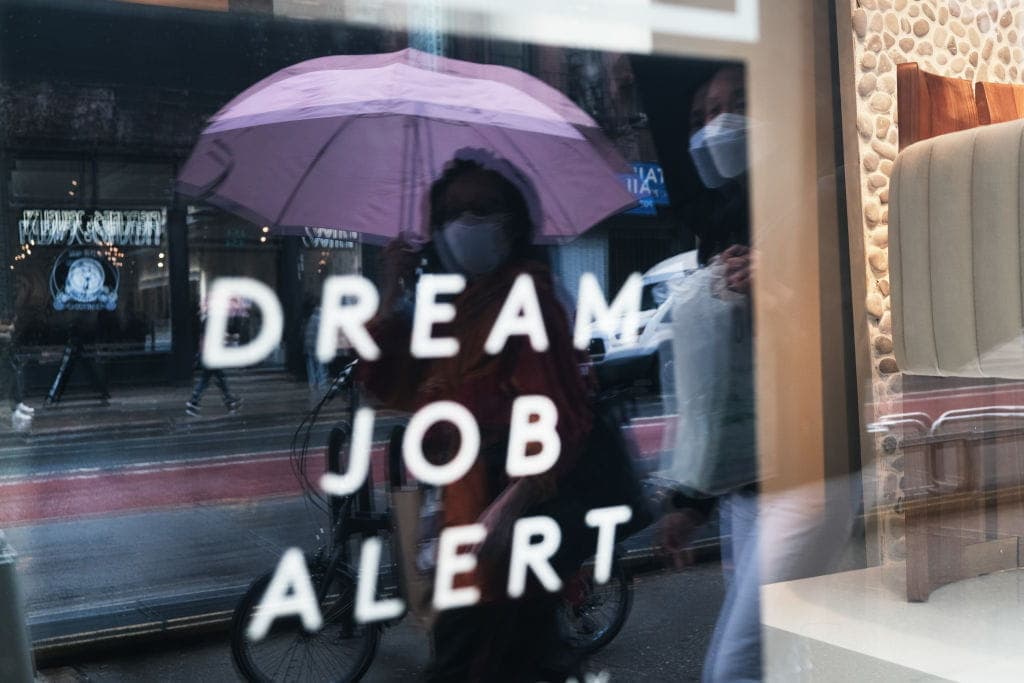

The US labor market has been at a standstill over the last several months. Employment conditions were frozen in the winter, blossomed in the spring, and then the dog days arrived in time for the summer. While the United States braces for sweater weather, payroll growth could be heating up, as observed in the August jobs report. This is exceptional news for Main Street, but not necessarily terrific for Wall Street.
August Jobs Report Stuns America
Not even the most bullish on Wall Street predicted the August jobs report. The US economy created 162,000 jobs last month, the best performance since March. Economists had projected a gain of just 56,000. But the stronger-than-expected number was only part of the story, as July's count was revised upward from negative 23,000 to a gain of 21,000. June’s figures were also adjusted a bit higher.


Free with the Daily Briefing
85EssaysUnravel the Constitution
Hamilton, Madison & Jay’s complete case for America, free and searchable in the Publius Reader.
Free with the Daily Briefing. Unsubscribe anytime.
August’s job gains were found across the marketplace, led by restaurants and bars (59,000), local government education (42,000), construction (22,000), manufacturing (16,000), and healthcare (13,000). Information-related industries eliminated 23,000 positions, which could partially reflect the impact of artificial intelligence (AI). Full-time employment rocketed by about a quarter-million, while employed part-time workers were flat.
That is not the only piece of positive news. More Americans headed back into the workforce as the labor force participation rate, which had hovered around its lowest level since the 1970s, ticked up to 61.6%.
Unfortunately, it was not all sunshine and lollipops, as renewed price pressures are likely impacting workers’ wallets. Average hourly earnings decelerated to a 12-month rate of 3.1%, which is firmly below the annual consumer inflation rate of 3.4%. Even if the August Consumer Price Index (CPI) report comes in below expectations next week, inflation is still eating away at employees’ wages.
On the Warsh-Path
If the latest employment data cast a positive light on the US economy – certainly shutting down any recession fears – then why weren’t financial markets happy? Blame the Fed.

Armchair and institutional traders were bracing for a Goldilocks report, something that was not too great but not too poor. Anything around the 56,000 mark would have been perfect. Instead, a red-hot August jobs report put the Federal Reserve in a position to raise interest rates at the September Federal Open Market Committee (FOMC) policy meeting. Or, at the very least, leave interest rates higher for longer until inflation storm clouds pass.
Futures markets are betting on a 60% chance of a quarter-point rate hike when the central bank convenes its Sept. 15-16 policy meeting. But these numbers could shift when the Bureau of Labor Statistics publishes the August CPI report days before the gathering.
Shortly after the August jobs report was published, President Donald Trump warned the Federal Reserve that it would have to lower interest rates or he would impose tariffs on countries with a trade deficit with the United States. Here is what he wrote on Truth Social:
“Lower the interest rates because the U.S.A. is a much stronger credit than it was just a short time ago! A STRONG COUNTRY MEANS A LOWER INTEREST RATE - IT’S A BETTER CREDIT…Very simple! We should have the LOWEST RATE of any country in the World, like ‘the old days.’
“Without the United States agreeing to allow them their big surpluses, and we could stop that immediately, they would no longer be considered financially ELITE! LOWER THE RATE OR I’LL STOP TRADING WITH COUNTRIES WITH WHICH WE HAVE A DEFICIT."
Will the Fed heed the president? Unlikely. There are 12 voting members, and only three have supported hiking interest rates. Fed Chairman Kevin Warsh has not signaled a direct path, and Fed Governor Christopher Waller wants to give “disinflation a chance.”
The monetary playbook is that the Fed does not tighten monetary policy in the middle of a price shock. With global oil prices above $90 a barrel again, the institution will likely wait for energy markets to stabilize. As long as underlying inflation is tame and stable, the majority of the rate-setting committee might want to wait a bit longer.
Labor Pains, or Lack Thereof?
For the past few years, economists have often described the labor market as being stuck in a “low-fire, low-hire” environment. Employers are reluctant to hire, and they do not want to fire. This is evident in the data: unemployment claims are at historic lows, job vacancies are elevated, and the layoff rate is tepid. On the other hand, surveys suggest that businesses want to hire workers but are struggling to find talent.
At this rate, if it were not for the war in Iran exacerbating cost-of-living challenges, the world’s largest economy would be kicking into high gear. High gasoline and diesel prices, economic uncertainty, supply chain disruptions, and rising interest rates are headwinds that fuel negative perceptions of today’s climate.


.jpg%20Ukraine&w=1920&q=75)