


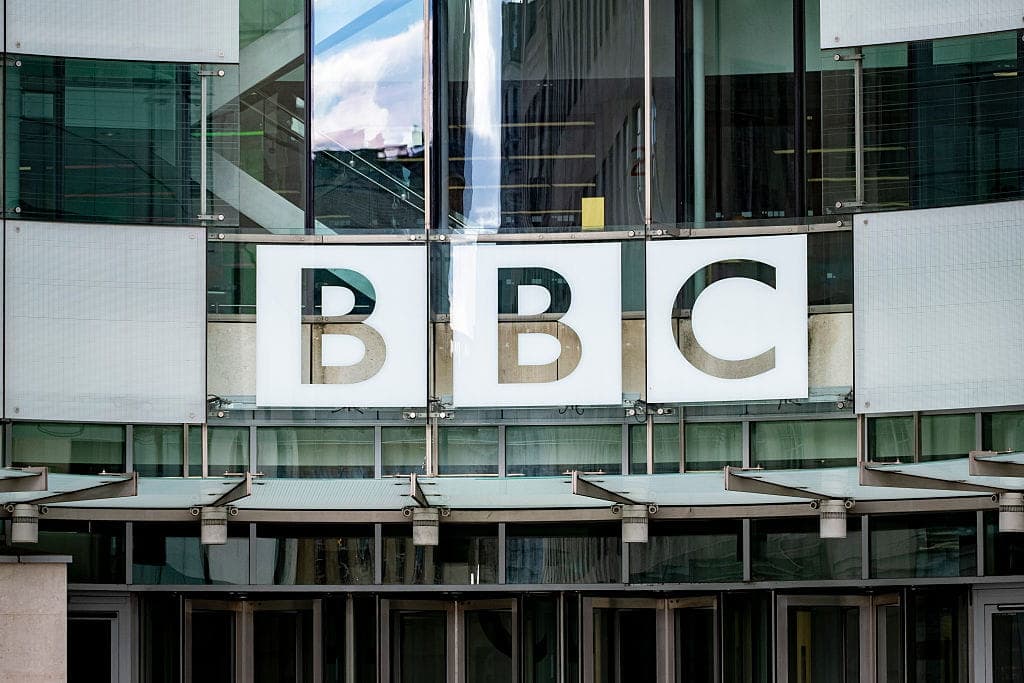

The latest “why aren’t people taking us seriously anymore?” analysis by out-of-touch big box media obsessing about themselves is out, and as always, zero lessons have been learned. Perhaps you’ve noticed the tendency of dominant media outlets in recent years to harp on one word in particular – polarization. Translation: We don't want you to have any options other than us for getting your news.
The Reuters Institute for the Study of Journalism on June 16 released its 2026 Digital News Report, and the slant is obvious throughout the lengthy study: You opinionated plebs are missing out on all the expertly curated truth we credentialed professionals are so earnestly striving to give you.
Gee, why do people not trust “the media” anymore? UK state broadcaster the BBC asks in an article on the report’s findings. “The research... suggests that public trust worldwide is at 37%, three points down on this time last year. In the UK, it has fallen by five points to 30% – 20 points lower than 10 years ago,” the BBC writes. “More than half of respondents said they now get their news from third-party platforms like social media and video networks,” the article uncomfortably notes.
As reported by the BBC, Reuters Institute complains, “Our data points to a mix of anxiety, disengagement and cynicism from audiences, many of whom don't like the way publishers are covering long-running news stories such as immigration, inflation and international conflict.”
BBC-Funded Report: Can Essential Media Like the BBC Survive?
The BBC laments the loss of faith in “traditional” media “sources,” which of course means outlets like, well, the BBC, as is stated directly in the report. Yet nowhere in its article does the BBC reveal that it is a listed financial sponsor of the study, along with “main sponsor” Google News Initiative. (GNI is the only “Over One Million Pounds” donor to the UK-based Reuters Institute for 2024-25 listed on the organization’s website). Other prominent supporters of the 2026 report include YouTube and globalist powerhouse multinational marketing firm Edelman.
Previous sponsors include notorious globalist progressive billionaire George Soros’s flagship Open Society Foundations operation. “The Open Society Foundations has joined in 2019 as a sponsor, allowing us to expand the report to cover South Africa (and has committed to supporting the inclusion of additional countries in the global south next year),” the Institute wrote of its 2020 Digital News Report.

All this is mentioned to accentuate a curious need the progressive establishment cannot shake: the constant urge to provide credentialed documentation of its own dispassionate importance. The 2026 Digital News Report is chock-full of such “research.”
A chapter from the executive summary is titled “Can public demand for impartial news survive platforms and polarization?” Guess who is declared to be “impartial” amid all the regrettable polarization? An entire excessively lengthy exercise is based upon a demonstrably false assertion (see below) that the big-box media insist on making about themselves:
“Impartiality is a core commitment for parts of the news media, including both public service media such as the BBC and some private publishers such as Reuters News. But many other news media, legacy or new, operate with a much more explicit, opinionated, and sometimes openly partisan editorial line. This has long been the norm in, for example, many European newspapers and much of US cable television and talk radio.”
The Reuters Institute is lauding the hardy professionalism of Reuters News and the BBC in its rigidly scientific media report, which just so happens to be sponsored by the BBC. This is how infantile the big-box media continue to be.
There’s more pabulum of this sort wherever one looks. A chapter titled “Do people think public service news is good for their country?” explains why the world needs PBS and the BBC:
“In a more polarized and fragmented media environment, the findings point to a potential role for public service media not only as providers of trusted information, but as facilitators of trust across different – often divided – groups. This could involve developing formats that help audiences understand why perspectives differ, highlighting areas of shared concern, and creating space for informed dialogue without forcing consensus.”
Polarized. You’re all so polarized... stop being so divisive, people, and let us do the thinking for you.
The Reuters Institute, heavily funded by Google, considers this to be the crux of the problem facing dominant media outlets today. The rise of what the Institute calls “right-wing populism” has fueled a lack of trust in long-established news organizations and their desire to provide “trusted information” to the public at large.
‘Avoid False Balance’ When Covering Politicians
“Populism isn’t just a style. As expert Cas Mudde [a Dutch political scientist] argues, it’s a thin ideology that splits society into ‘the real people’ and ‘the corrupt elite.’ That framing is step one,” a September 2025 article published by the Institute asserts. “Step two is what researchers call the double reciprocity break. In a healthy journalist–politician relationship, both sides win and lose over time. Populists game that relationship so they win whatever the tone – even when coverage is negative. That’s why standard tools keep failing.”
The overriding logic behind this wholly establishment worldview is easy to see for those residing outside its comfy confines. Author Michael Hauser Tov, Chief Political Correspondent for Israeli newspaper Haaretz, is saying it’s OK for the various players in the political game to have their share of success and failure along the way. But the game itself can never be called into question. That is the one thing that cannot be allowed to happen. This explains the persistent obsession with “polarization.” Like or dislike us as individuals. Fine. But do not opt out of our construct. We will not abide that.
From Liberty Nation News, Trivia, Facts, Check Us Out
Stay informed.
Today’s news, the Constitution and American history, written for young readers.
Visit GenerationLiberty.com
News, Trivia, Facts, Check Us Out
Stay informed.
Today’s news, the Constitution and American history, written for young readers.
Visit GenerationLiberty.com
Tov’s article is literally meant to serve as a “harm-reduction playbook for covering populists.” Its guidelines speak volumes as to what Big Media has become today.
“Techniques” reporters can use to combat populism include “avoid false balance,” he states. So much for impartiality. “This isn’t about abandoning objectivity; it’s about reinterpreting it. Objectivity is a tool, not the goal,” Tov openly writes. “Using one technique with populist politicians and not with another may not be the most objective act, but it is a journalistic act. In fact, it aligns with other journalistic values that are no less important – foremost among them: providing the audience with the truth, and only the truth.”
Let’s get back to the original question again: Why, oh why, does nobody trust our learned media light beacons of truth anymore? The BBC finds it to be a mystery indeed.

.jpg&w=1920&q=75)