
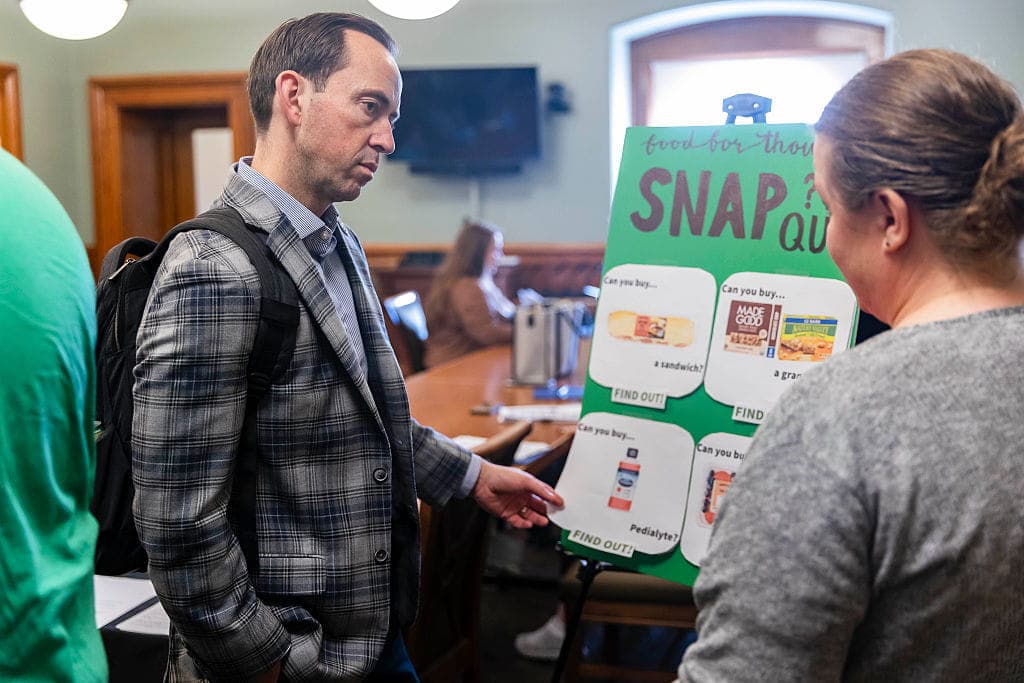

Five plaintiffs who receive Supplemental Nutrition Assistance Program (SNAP) benefits have sued the US Department of Agriculture, alleging it violated the law by allowing states to restrict access to sugary drinks, candy, and other products deemed unhealthy. The complaint alleges that the Trump administration lacked authority to restrict beneficiaries' free choice.
Lawsuit for the Poor, or the Beverage Industry?
The case was brought by the National Center for Law and Economic Justice (NCLEJ), which advocates for low-income people, and Shinder Cantor Lerner, an antitrust law firm. Katherine Deabler-Meadows, a senior attorney for the NCLEJ, reportedly stated in an interview that granting waivers to the states served as a “backdoor in national policy that expresses the administration’s preferences around food.” The suit alleges the USDA did not permit sufficient public comment under the Administrative Procedures Act and that it violated the Food and Nutrition Act because the waivers do not “increase the efficiency” of SNAP or “improve the delivery” of benefits. The plaintiffs also argue that the USDA “authorized states to narrow the statutory definition of ‘food’ haphazardly without statutory authority or evaluation methodology, and without notice to or input from the people or businesses directly affected.”
The businesses directly affected include beverage manufacturers, a powerful lobbying group that has long been criticized for elevating profits above consumer health.
“Millions of Americans rely on the Supplemental Nutrition Assistance Program (SNAP) to help feed their families. They deserve the same freedom to choose the foods and beverages that best fit their needs,” the American Beverage Association said in a press release. “Restricting products – like soda – from SNAP won’t make anyone healthier or save a $1 in taxpayer spending, whether SNAP costs today or healthcare costs tomorrow…”
“The fact is beverages are not driving obesity and chronic disease in America,” the statement concluded.
MAHA vs SNAP
In the midst of the Make America Healthy Again movement led by Health and Human Services Secretary Robert F. Kennedy, Jr., such claims do not resonate very powerfully. The Harvard T.H. Chan School of Public Health reports:
“Americans consume on average more than 200 calories each day from sugary drinks (58,59)—four times what they consumed in 1965 (60)—and strong evidence indicates that our rising thirst for ‘liquid candy’ has been a major contributor to the obesity and diabetes epidemics.
One of the states named in the suit is West Virginia, a leader in MAHA initiatives. West Virginia also holds the unsavory honor of being the most obese state in the nation. SNAP waiver advocates claim that beneficiaries do not lose the dollar value of benefits and can still buy lobster and caviar with them. The stated goal is to improve health, and recipients can still buy soda with their own funds. Public opinion parallels this perspective, with many Americans expressing resentment that they have to subsidize junk food rather than healthier, whole-food options.
Past Efforts Have Failed
A 2016 USDA study found that the top item purchased in SNAP households was soft drinks, accounting for 5.4% of all expenditures, whereas non-SNAP households spent only 4% of their food purchases on soft drinks. Efforts to restrict unhealthy offerings to benefit, not discriminate against, low-income Americans have persisted for years. The beverage lobby has earnestly fought for the free choice of recipients to buy what they want.
In 2024, the Center on Opportunity and Social Mobility lamented that the House Agriculture Committee failed to pass an appropriations bill authorizing a pilot program to evaluate whether dietary restrictions in SNAP would improve health outcomes for low-income households. The organization claims its research supports such restrictions, stating:
“A large and growing body of research shows that SNAP contributes to poor health. Although low-income households disproportionately experience health issues such as diet-related disease and obesity, our own research shows that SNAP recipients fare worse than other low-income households on these outcomes.”
SNAP beneficiaries cannot purchase unhealthy options such as tobacco and alcohol. Perhaps the DC district court will be asked to decide whether soda is or is not healthy for recipients, and thus within the USDA's authority to restrict on that basis. More likely, the case will be decided on whether the agency complied with procedural requirements and possibly sent back for a public comment period and other administrative safeguards.
However, given the current MAHA climate, overwhelming evidence that soft drinks lack nutritional value, and strong public sentiments against taxpayer subsidization of unhealthy beverages, the majority of comments will likely support USDA’s decision to allow states the latitude to administer the program to improve health outcomes instead of soda industry profits.

.jpg%20fraud&w=1920&q=75)