

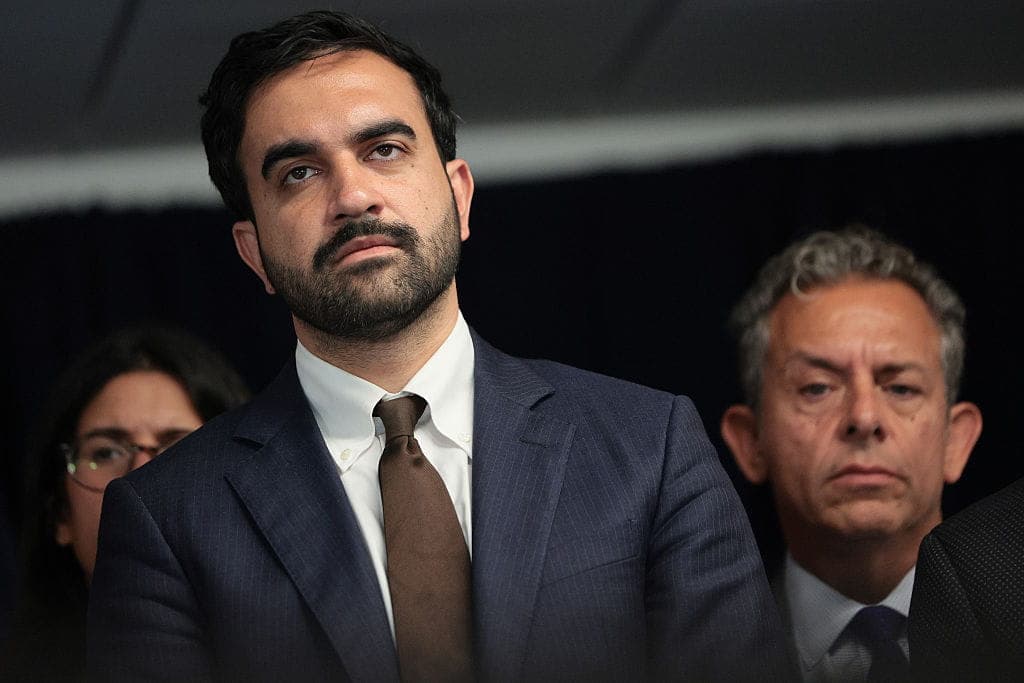

Campaign promises are a staple of politics, but what happens when keeping one becomes suspicious and suggests collusion? New York City Mayor Zohran Mamdani made freezing the rent one of his signature promises on the campaign trail, pledging relief for New Yorkers struggling with the city's notoriously high housing costs. Mamdani got the rent freeze he promised, but the story didn't end there. Allegations that his administration may have improperly influenced the independent board responsible for setting rents have landed the issue in court, where a judge is now demanding answers.
Mamdani Collusion?
In June, the New York City Rent Guidelines Board (RGB) approved Mayor Zohran Mamdani’s key campaign promise to “freeze the rent” on one and two-year leases for rent-stabilized units. The issue is less about the freeze, although that is a huge contention, and more about how that vote came to pass. Just hours after Christina Smyth, a member of the RGB, resigned, the board voted 7-1 in favor of Mamdani’s proposal.
In her resignation letter, Smyth said the board “stopped being a fact-finding body” and was rebuilt “to deliver a rent freeze” no matter what. “Everything else has been theater,” she wrote. “The hearings, the reports, the public comment, the data. None of it was ever going to change the result.”
The only no vote belonged to Arpit Gupta, an appointee of former Mayor Eric Adams. There are nine members on the board, and six of those were appointed by Mamdani after he took office. This is the part critics take issue with. A coalition of city landlords filed a legal challenge, accusing Mamdani of stacking the board, which is supposed to be independent, with tenant activists loyal to his cause. They opine that the decision was made on the campaign trail, before the mayor even took office.
Free with the Daily Briefing
85EssaysUnravel the Constitution
Hamilton, Madison & Jay’s complete case for America, free and searchable in the Publius Reader.
Free with the Daily Briefing. Unsubscribe anytime.
Apparently, the judge agrees there’s enough suspicion to look deeper into the matter. Judge Brendan Lantry, former chair for the Staten Island GOP, granted an order to obtain the behind-the-scenes communications to see if there was any collusion involved.
“The question naturally arises: how would the Mayor comply with his ‘guarantee’ to the voters to ‘freeze’ the rent unless he, or his staff, communicated with the Board to ensure that the Board refrained from imposing any rental increase?” Lantry wrote.
The judge allowed that some of the instances in the suit are unusual. “The court acknowledges that discovery in a special proceeding is rare,” Lantry wrote. “It is also rare (in fact, it is unprecedented) for a candidate for Mayor of New York City to guarantee that the Board, an entity that the parties concede is independent from the Mayor’s Office, will freeze the rent upon his election to office.” He also mentioned Smyth’s resignation as another rarity.
The judge’s order calls for the communications between City Hall, the RGB, the Mayor’s Office of Mass Engagement, the Mayor’s Office of Management and Budget, and the Mayor’s Office to Protect Tenants. It excludes communications between Mamdani and his staff, and also internal messages at the Rent Guidelines Board.
The Rent Freeze
The rent freeze affects about a million New Yorkers. Not all landlords will have to pull back on rental increases, just rent-stabilized buildings. According to Homes and Community Renewal, this applies to buildings of six or more units that were built between February 1, 1947, and December 31, 1973. Also, “A third category of rent stabilized apartments covers buildings with three or more apartments constructed or extensively renovated on or after January 1, 1974 with special tax benefits.”
Every year, the RGB board sets the allowable annual rent adjustments for these apartments. For leases beginning or renewing between October 1 last year and September 30 this year, 3% was allowed for one-year leases and 4.5% for two-year leases. For 2027, the board approved a 0% increase. However, the freeze applies when the qualifying lease begins or renews. It doesn't retroactively wipe out an increase that already took effect under the previous year's guidelines.

Landlords argue that the RBG board didn’t sufficiently research the financial costs, as they’re supposed to, before setting the percentages, and instead point to possible collusion with Mamdani who pushed for the rent freeze during his campaign. As New York Post pointed out, an April report by the Rent Guidelines Board showed rent-stabilized housing insurance soared 10.5% in 2026 while fuel and maintenance rose 11% and 6% respectively. With costs soaring, critics want to know how the board could freeze the rents.
Judge Lantry referred to a November 2024 campaign ad in which Mamdani said, “As mayor, I’ll freeze the rent every year that I’m in office … That’s a guarantee.” As the judge questioned, how can a candidate guarantee the outcome of a decision that legally belongs to an independent board?
There’s nothing unusual about a politician promising voters a particular policy. Guaranteeing what an independent board will do is a different matter. Mamdani may have gotten exactly the rent freeze he campaigned on, but now there’s a question on just how he got those votes and whether there was collusion involved. The new rent freeze goes into effect on October 1, but there is also a discovery conference scheduled for September 21 to further investigate.