


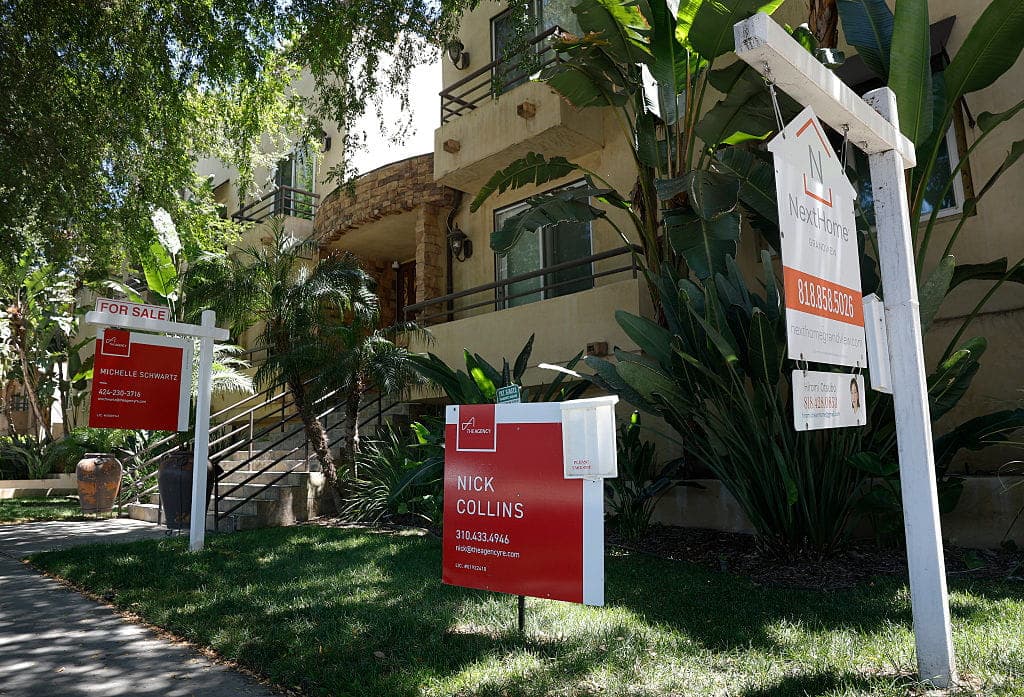

Affordability is at the center of the Republican Party’s chances of retaining the House and Senate in November’s midterm elections. Beef prices are high, gas is above $4, and diesel is adding to companies’ cost pressures. But while everyday Americans have plenty to complain about, one affordability issue is getting too little attention: the American Dream. Across the US real estate market, evidence suggests housing deflation is on the horizon, and the homebuying objective would be within reach tomorrow if not for the war in Iran.
Housing Deflation Data
For better or worse, studies show how important real estate wealth is to consumption, the largest driver of economic growth in the United States. Generally, the data show that households typically spend between three and seven cents of every additional dollar of housing wealth. When Federal Reserve Chair Jerome Powell warned in 2022 that pain was inevitable for consumers, he may have forgotten that millions of people bought homes with 3% mortgages. In other words, you cannot underestimate the consumer because of the wealth effect.
Lawmakers on both sides of the aisle promised to address housing affordability by moving ahead with the bipartisan 21st Century Road to Housing Act, which was enacted on July 11. The administration has aimed to subsidize demand through 50-year mortgages, mortgage portability, and purchasing billions in mortgage-backed securities. Bringing supply to the market takes time, and the only near-term solution is a drop in demand – and this could be happening.


Free with the Daily Briefing
85EssaysUnravel the Constitution
Hamilton, Madison & Jay’s complete case for America, free and searchable in the Publius Reader.
Free with the Daily Briefing. Unsubscribe anytime.
Lennar, the nation’s second-largest homebuilder, has cut home prices by 30% from the pandemic high of $511,000. The average net selling price of new orders these days is $359,000. The broader homebuilding industry has also slashed average prices in the double digits. Recent US government data show that the median sales price for new homes sold in July was $393,800, down almost 15% from the October 2022 peak of $460,300.
The resale market, however, has shown little improvement. Existing home prices continue to inch closer to around half a million dollars. You can thank the pandemic-era Federal Reserve for record-low mortgage rates, which created golden handcuffs and a lock-in effect. Additionally, most sellers are still demanding crisis-era prices.
At the same time, cracks could be forming in the real estate market, leading to some housing deflation – or, at the very least, housing disinflation.
The main factor is likely a mismatch between buyers and sellers. Redfin estimates that sellers outnumbered buyers by the highest margin on record, giving John Smith and his family an advantage in trying to break into the housing market. As a result, research indicates sellers are offering more concessions to prospective buyers, which could offer more savings.
Mortgaging the Future
For now, the main barrier to homeownership could be interest rates. Since the outbreak of the war in Iran, now nearing the seven-month mark, borrowing costs have gone through the roof. The ten-year benchmark Treasury bond yield is at 5%, the highest since 2023. The 30-year yield is approaching 5.4%, the highest in almost 20 years. Several factors are at play, but fears of conflict-driven inflation have contributed to the surge.

Because the mortgage market generally tracks the ten-year Treasury yield, rates on home loans have gone up. The average fixed interest rate on a 30-year mortgage is above 7% for the first time in more than a year, a far cry from below 6% before the war.
In the four weeks ending Sept. 13, the median monthly mortgage payment is $2,633, up 3.4% year-over-year, according to Redfin.
"There's no guarantee about where we'll go from here, but common themes remain important. These include big-ticket economic data and oil price volatility relating to Iran war developments," Matthew Graham, COO at Mortgage News Daily, said in recent commentary.
With the Federal Reserve penciling in one more rate hike at either the October or December Federal Open Market Committee (FOMC) policy meeting, yields could inch higher again.
Complicated Outlook
Is the American Dream so close yet so far away? The outlook is indeed complicated. But perhaps the US housing market is in the Goldilocks zone. Prices are neither skyrocketing nor collapsing, which might be something President Donald Trump is aiming for.
Hoby Hanna, CEO of Howard Hanna Real Estate Services, summarized the situation in comments to Yahoo! Finance:
"We're not heading toward a housing crash; we're in a market correction defined by stability, not volatility. Today's housing environment is fundamentally different from 2008. Homeowners have record levels of equity, lending standards are sound, and inventory remains constrained. What we're seeing now is a normalization, not a collapse, as the market adjusts to new economic realities. For buyers and sellers, this is a market filled with opportunity and resilience, not instability or uncertainty."
For now, a dose of housing deflation could be traversing the real estate industry.