
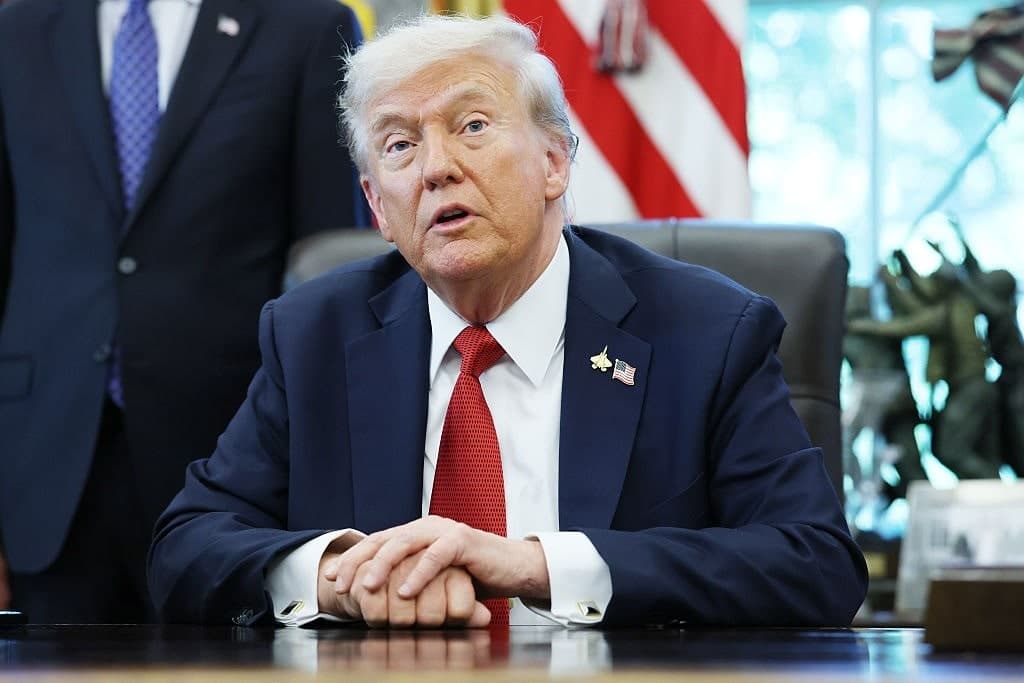

When President Donald Trump stepped to the podium on Liberation Day and unveiled a chart of sweeping tariff rates on much of the world, economists immediately rushed to their economic models. Their conclusion? They declared that a Trump recession was imminent. It has been several months since the historic April 2 announcement, and despite a 0.5% contraction in the first quarter amid a shift in global trade, the US economy is running full steam ahead.
Where’s the Trump Recession?
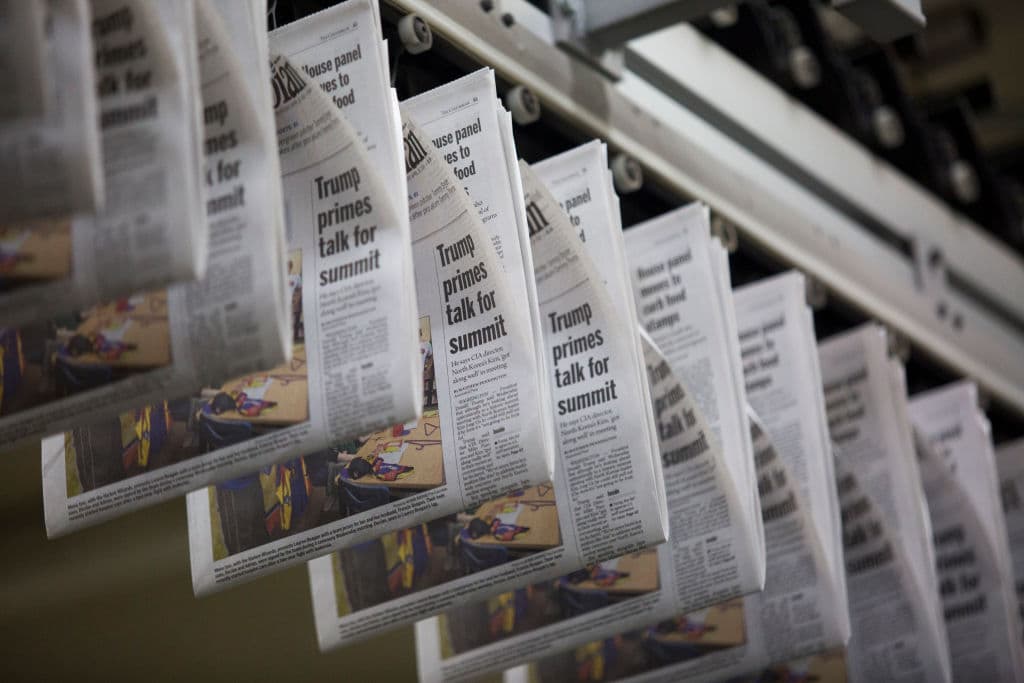
In the weeks after Trump unveiled the contours of his plans to overhaul international trade, the mainstream media prognosticated a meltdown. Let's hop into the time travel machine and look at some of the headlines:
CNN: "Donald Trump's tariffs could push the world into recession."
NPR: "U.S. economy shrinks as Trump's tariffs spark recession fear."
MSNBC: "50/50 Into a recession."
ABC News: "Trump's trade war sparks recession fears."
The Hill: "JP Morgan predicts 2025 recession as Trump tariffs rattle market."
Some experts paid a visit to CNBC and Bloomberg to plead with the Federal Reserve to start cutting interest rates, fearing the sky would not fall. Banks raised their recession forecasts. Progressive lawmakers already planned some depression-esque headlines for their allies in the press.
Liberty Nation News, one month before Trump showcased his trade agenda, wrote about the "coming paper recession." Rather than relying on the government for growth, the current administration may implement policies that reprivatize the economy, which could have led to a short-term Trump recession.
Now that we are at the halfway mark since the springtime liberation, is everyone still panicking on the streets? No – quite the opposite.
Examining the Data
After getting off to a rocky start, the gross domestic product (GDP) growth rate has been on fire.
In the second quarter, the GDP growth rate was 3.8%, driven by a sharp decline in imports and a rebound in consumer spending. A double-digit drop in imports mathematically bolsters the GDP since they are subtracted in the calculation. Personal consumption blossomed, particularly in services and durable goods.

Looking ahead to the July-September period, the Atlanta Federal Reserve’s GDPNow Model, a widely watched running growth estimate by the regional central bank, suggests a 3.8% expansion. The blockbuster growth is expected to be fueled by another increase in consumer spending, net exports, and nonresidential fixed investment, which are factors that the administration would want to see.
Once again, government outlays will account for a smaller slice of the projected final GDP reading, totaling 0.3%. By comparison, government spending accounted for 0.84% of the economy in the third quarter of 2024 and 0.73% in the third quarter of 2023.
It would not be surprising if comparable numbers were observed in the final three months of 2025. One reason is the momentum in capital expenditure, or capex, spending this year.
This past summer, Treasury Secretary Scott Bessent referenced the "capex comeback" as private-sector investments rocketed. Capex is a vital indicator of the economy's future, as it assesses companies' spending on purchasing, upgrading, or maintaining physical assets to ensure long-term productivity. In the first and second quarters, capital expenditures soared at an annualized pace of 23% and 11%, respectively, representing the first back-to-back quarterly boost in three decades. Market watchers expect another three months of capex growth, partly due to the One Big Beautiful Bill's 100% first-year depreciation for qualified assets.
Capex could remain the top signal for years to come as the country has attracted trillions of dollars in public and private investment at home and abroad. If even half of these commitments from tech giants, pharmaceutical juggernauts, and automakers come to fruition, the nation would continue swimming in cash.
While inflationary pressures have been gradually building, with the headline annual inflation rate rising to 2.9% in August, they have been modest at best and could peak by year’s end or early 2026.
The primary concern, however, is that the US labor market has been deteriorating rapidly. From the Bureau of Labor Statistics’ downward revisions to ADP’s back-to-back negative readings, employment conditions could erode from the current “low fire, low hire” environment at a fast and furious pace.
The best description of America’s current economy? Hot.
Economists Get It Wrong
Torsten Slok, chief economist at Apollo Wealth Management, presented a damning indictment of the economics profession. In an Oct. 1 note, titled "We in the Economics Profession Need to Look Ourselves in the Mirror," Slok opined:
"The consensus has been wrong since January. The forecast for the past nine months has been that the US economy would slow down. But the reality is that it has simply not happened … GDP growth in the second quarter was 3.8%, and the Atlanta Fed predicts that GDP in the third quarter will be 3.9%. Yes, job growth is slowing, but this is the result of slowing immigration.
"The bottom line is that the US economy remains remarkably resilient, and it is becoming increasingly difficult to argue that we are still waiting for the delayed negative effects of what happened six months ago on Liberation Day in April."
Will the United States eventually see the consequences of sweeping tariffs? Will consumers' wallets start bearing the brunt of levies? Can the US labor market reverse its deterioration once uncertainty dissipates? Perhaps. For now, Trumponomics is running like a locomotive through a crowd of economists.
.jpg&w=1920&q=75)
.jpg&w=1920&q=75)