
.jpg&w=1920&q=75)

Nineteen Federal Reserve officials, including Chairman Kevin Warsh, will sit behind closed doors at the Eccles Building for two days beginning July 28. The mid-summer gathering will mark Warsh’s second meeting as head of the US central bank. While he promised a good old-fashioned “family fight,” monetary policymakers will agree that now is not the time for cutting interest rates, a reality that will not sit well with President Donald Trump.
On the Warsh-path to the Federal Reserve
Most investors expect the Fed to leave its benchmark federal funds rate unchanged this week within the current target range of 3.5% to 3.75%. In this economic environment – President Trump’s tariffs and elevated global energy prices – the playbook dictates that the century-old institution must cut through the noise and assess underlying trends.
Since the start of the Iranian conflict in late February, inflation has been surging, mainly due to rising crude oil and gasoline costs. June’s picture suggested conditions were stabilizing amid falling oil and gas prices. Then the United States and Iran resumed hostilities, and financial markets saw oil at $100 and gas at $4 again. Trump then declared Washington and Tehran would pause attacks, sending energy costs falling.
Suffice it to say, the inflation outlook is uncertain. But traders do not think a Warsh-led Federal Reserve will take any chances, with futures market data pointing to a September quarter-point rate hike as the base-case scenario.
Free with the Daily Briefing
85EssaysUnravel the Constitution
Hamilton, Madison & Jay’s complete case for America, free and searchable in the Publius Reader.
Free with the Daily Briefing. Unsubscribe anytime.
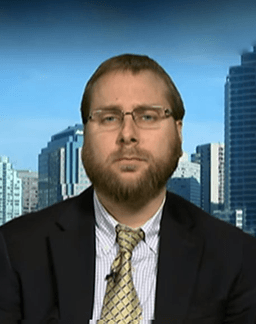
"That's how I think it's going to go," Jai Kedia, research fellow at the Center for Monetary and Financial Alternatives at the Cato Institute, told Liberty Nation News' Swamponomics TV. "It's a separate question from whether it's a good or bad decision, but that's how I think that's how it's going to play out."
Hawks and doves each present a compelling case for either pausing or hiking.
When Doves Cry
From a hawkish perspective, the Fed cannot risk another inflation revival. While core inflation, which strips out the volatile energy and food categories, has been tamer below 3%, the longer the conflict drags on, the greater the risks will be moving forward. A dovish camp contends that these are short-term factors and that rate hikes could derail the broader economy and adversely affect the “low-fire, low-hire” labor market.
Like his predecessor, it is a balancing act for Warsh. He is extremely bullish on the long-term disinflationary and potentially deflationary effects of artificial intelligence (AI), but the new central bank chief also acknowledges that events like “RAMageddon” and “chipflation” could create near-term price pressures on everyday consumer goods.
Another concern is that Warsh has yet to regain control over interest rates. Short- and long-term yields on Treasury securities have been surging. The ten-year is above 4.5%, and the 30-year has crossed the 5% mark. The two-year yield, which monitors Fed policy expectations, has risen almost 100 basis points this year to around 4.3%.
“You see essentially bond markets across the board have been rising in interest rates the whole year, even though the Fed hasn't done anything,” Kedia said. “At some point, something has to change, and you're going to have to see the Fed catch up. September seems a more likely time for me.”
The post-meeting statement may not provide much information, as Warsh has declared an end to forward guidance. The 2:30 p.m. press conference on July 29 might not signal anything other than the Federal Reserve being dependent on the data. His keynote address during the August trip in Jackson Hole might not provide much insight either.
From Liberty Nation News, Trivia, Facts, Check Us Out
Stay informed.
Today’s news, the Constitution and American history, written for young readers.
Visit GenerationLiberty.com
News, Trivia, Facts, Check Us Out
Stay informed.
Today’s news, the Constitution and American history, written for young readers.
Visit GenerationLiberty.com
In the end, market watchers and economists can only comb through economic data to gauge the Fed’s next policy action, and Warsh may not want it any other way.
By mid-September, the Fed will have a couple of Consumer Price Index (CPI) reports, two non-farm payroll reports, and updates to the second-quarter gross domestic product (GDP) estimate. But will September spell the end of the conflict in the Middle East? That is the $64,000 question.
Independent Enough?
The fact that Wall Street is penciling in higher interest rates for the foreseeable future should put to bed the idea that Warsh is nothing more than a political tool. It was already a ridiculous assumption, considering that eleven other officials also cast a vote every meeting. Despite arguing for a lower-rate environment, President Trump has seemingly accepted that his nominee will deliver tighter monetary policy. His patience might wear thin the longer the Fed avoids rate cuts. Cue the nicknames on Truth Social.

.jpg&w=1920&q=75)