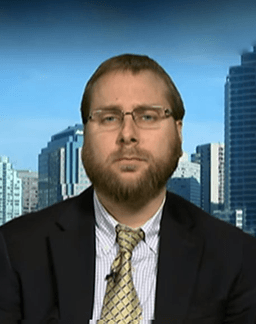

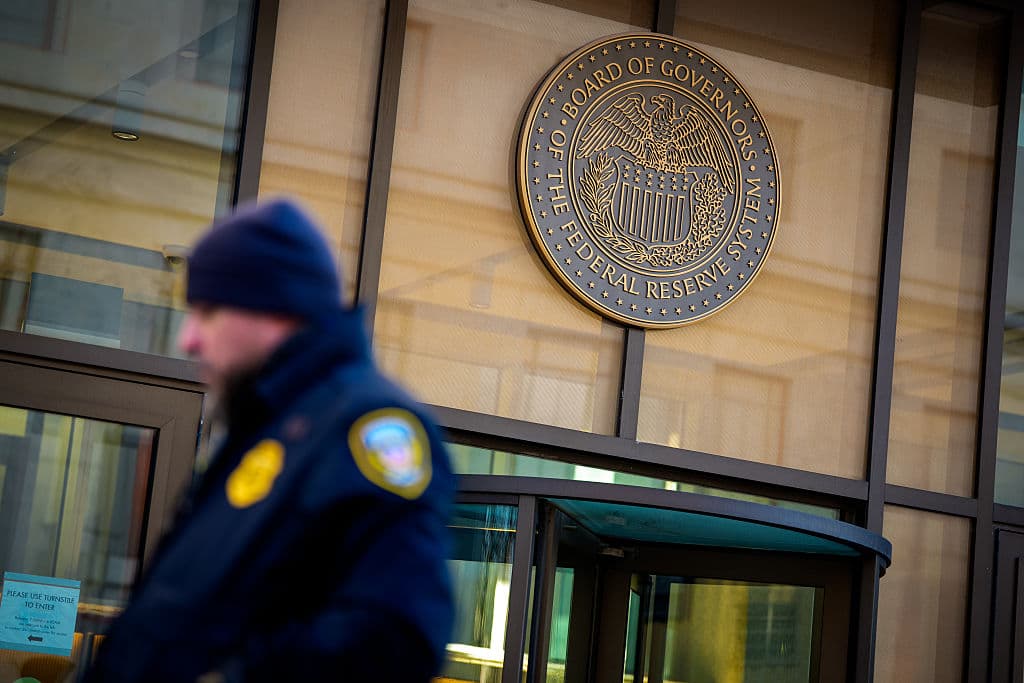

Kevin Warsh, President Donald Trump’s nominee to lead the Federal Reserve, correctly identified the US central bank’s culpability in Washington's deteriorating finances. By monetizing the debt through balance-sheet expansion and low pre-crisis interest rates, the Fed enabled politicians to pursue expansive fiscal policy. A hawkish stance may not put the genie back in the bottle, and the doves will gather an army to ensure the punch bowl remains spiked.
Fiscal Policy at the Fed
The Federal Reserve does not talk about fiscal policy, says Chair Jerome Powell. The Eccles Building focuses on its congressional mandate of maximum employment and price stability, as well as on bank supervision and other mission-creep endeavors. But while Powell has agreed that the federal government’s fiscal position is on an unsustainable path, monetary policymakers have refrained from corrective action. It’s like the weather: Everybody talks about it, but nobody does anything to fix it!
This statement helps mask the fact that the Creature from Jekyll Island keeps subsidizing Uncle Sam’s shovel used to dig its own financial grave.
Quantitative easing (QE) was the first tool employed during the global financial crisis 20 years ago. The Frankenstein-esque program consisted of purchasing vast amounts of US Treasury securities. The idea was to create artificial demand for government bonds, thereby lowering yields and reducing interest costs.
Today, the Fed’s balance sheet stands at approximately $6.61 trillion, down from the post-pandemic high of nearly $9 trillion. To put this into context, its public ledger was around $800 billion before the Great Recession and $4.8 trillion before the public health crisis. In other words, there is no going back to the days of a conservative monetary policy.
Interest rate policy, of course, has been the go-to weapon of choice for US officials. Before the Fed launched its quantitative tightening (QT) cycle in early 2023, the central bank kept interest rates at 0% (they had already been artificially low prior to the coronavirus crisis). This made borrowing cheaper and placed less budgetary pressure on administrations and lawmakers.
While it might seem counterintuitive, Warsh could lower rates as he shrinks the balance sheet. If the Fed is no longer in a permanent emergency mode and turns off the spigot, inflation expectations could decline, and long-term yields could join. Additionally, a smaller balance sheet would shrink excess reserves, distorting money-market pricing and pushing up the term premium.
If the monetary authorities walked away from the scene of the crime and refrained from tampering with the evidence, the US government would be forced to stop spending, interest rates would rise, and the death spiral would begin. Instead, the Fed continues to subsidize current fiscal policy in the nation’s capital.
Growing Pains
President Trump and his administration insist that the United States can grow its way out of the fiscal crisis. To his credit, Warsh is just as optimistic, arguing that the country is on the cusp of a productivity boom and disinflationary growth, as the data show.

Labor productivity rocketed in the second and third quarters, while the gross domestic product has been above 4% during the same span (fourth-quarter growth is shaping up to be 5%). For the first time in years, the deficit-to-GDP ratio fell below 6% in 2025, and Treasury Secretary Scott Bessent aims to bring it down to 3% by the end of Trump’s tenure.
If the objective is to grow the economy faster than the national debt, this could be a Sisyphean or Herculean endeavor. A $39 trillion debt, a $2 trillion budget deficit, $1 trillion in interest payments, and trillions in unfunded liabilities and expenditures are factors the Fed should be considering in its calculus, despite shrugging off fiscal policy.
On the one hand, lowering interest rates will keep blowing the bubble. On the other hand, leaving rates above the neutral territory could weigh on employment conditions, stifle growth prospects, and facilitate Washington’s sky-high debt-servicing payments.
Suffice it to say, it will not be easy for Kevin Warsh.
Paging Paul Volcker
When former Fed Chair Paul Volcker came to town, he forced the entire nation to swallow its medicine. The prescription? Substantially high interest rates. Even if he rose from the dead, nothing would – or could – be changed without causing a trail of destruction. Warsh wants to bring reform to the Federal Reserve, something the 113-year-old entity badly needs. But if his agenda is implemented, he might create some enemies along the way, including the president.