


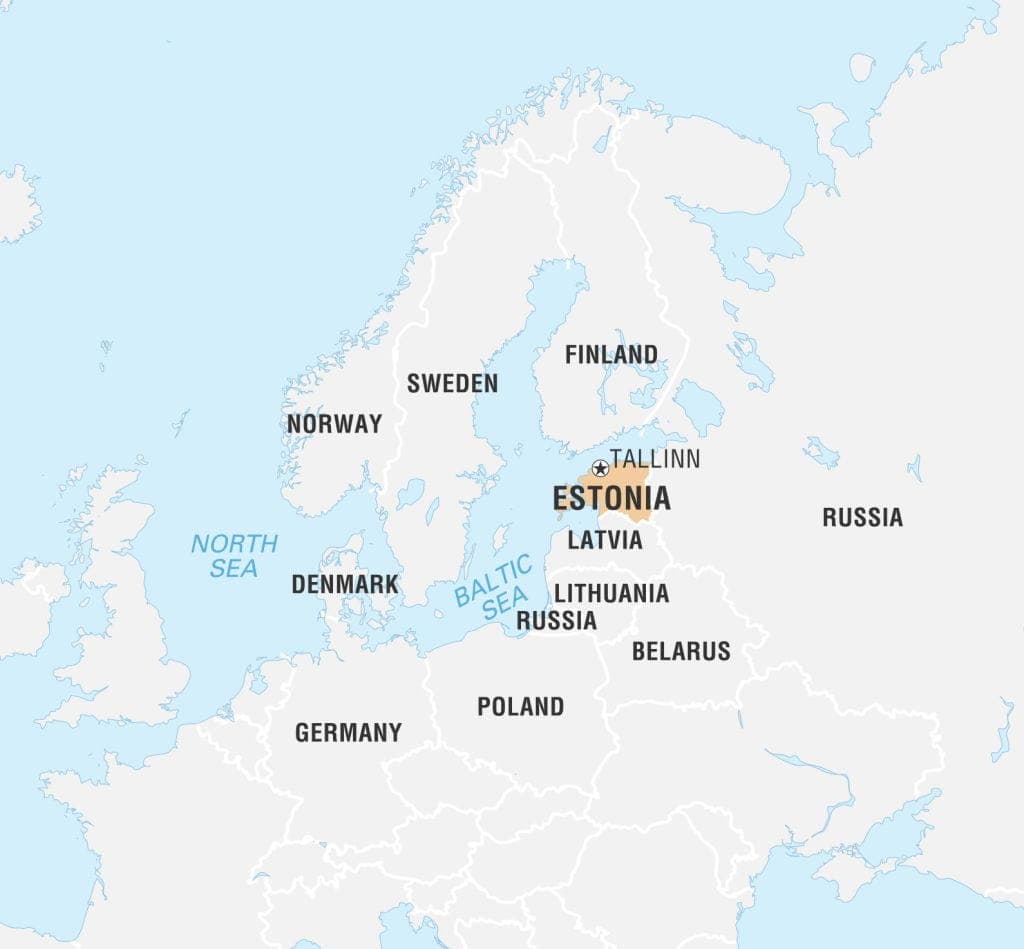

Poland and the Baltic States of Lithuania, Latvia, and Estonia believe they are the targets of Russian hybrid warfare. Russia is, in fact, at war with these countries, each of which has an eastern border ripe for an invasion similar to that which took place in April 2014 in the Ukrainian Donbas region and Crimea. Prior to the unprovoked invasion of Ukraine by Kremlin troops in February 2022, Russia carried out a campaign of disinformation, sabotaging Ukrainian infrastructure and cyberattack operations.
Hybrid Warfare Daily Routine for Baltic States
As is the case in Ukraine, where hybrid or asymmetric warfare is a daily condition, the Baltic States and Poland are experiencing attacks routinely. Hybrid warfare is different from kinetic battlefield conflicts. This brand of attack uses different weapons – different, but no less effective. Cyberattacks replace artillery, disinformation campaigns replace tanks and armor, and near-daily GPS jamming that affects civilian and maritime traffic is substituted for cruise missiles. Instead of troops and tanks, Russia pushes illegal immigrants across neighboring borders.
According to Crisis24.com, a private-sector intelligence analysis firm, “Sustained Russian hybrid operations in the Baltic States will continue to occur at a steady rate in the coming months, increasingly driven by structured proxy networks and kinetic sabotage.” Some believe hybrid attacks from Russia are imminent. The Associated Press, in a July 15 report, explained:
“Lithuania’s president [Gitanas Nausėda] said Wednesday [July 15] that intelligence assessments suggest that Russia is planning potential attacks on critical infrastructure in the Baltic states or Poland. President Gitanas Nausėda said that authorities were monitoring the risk of attacks that could disrupt the country’s energy and transport systems, including facilities supporting Lithuania’s connections with the European electricity grid.”
The AP observed others believe that as Ukrainian operations against Russia become increasingly more effective, Moscow might turn its aggression against NATO’s eastern borders. “Latvian President Edgars Rinkēvičs similarly warned on Wednesday [July 15] that, with Ukraine increasingly effective at putting pressure on Russia, Moscow might respond with provocations against NATO’s eastern flank,” according to the AP. For the Kremlin, such an attack would have consequences that Russia may not be ready for. An overt assault by Moscow on any NATO country could, and probably would, prompt a NATO Article 5 response. Article 5 of the NATO charter states that an attack on one NATO country is considered an attack on all NATO countries. With Russia’s attention focused on its unprovoked invasion of Ukraine, taking on NATO would be more than it could handle. However, Russia has continued to push the envelope of hybrid warfare.
Russia Weaponizing Illegal Migrants
The Polish government has reported that Russia, with Belarus acting as an accomplice, has weaponized illegal migrant crossings at locations along the 324-mile border with Belarus. The point is to flood Poland with African and Middle Eastern migrants, which Poland has described as hybrid warfare. Ambassador Krzysztof Olendzki of Poland’s Foreign Ministry told Fox News Digital: “We are at war…We cannot see it as a classical war with soldiers, with tanks and so on, but the war is exercised by our adversaries, by Belarus and Russia, who are using practically migrants [sic] as an asymmetric weapon against NATO countries.”
What Russia’s hybrid aggression against its neighbors has done is move them to be prepared. Poland, for example, has increased its defense spending in NATO to nearly 5% of GDP. The Baltic States have begun accelerating construction of a Baltic Defense Line that includes bunkers, anti-tank ditches, trenches, monitoring systems, and counter-mobility obstacles along their borders with Russia and Belarus. As Poland’s foreign minister explained, the Baltic States and Poland are at war. Just because the fighting does not look like conventional combat does not mean the consequences are not impactful for those on the receiving end.
~
The views expressed are those of the author and not of any other affiliate.


.jpg%20noncitizen%20voting&w=1920&q=75)
.jpg%20Hillary%20Clinton&w=1920&q=75)