


The American Dream is turning into a nightmare for many as the rising costs of college, homeownership, and childcare — in addition to sluggish wage growth —push the milestone further out of reach.
New analysis from Investopedia revealed that the American Dream’s lifetime price tag increased 4.1% from 2025 to 2026, rising from $5.11 million to $5.32 million. To make matters worse, private sector wages and salaries increased by just 3.1% over roughly the same period, according to the Bureau of Labor Statistics.
Home Prices — Devouring the American Dream
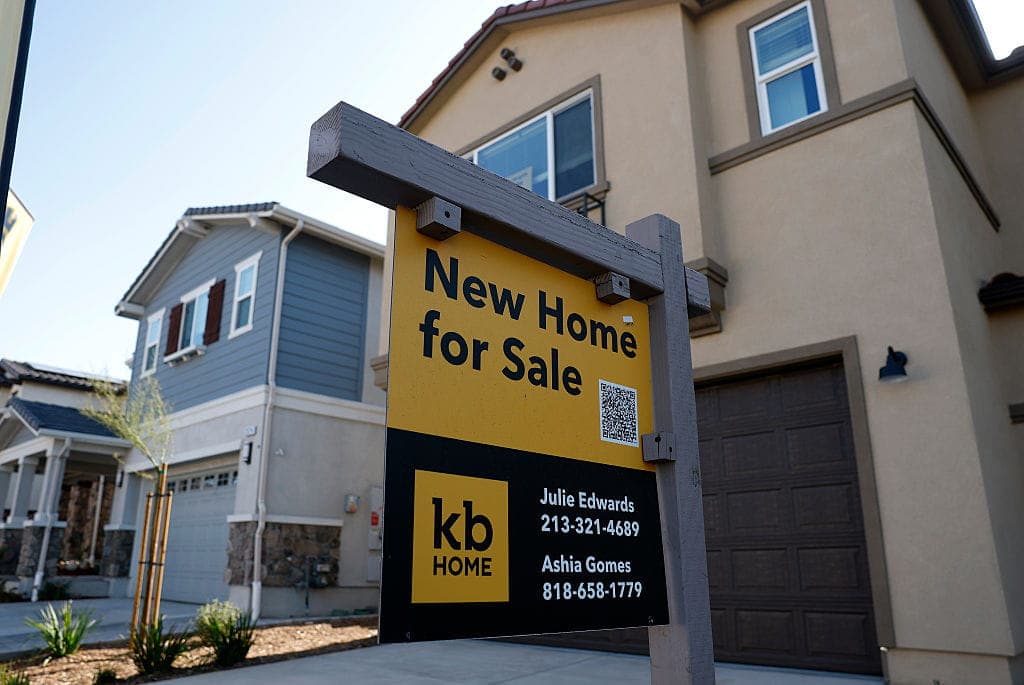
The rising cost of the American Dream can be attributed in large part to the soaring price of homeownership, which added more than $91,000 to the estimated lifetime cost. In 2025, owning a home was projected to cost $1.184 million over one’s life. That number has since jumped 7.7% to $1.275 million.
So, where does all that money go? “The median price for a single-family home ran more than $420,000 over the 12 months through August, and a 30-year mortgage averaged 6.32%,” Investopedia’s report explained. “A 20% down payment plus 30 years of paying principal and interest totals roughly $837,000, or nearly twice the purchase price.” Throw in property taxes, insurance, upkeep, and utilities, and the homeownership price tag increases by another $438,000.
The high cost of homeownership appears to be changing how Gen Z defines success. According to a new Entrata survey, Gen Z renters were the only generation to rank investing as a greater sign of success than owning a home.
Kids and College
Between 2025 and 2026, the cost to raise two children and send them to college rose almost 9% to $953,763. The bulk of that amount — just over $700,000 — goes toward raising the children through age 17, taking into consideration additional housing, transportation, food, and taxes in a two-adult household.


Childcare accounts for a significant chunk of that expense. According to Child Care Aware of America, parents paid an average of more than $13,000 per child per year for daycare centers in 2025. The cherry on top? It costs nearly a quarter of a million dollars to send two children to an in-state public university.
"Parents don't need a report to tell them raising kids has gotten more expensive, because we have been living it," certified financial planner Ashley Feinstein Gerstley told "Good Morning America" earlier this year. "Families feel it most in housing, in childcare and at the grocery store."
Is the American Dream Dead?
Americans are divided on the state of the American Dream. Just one in three Americans still believes that hard work is enough to get ahead in life, according to an AP-NORC survey conducted earlier this year. Half believe the American dream was once attainable but is no longer a reality, while just 15% say it was never achievable in the first place.
The survey noted that Americans’ “views of the American Dream are closely tied to how they see their own economic prospects.” That's hardly surprising considering how closely financial stability is tied to the milestone. But the American Dream has survived economic hardships before, from the Great Depression to the 2008 financial crisis, so now the question is whether Americans have lost faith in the dream itself or simply their individual ability to achieve it.