
.jpg&w=1920&q=75)

As Americans gather to celebrate the nation’s 250th anniversary, partisan divisions will fade as patriots both red and blue join in celebrating the blessings of the remarkable feats of the nation. The Founding Fathers had doubts that their new political experiment would last so long, but their dream of a thriving Republic has persisted despite many challenges. Still, partisan strife has increased in the United States in recent decades.
Defining the American Dream
A persistent theme for the founders in crafting this new American Republic was how to protect the rights of the individual, including rights to representation in government, while also shielding the fledgling society from the ugly specter of the “demos,” or pure majoritarian rule. Those who created the structures of the US Republic strove not to “protect democracy” but to “protect We the People from the horrors of democracy.”
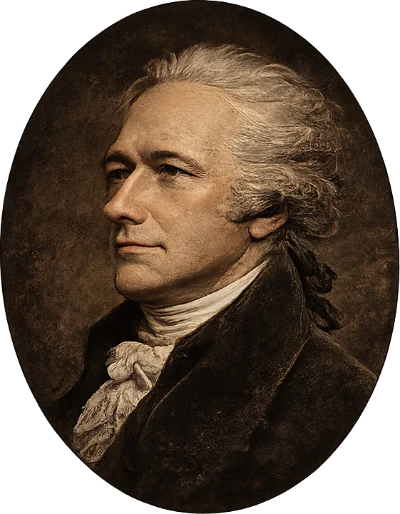
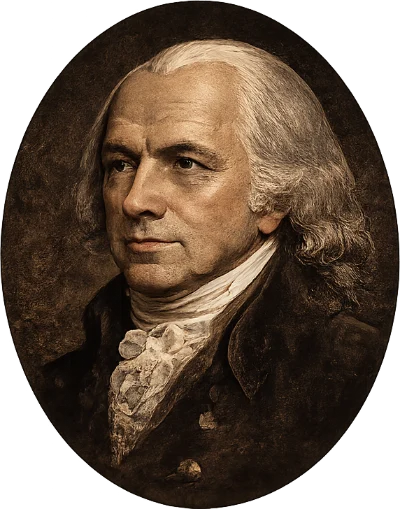
This is suggested by Benjamin Franklin’s famous remark about the new government he had helped forge. When asked on September 17, 1787, about what form of government the Constitutional Convention had created, Franklin reportedly said: “A Republic, if you can keep it.” The second part of the sentence implies a necessary stewardship.
The American dream is not about owning a suburban home with a garage and a lawn; it is about the liberty to speak, travel, worship, vote, and act freely. However, those freedoms came at a cost and must be vigilantly guarded against forces that would deny or abridge them if able. And the entire bargain was forged in bitter conflict.
The Art and Challenge of Compromise
Americans have always managed to compromise despite sometimes mercurial internal socio-political conflicts. During the American Revolution, a majority of colonists were initially undecided, and an estimated 20% were British loyalists who swore fealty to the king. These internecine tensions were extremely bitter, tearing families apart and spurring migration. Tens of thousands of loyalists left America following the American Revolution, many to Canada. Poor Richard suffered from these intensely competing worldviews: His son, William Franklin, a governor of New Jersey and Loyalist who supported the British during the war, reportedly rarely or never spoke to his father following the revolution.
This fabric of unity, despite often very divergent views, is part of what has made America great – and diverse in bloodlines, cultures, talents, and ideas. The nation even survived a bloody Civil War that pitted brother against brother and claimed hundreds of thousands of lives.
America’s 1976 bicentennial celebrations were also clouded by misgivings about the nation’s future and direction. A series of shocking assassinations, including John F. Kennedy, Jr. and Martin Luther King, Jr., had shaken the nation to its foundations in the 1960s. The hippie generation was challenging family mores and experimenting with drugs, creating cultural strain that persists today. Tension over the Vietnam War had ripped families apart and sparked domestic violence. And, of course, the Watergate scandal was a fresh wound on a battered Republic.
Rising Partisan Polarization
Since the 1990s, the political tension in the United States has grown more intensely polarized. Each side blames the other for events and societal problems. Americans see the same events from diametrically opposed views: e.g., Renee Good, Alex Pretti, Karmelo Anthony, January 6th, open borders, the Iran War, and numerous US Supreme Court decisions.
The American dream was never about money. On the contrary, twentieth-century materialism, deteriorating moral cohesion, and reckless public spending are destroying the underlying social contract that held the nation together through past conflicts and crises. The US was founded, profoundly, in Judeo-Christian concepts without which it cannot survive.
From Liberty Nation News, Trivia, Facts, Check Us Out
Stay informed.
Today’s news, the Constitution and American history, written for young readers.
Visit GenerationLiberty.com
News, Trivia, Facts, Check Us Out
Stay informed.
Today’s news, the Constitution and American history, written for young readers.
Visit GenerationLiberty.com
British author Os Guinness has attributed the success of the American experiment to what he calls “the Golden Triangle of Freedom.” Professor Guinness maintains that the interdependent relationship between virtue, faith, and liberty forms a self-sustaining cycle in which true freedom requires virtue, which requires faith, which requires freedom to flourish. If any one pillar of this triangle is interrupted, a free Republic begins to decay.
Perhaps Americans cannot keep their Republic, as admonished by Franklin, if they abandon virtue in pursuit of ease, faith in pursuit of hedonistic excess, and freedom in the folly of Marxist destruction. Secular humanism and fake science have become the established religions of the corrupt state. “Christian nationalism” (vaguely defined) is a pejorative slur against those who acknowledge the plain fact that the country was built by mostly Christians on Christian values. Political violence is rising while conventional violent crime declines.
A Future Celebration?
In this socio-political climate, the view toward America’s tricentennial celebration is hazy and distant. Will the dream of the founders continue and the golden triangle rebound?
A Marist poll conducted in April of 2024 found 47% of Americans believed another US civil war was likely in their lifetimes. A November 2025 poll from the Leadership Conference on Civil and Human Rights found the number of respondents who believed the nation was on a path to another civil war was at 59%, suggesting the nation’s political strife is steadily increasing.
As the nation struggles with socialist narratives, rampant fraud in federal programs, dubious voting systems, and shady abuses by Deep State agencies, that golden triangle and its direct connection to the dream of a Republic that would endure is ever more evident. The founders were concerned that mob democracy would result in a barbarian demos that would employ violence to get what it could not win by persuasion or common sense. Keying Teslas, burning buildings, applauding murders, demanding reparations and state benefits, and other similar tantrums are the symptoms of a society moving into entropy and decay, not unity and mutual respect.
It is a blessing and perhaps a miracle that the United States of America has endured for 250 years. Americans will commemorate their wonderful republic again in fifty years… if they can keep it.