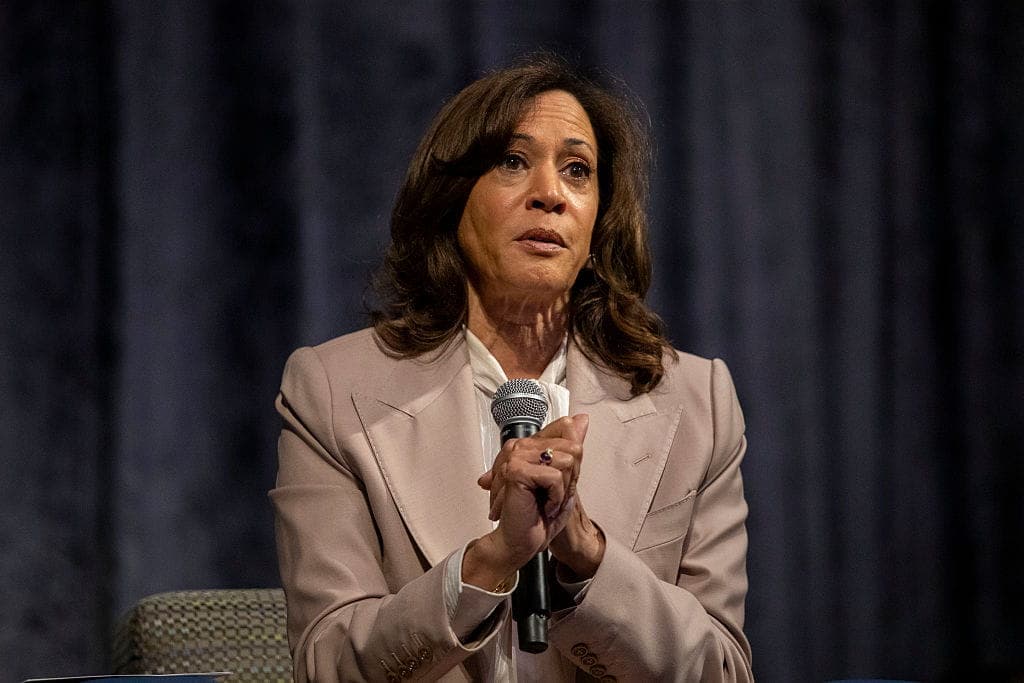



Vice President JD Vance has been gradually assembling his 2028 election campaign. His message appears to be simple enough: Ensure the government provides you with a good life. On the surface, this might sound like populist grandstanding that more traditional Republicans would call socialist. Based on polling that shows growing bipartisan support for government price controls, however, it might be a winning stance heading into the next presidential contest.
Everyone Likes Price Controls
A new CBS News-YouGov poll released over the weekend found growing approval across party lines of the government establishing price controls. Here is a breakdown of support:
· Democrats: 75%
· Independents: 62%
· Republicans: 54%
The data were shared on X by pollster Frank Luntz, garnering widespread mockery. While politicians and bureaucrats have implemented price controls, they have never worked anywhere at any point in time. But the sentiment behind the position makes sense.
Sixty percent of respondents said the way the current economy is structured makes it unfair to get ahead. Fifty-three percent of young Americans (18 to 44) say their generation is worse off than their parents'. The overwhelming majority (73%) say the income gap between the wealthiest Americans and the middle class is "increasing."
Free with the Daily Briefing
85EssaysUnravel the Constitution
Hamilton, Madison & Jay’s complete case for America, free and searchable in the Publius Reader.
Free with the Daily Briefing. Unsubscribe anytime.
Recent social media discussions surrounding food prices and $20 burritos have highlighted how much Americans despise inflation. Despite President Donald Trump’s promise to vanquish inflation from the economy, prices are still running firmly above the Federal Reserve’s 2% target – and the GOP could pay dearly for this during the midterm elections.
Liberty Nation News' Public Square figures show that President Trump's approval ratings on the economy and inflation are 35% and 29%, respectively. Democrats also hold a six-point lead over Republicans on the question, "Which party would you vote for in Congress?"
So, are price controls the answer to the current generation’s affordability challenges?
Putting a Glove on the Invisible Hand
Voters mocked former Vice President Kamala Harris in 2024 when she proposed government price controls on groceries nationwide. It was not a serious idea, and Americans cackled the idea away. Two years later, more people are cozying up to caps, even as the legendary economist Ludwig von Mises repeatedly articulated that it is impossible for the government to set prices.
What makes the free market a beautiful thing is that businesses, consumers, and producers communicate without anyone saying a word to each other. This is done by relaying the price dynamics of supply and demand. Or as Mises wrote in Human Action:
“Prices are by definition determined by peoples’ buying and selling or abstention from buying and selling. They must not be confused with fiats issued by governments or other agencies enforcing their orders by an apparatus of coercion and compulsion.
“Prices are a market phenomenon. They are generated by the market process and are the pith of the market economy. There is no such thing as prices outside the market. Prices cannot be constructed synthetically, as it were.”
Observers will typically think of food as a prime example of government price controls. But this can be applied to a broad array of goods and services, whether rents or childcare – both of which are currently in short supply. When politicians suffocate supply and subsidize demand, you create shortages and sky-high prices.

The vast number of inputs into any given product or service makes setting prices and facilitating a smooth environment unattainable, unworkable, and unreasonable. A common example would be milk: whole, 1%, 2%, homogenized, organic, lactose-free, protein-rich, and the list goes on. Beyond the beverage, you would have to consider the supplier, packaging, labeling, regulations, shipping, retailing, and point-of-sale.
Despite astronomical resources at its disposal, cities cannot maintain roads, states cannot build trains, and Washington cannot balance a budget.
Vanceonomics
From equity stakes to protectionism, the current administration has adopted many positions that fly in the face of Republican orthodoxy – at least in theory. This leaves pro-market voters in a bind come 2028. At the same time, for those considering big-government candidates, there is a buffet of choice on either ticket.