
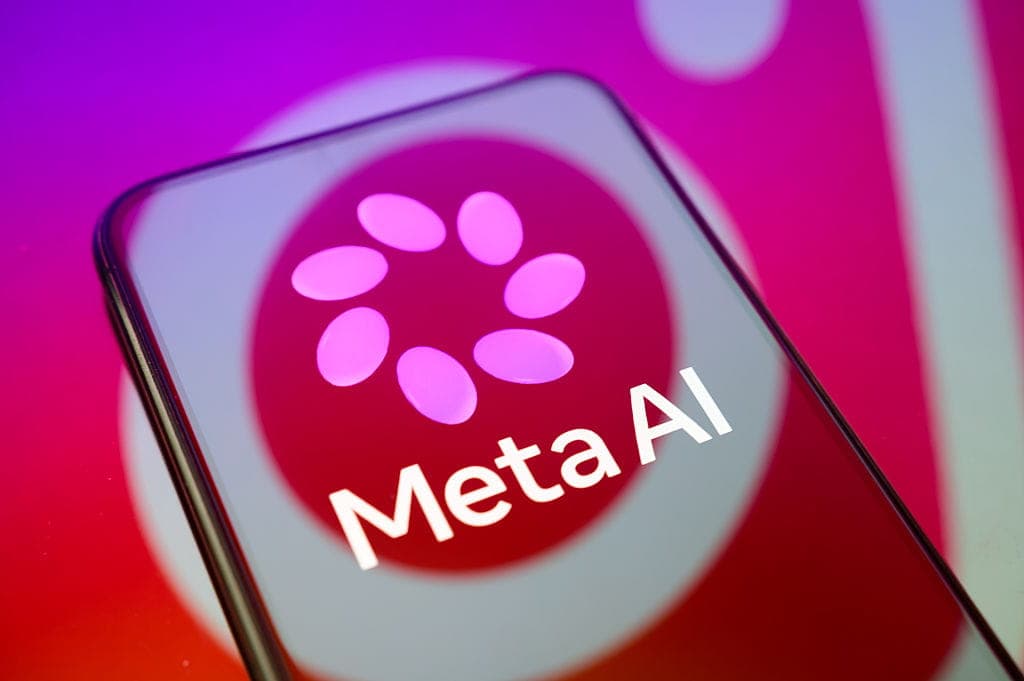

Imagine scrolling through social media, and you come across an image of you in Tahiti, but you’ve never been there. Or you find yourself introducing at a party, although you have no knowledge of the event. It could happen to you, at least with Meta AI and its new program that allows people to use your images from Instagram – and here’s the kicker, you wouldn’t even be notified. Thankfully, the social media giant realized its mishap – after a huge backlash – and shut down the program. But the fact that such artificial intelligence is available is a cause for concern.
AI Selfie Concerns
The new, now-defunct model called Muse Image allowed anyone to use any Instagram public profile without the account holder’s knowledge. Profiles were automatically opted in to the program, and to get out of it, users had to go through a bit of a convoluted process – that’s if they even knew about it.
“Whether you want to design a custom event invitation, mock up a collaborative creative concept, or generate a personalized graphic, tagging a username lets Meta AI use public photos to build a visual that’s ready to post,” reads one of Meta’s announcement blogs.
Thankfully, the new program didn’t even last a week before it was removed after social media posts and warnings from individual users and Hollywood complained. The Screen Actors Guild-American Federation of Television and Radio Artists got involved and urged its members to change the settings on their Instagram accounts to protect their images and likeness.
“Our intent was to provide a useful creative tool and to give people control over whether their public content could be referenced in this way,” Meta declared in a statement. “We’ve heard the feedback that this feature missed the mark, so it’s no longer available.”
However, nothing has been released about what happened to the images and information the program obtained before it was shut down.
Privacy Issues
While AI can be useful, it can also create privacy issues. If you think your private images and such are safe, think again. Most companies require you to opt your account out of AI training, such as with Google Search, which now stores media uploads that it claims are for training purposes. If you don’t toggle the switch, you are automatically “enrolled.” And most people aren’t even aware of the policy or that they need to adjust their controls to get out of it.
Unfortunately, this isn’t a new thing. A 2024 article by The Verge, titled “Meta fed its AI on almost everything you’ve posted publicly since 2007,” talked about the practice of using people’s images and posts to further train artificial intelligence. Since it’s been going on for nearly two decades, there’s likely a lot of information taken from account holders without their knowledge, since you can’t get back anything that’s already been collected and can only prevent future scraping.
“The truth of the matter is that unless you have consciously set those posts to private since 2007, Meta has just decided that you will scrape all of the photos and all of the texts from every public post on Instagram or Facebook since 2007 unless there was a conscious decision to set them on private,” Australian Sen. David Shoebridge said during an inquiry at the time.
Artificial Intelligence From Beyond the Grave
Another new program that is truly fantastic or extremely disturbing, depending on your view, is the ability to use AI to bring the dead to life in videos and other images. We’ve seen this type of artificial intelligence used in movies, such as the technology that inserted the late Carrie Fisher in Star Wars: The Rise of Skywalker and the late Harold Ramis in Ghostbusters: Afterlife. But now, similar tools are available to the public, but they are not being used only to create entertainment; instead, South Koreans are resurrecting loved ones.
Some have used it to have the dearly deceased talk at their funerals or celebrations of life. Others have used the AI program to “speak” to relatives. Some praise it, saying it gives the grieving an opportunity to say goodbye or just feel close to the person. But others warn it is an ethical concern as well as interfering with the painful but necessary grief process.

“It’s a double-edged sword, as it deals with human emotions,” Yong Man Ro, an AI expert at the Korea Advanced Institute of Science and Technology, told AP. “As AI technologies become part of people’s lives, they can also bring about cultural experiences and shocks that we have never experienced.”
Choung Wan, emeritus professor at Seoul’s Kyung Hee University Law School, warned of mental health consequences. “Psychologically, a healthy mourning involves a process to acknowledge the absence of the deceased and pass through the pains of their losses. But speaking with an AI system simulating a living person could undermine the process of accepting deaths and rather cause a negative effect of leaving bereaved families trapped in a fantasy.”
Still, the afterlife aspect is gaining traction. Sharon Osbourne said during a Las Vegas event, “Elvis died 50 years ago, and everybody knows Elvis. I just want that for Ozzy.” The family is working on an AI version of the Prince of Darkness that will allow fans to speak with him.
Meta may have pulled the plug on Muse Image after public outrage, but the technology hasn't disappeared. AI is advancing far faster than the laws designed to protect privacy, identity, and consent, making it a genuine concern for today and beyond.

.jpg&w=1920&q=75)