


In 1963, President John F. Kennedy said: “Simple justice requires that public funds, to which all taxpayers of all races contribute, not be spent in any fashion which encourages, entrenches, subsidizes, or results in ... discrimination.” He was discussing the bill that would become the 1964 Civil Rights Act. That vision became real for only 14 years before race-based discrimination was once again legal. From 1978 until now, it has been lawful to show bias against certain races and favor toward others if you call it affirmative action. That may all end soon.

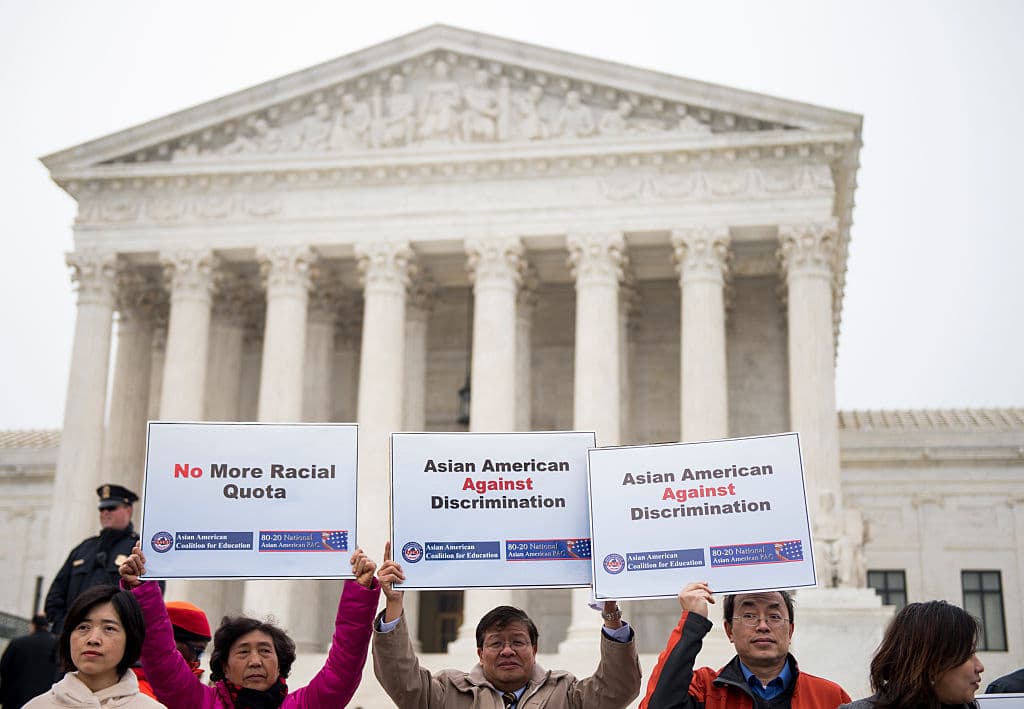
The Supreme Court will hear Students for Fair Admissions v. University of North Carolina and Students for Fair Admissions v. Harvard on Oct. 31. One of the stated questions the justices took the case to answer is: “Should this Court overrule Grutter v. Bollinger and hold that institutions of higher education cannot use race as a factor in admissions?” The 2003 Grutter ruling upheld the original 1978 case University of California v. Bakke, which allowed for racial discrimination despite the Civil Rights Act.
Whites and Asians Out
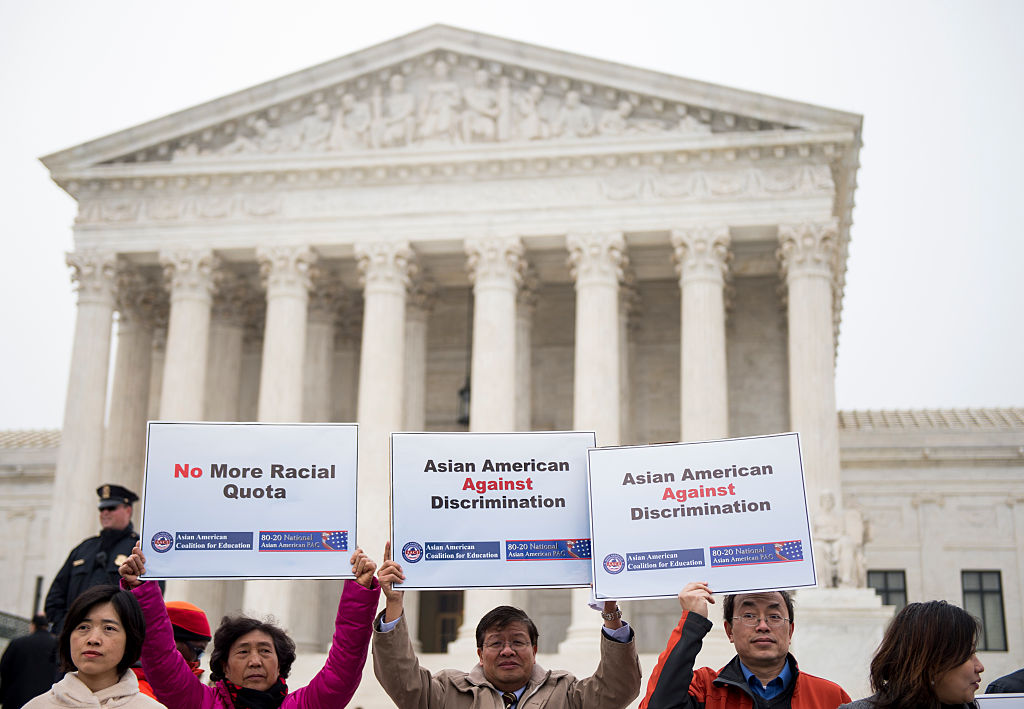
(Photo By Bill Clark/CQ Roll Call)
Allan Bakke was the wrong color -- white -- when he applied to medical school at the University of California, Davis, in 1973. Though he had an undergraduate GPA of 3.51 and did very well on the Medical College Admission Test (MCAT), scoring within the 97th percentile in the sciences, UC Davis wanted more black and brown people. So, Bakke’s dreams had to be sacrificed to create a more politically correct color palette of students -- just like the hopes of many Asian pupils today in higher education evaporate on the altar of racial politics.
The Supreme Court ruled in the Bakke case that holding a specific number of seats in a class for certain races was not okay but that “the goal of achieving a diverse student body is sufficiently compelling to justify consideration of race in admissions decisions.” That sentence from Justice Lewis Powell has fueled all manner of discrimination in higher education, and the advantage of being a preferred race has risen like inflation. It’s such a plus to be a preferred minority that, according to reports, “34 percent of white Americans who applied to colleges or universities admit to lying about being a racial minority on their application.”
The End of Affirmative Action?

Those who believe President Kennedy was right have been fighting against the ruling ever since. Students for Fair Admissions may have the best chance yet because of the composition of the Court, which now seems to favor those who would overturn Bakke and its legacy cases. Clarence Thomas is the only justice currently on the Court who ruled in Grutter v. Bollinger. His dissent was a thorough and passionate rebuke of affirmative-action policies that led with a lengthy quote from Frederick Douglass, who said in part:
“Do nothing with us! Your doing with us has already played the mischief with us. Do nothing with us! If the apples will not remain on the tree of their own strength, if they are worm-eaten at the core, if they are early ripe and disposed to fall, let them fall ... All I ask is, give him a chance to stand on his own legs! Let him alone!”
In upholding affirmative action with the 2003 Grutter decision, Justice Sandra Day O’Connor said, “The Court expects that 25 years from now, the use of racial preferences will no longer be necessary to further the interest approved today.” It has been a little more than 19 years since that case was decided.