


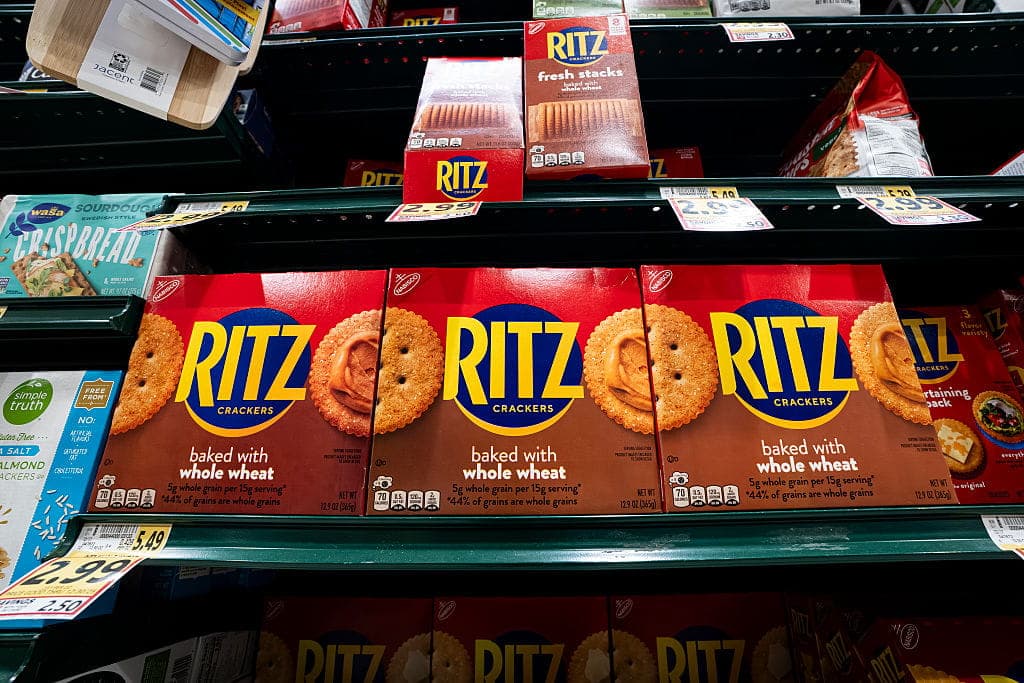

Modern American life has become ever more complex, a challenge that increasingly extends to food. Preservatives, colorings, flavor “enhancers,” and other additives have become ubiquitous on grocery store ingredient lists. As the Make America Healthy Again (MAHA) movement makes Americans more aware of what is lurking in their food supplies, the question of what food actually is, or should be redefined to mean, becomes more pressing.
MAHA and UPFs
Indeed, the term “Ultra-processed Foods” (UPFs) has become vogue, elevated into public consciousness by the controversial warnings of Robert F. Kennedy Jr. and his followers. Yet even that term is not clearly defined – the Health and Human Services Secretary is expected to announce a working definition imminently.
The Merriam-Webster dictionary defines food as “material consisting essentially of protein, carbohydrate, and fat used in the body of an organism to sustain growth, repair, and vital processes and to furnish energy.” This sensible summary served bygone generations, but the modern quandary is evident: Many processed foods are now “essentially” comprised of mysterious chemicals and fillers that do not fit within the enumerated categories of protein, carbohydrate, or fat.
Twentieth-century technologies created ever more processes and concoctions to fabricate the grocery store shelf offerings of things considered “food,” to which have been added many pesticide residues, microplastics, and phthalates that aren’t even ingredients but are absorbed during farming, processing, or packaging. At the same time, companies have captured regulatory agencies to deceive American diners about what they are putting into their bodies under the food moniker.
“Is It Safe?”
The US FDA uses a food approval system called GRAS, (Generally Recognized As Safe), which essentially allows industrial food producers to put anything they want in their wares so long as it is not proven harmful. This contrasts dramatically with regulatory frameworks in Europe and other nations, which require evidence of safety before human ingestion.

Many Americans will recall government messaging of the past that endorsed breakfast cereals as healthy, eggs and butter as dangerous, and red meat as a killer. The food pyramid was co-opted decades ago by corporate capture – margarine was far more profitable than butter, manufactured in a factory rather than a cow’s body, transforming unprofitable waste products into high-margin dinner-table “products,” encouraged by government fearmongering about heart attacks and cholesterol.
In revising the federal food pyramid, HHS Secretary Kennedy and USDA Secretary Brooke Rollins transformed dietary guidelines overnight. Americans long knew the government’s recommendations were bunk. Still, there is something refreshing and hopeful about hearing an administration say so out loud and begin taking steps to fix the problem. This parallels the Epstein files – everybody knew Jeffrey Epstein was a creeper catering to super-rich perverts: the real shocker is to see the usual cover-up unravel.
Searching for Meaning
Merriam-Webster also defines food as “something that nourishes, sustains, or supplies,” including, as an example, the phrase “food for thought.” Americans’ thoughts are increasingly occupied with food, much of which does not nourish or sustain a generation of obese and overweight people.
At least seven states have enacted laws to ban synthetic meats, responding to constituent demands unappeased by federal declarations that these lab concoctions are “safe.” The adversarial battle involved in food shopping requires labeling and laws to better protect families, especially children. Baby foods, bottled formula, and popular candies are commonly tainted with heavy metals and chemical residues – not very nourishing or sustaining.
A recent media hubbub concerned complaints by the grandson of the developer of Reese’s Peanut Butter Cups that the product has diverged from its origins. The company responded with soothing assurance:
“As we've grown and expanded the Reese's product line, we make product recipe adjustments that allow us to make new shapes, sizes and innovations that Reese's fans have come to love and ask for, while always protecting the essence of what makes Reese's unique and special: the perfect combination of chocolate and peanut butter,"
The Essence of Real Food
But consumers are increasingly aware that other “essences” may eclipse the palatability of such offerings. Reese’s Peanut Butter Cups now list dubious additives as ingredients, including dextrose (sugar made from corn or wheat), polyglycerol polyricinoleate (PGPR) (a common emulsifier), and the ubiquitous preservative Tertiary butylhydroquinone (TBHQ). Extending shelf life is a high priority for industrial food manufacturers, even if children’s lives are shortened.
As Americans closely scrutinize their food supply, manufacturers will have difficulty disguising their processes and unsavory practices (such as food additives that keep consumers eating when they are full). It is unsurprising that HHS Secretary Kennedy and his staff face a difficult challenge in defining what UPFs are, as modern food production has become a frustrating labyrinth to navigate for even the savviest shopper. But the effort is overdue, and the announcement will push the healthy food envelope one step closer to public school meals and SNAP beneficiaries’ larders.
Yet Americans will still be left scratching their heads about what the modern definition of food should be. The definition of UPFs will help delineate more clearly what it is not.




.jpg%20noncitizen%20voting&w=1920&q=75)
.jpg%20Hillary%20Clinton&w=1920&q=75)