



On April 3, the Office of Management and Budget submitted President Donald Trump’s budget request for FY2027. Included was the Department of War’s (DOW) $1.5 trillion spending ask. The increased and reduced funding categories revealed the White House's priorities for the coming years. There were definite winners and losers.
DOW Budget Request Supports Defense Strategy
Trump’s DOW budget supports the National Defense Strategy, “the roadmap for how the NSS [National Security Strategy] will be implemented, explaining clearly the intensity with which US equities in the Western Hemisphere and the rest of the world will be defended,” as Liberty Nation News reported. In an approach similar to that of 2026, the funding request is split into two appropriations buckets: the base budget request is $1.1 trillion, and the reconciliation funding package includes $350 billion. According to the Center for Strategic and International Studies, the total budget submitted to Congress constitutes 63% of the discretionary federal budget and 18% of the total federal budget (down from 1986, when it accounted for 29%). Nonetheless, based on FY2027 dollars, not since 1945 has the United States seen a budget request of this magnitude.
Reconciliation funding is not a standalone piece of legislation. Instead, the $350 billion is proposed mandatory spending to be enacted through the reconciliation process, “which requires only a majority vote in the Congress [shifting] the spending paradigm by preventing these vital increases from being taken hostage by Democrats in exchange for wasteful nondefense spending increases,” according to the White House Top Line Fact Sheet. Additionally, the reconciliation process does not allow for what is called “ratcheting,” or adding non-defense spending programs to the bill, raising the top line.
In comparing the military services' total budget requests for FY2027, Meritalk.com pointed out:
“Initial budget documents indicate the Department of the Navy would receive the largest share at $150 billion, including $126 billion in the base request and $24 billion in reconciliation funds. The Department of the Air Force, which includes both the Air Force and Space Force, would receive $101.2 billion, followed by the Army at $60.5 billion.”
Among those requests, several programs received new or expanded funding. “The Budget supports development of game-changing space-based missile defense sensors and interceptors, kinetic and non-kinetic missile defeat and defense capabilities, and enabling technologies for a layered, next-generation homeland missile defense system,” again from the White House Top Line Fact Sheet. The Golden Dome missile defense program request is for $17.5 billion, with $400 million in the base budget and $17.1 billion in the reconciliation funding bill. This amount is needed if the program is going to achieve some level of operability in slightly less than three years, as the president desires.

Another big budget winner is the Navy shipbuilding program. According to Breaking Defense, “The Navy is requesting $65.8 billion for shipbuilding alone for FY27, with roughly $60.2 billion coming from the base budget and another $5.6 billion from reconciliation funding, according to budget documents.” That level of funding is nearly two and a half times the $27.2 billion requested in FY2026.
The Air Force research and development budget request has increased from $57 billion in FY2026 to $74.2 billion, a 30% boost. Much of it will be allocated to the F-47 sixth-generation stealth fighter, which would receive $5 billion, up from $1.5 billion in FY2026. A large raise in spending on missiles and munitions is in the DOW budget request. For example, US Army missile procurement upsurged from $7 billion to $37 billion to replenish the stocks depleted in the June 2025 war with Iran and the most recent Iranian conflict. The Air Force also saw a bump in missile procurement, rising from $6.3 billion in FY2026 to $11.4 billion in FY2027.
Some Programs Face Reductions in Funding
Line items that face reductions or flat requests are basic and applied research and development programs. Again, according to Meritalk.com, “For instance, funding for basic research would fall by more than $3 billion from the current appropriated level. Most of that reduction, about $2.6 billion, would affect the Space Force.” The hardest hit was the Air Force's E-7 Wedgetail radar aircraft, which was zeroed out. This will prompt a fight with Congress, which favors the aircraft program. The Air Force’s problem-plagued Sentinel intercontinental ballistic missile Minuteman III replacement program was cut by $300 million from FY2026, bringing the FY2027 total to $4.5 billion.
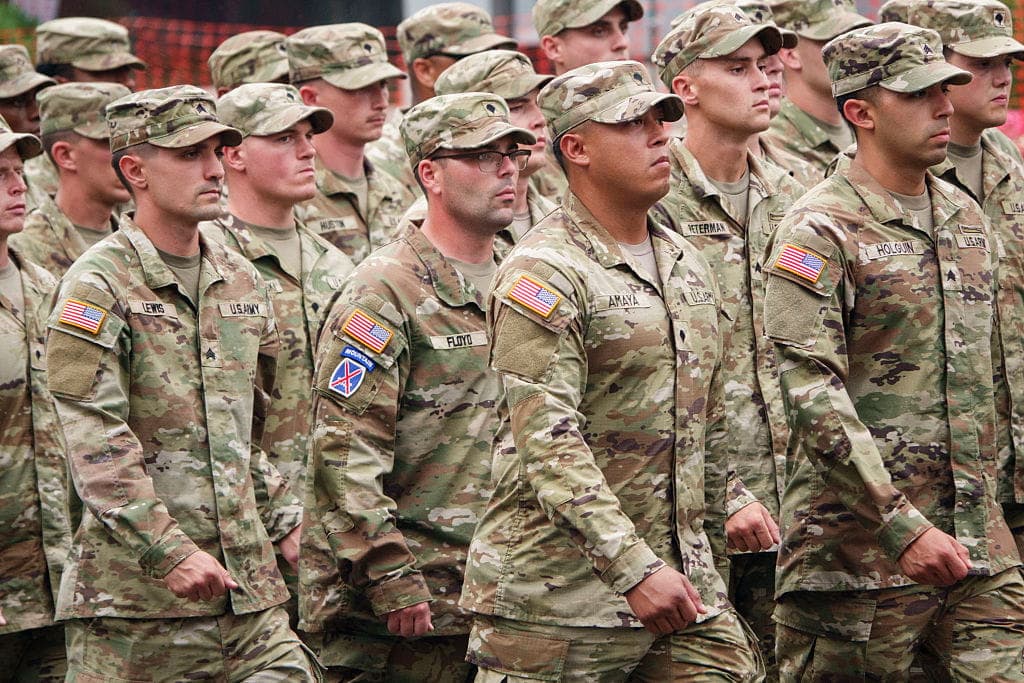
In the personnel account, the DOW wants to grow the force by approximately 21,000, from 1,321,916 in FY2026 to 1,342,900 in FY2027. Clearly, the DOW wants to invest in modernization while propping up munitions and missiles accounts. Experts believe that the FY2027 budget is a one-time plus-up, and in subsequent years, it will not be as high. However, the FY2027 budget request is ample evidence that the Trump administration is bent on building a lethal, ready, and capable military force.
~
The views expressed are those of the author and not of any other affiliate.



.jpg%20Inflation&w=1920&q=75)
.jpg%20Mamdani&w=1920&q=75)