


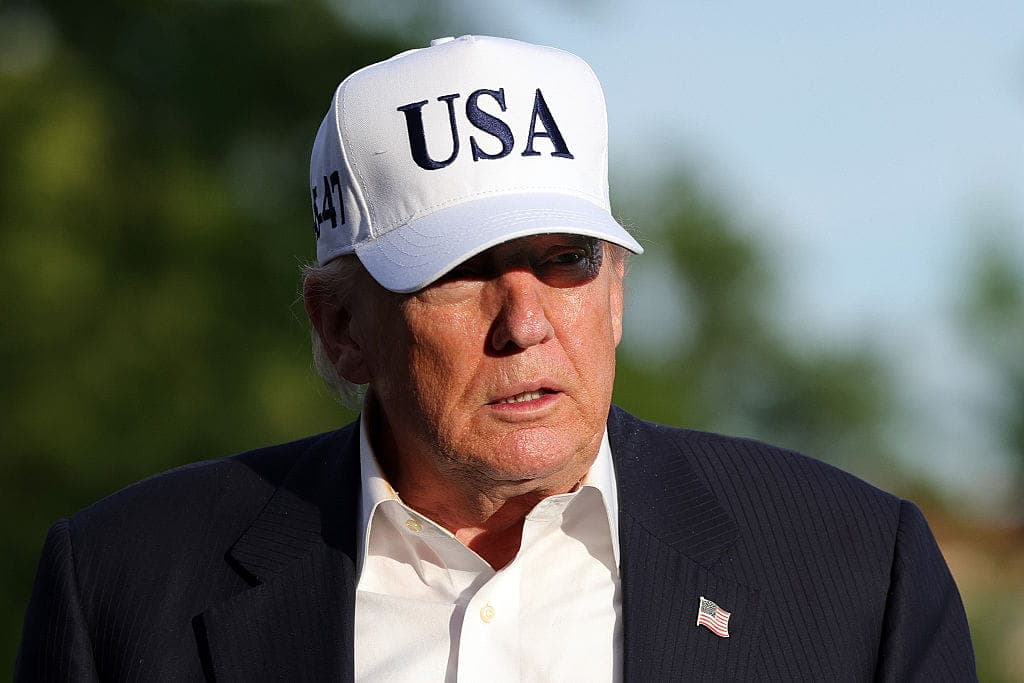

The president’s retribution crusade continued on May 19, with Trump-endorsed newcomer Ed Gallrein ousting Rep. Thomas Massie (R-KY) in a primary contest. This is just the latest in a string of victories for candidates backed by the president, who has helped reshape GOP primaries by targeting perceived dissenters. But while Trump’s endorsement has proven decisive within the party, recent data suggest it may carry more risk than reward in the general election.
The Limits of the Trump Endorsement
Politico published a survey this week that tested the power of political endorsements. Respondents were asked to select one of two hypothetical candidates in a House race, each backed by a special interest group, one approved by Trump and one opposed by him. People who voted for Trump in 2024 were 22% more likely to choose a candidate he supported. But among those who voted for Vice President Kamala Harris, respondents were 55% less likely to choose a Trump-backed candidate.
Perhaps more striking was that a negative reaction among Harris voters outweighed the positive effect among Trump voters. “As a result,” explained Politico, “a Trump endorsement was more detrimental than helpful.” The results point to a backlash effect that is mostly absent in primaries. This is just one survey, but other research reveals similar findings.

Three political scientists released a report in 2020 that examined campaign fundraising, turnout, and vote share for Trump-endorsed candidates in the 2018 midterm elections. They concluded that the 45th president’s endorsement caused more harm than good, leading to “an increased vote share going to the Democratic opponent of the candidate Trump endorsed.” While endorsed candidates raised more money, their Democratic opponents often matched or exceeded those gains and saw increased turnout at the polls.
In fact, all 2018 races with a Trump-endorsed candidate saw a higher turnout than other races; however, those contenders lost almost 2.5% of their vote share compared with candidates in similar districts who didn’t receive Trump’s support. “Ultimately, we found that Trump’s endorsements cost Republicans 16 seats – exactly 20% of the 80 candidates he endorsed,” explained the authors.
One of those political scientists, Michael Heseltine, expanded his research a couple of years later and found that, between 2018 and 2022, Trump’s endorsements served as a strong signal for Republican voters but had no significant impact on the outcomes of general elections.
From Liberty Nation News, Trivia, Facts, Check Us Out
Stay informed.
Today’s news, the Constitution and American history, written for young readers.
Visit GenerationLiberty.com
News, Trivia, Facts, Check Us Out
Stay informed.
Today’s news, the Constitution and American history, written for young readers.
Visit GenerationLiberty.com
During Trump’s first term, he had a 95% success rate in the 2018 primaries and a 59% success rate in the general, according to Ballotpedia. In 2022, those numbers were 93% and 83%, respectively. In the most competitive races, however, the results were less favorable: Of the five candidates Trump endorsed in the 36 most competitive House contests, all five lost.
Of course, he wasn’t in office in 2022, which surely impacted how people viewed his support in certain races. But this year, nearly a third of the way through his second term, his administration’s work thus far will likely influence how many people vote. The president no doubt remains a dominant force in the Republican Party, but it might take more than swaying MAGA if the GOP wants to maintain control of both chambers of Congress.

.jpg&w=1920&q=75)