


On Wednesday, April 22, the US Senate Committee on the Judiciary heard testimony on the topic “Stealth Stealing: China’s Ongoing Theft of US Innovation.” Witnesses included Mark Cohen, Senior Fellow at the University of Akron Law School's Intellectual Property Institute; Tom Lyons, Co-Founder of the 2430 Group; and Helen Toner, Interim Executive Director of the Center for Security and Emerging Technology at Georgetown University. The issues included blatant theft of US technology and intellectual property, as well as intense competition with China for dominance in the field of artificial intelligence. And this theft by the CCP is nothing new.
China and the Wholesale Theft of American Technology
Senator Tillis (R-NC), serving as chairman, opened the hearing, explaining:
“Today’s hearing will explore how foreign adversaries, specifically the communist party of China, threaten US economic and innovation dominance through rampant intellectual property theft. The economic loss from China’s IP theft is estimated to be between $400 billion and $600 billion a year. The equivalent of costing the average American taxpayer thousands of dollars every year. China’s overall goal is to undermine US leadership to assume the title of the world’s innovation leader. We cannot allow it to happen.”
Mr. Lyons, in his opening statement, offered a troubling observation. “What we’ve seen has been alarming. American firms are not competing against Chinese rivals in any normal sense. They are competing against the largest intelligence apparatus in the world. One whose mission includes putting American companies out of business,” Lyons said.
Senator Durbin (D-IL) observed that, looking back in history, “whether it was the A-bomb or the man on the moon,” achieving scientific goals was a partnership between government and the private sector. Putting a question to Ms. Toner, Senator Durbin wanted to know the extent to which there was a collaboration between the private sector and government when it comes to the government’s role in the research in AI and what comes from it. Ms. Toner replied, “Yes, I think it’s truly unprecedented the mismatch between how strategically important this technology is and how little involvement government has in developing it.”
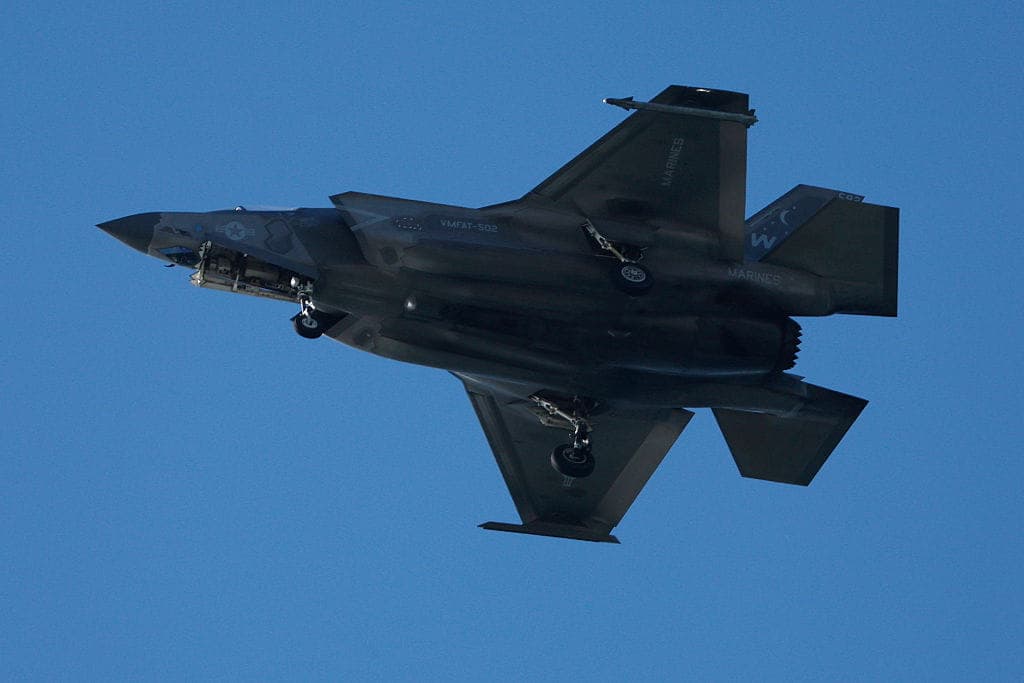
When it came time for Senator Ted Cruz (R-TX) to inquire of the witnesses, his line of questioning focused on “what stolen innovation looks like in practice.” Referring to visual aid charts, Senator Cruz showed a photograph of an F-35 Lightning II fifth-generation US jet fighter. Cruz referred to the F-35 photos and subsequent photos as some of the most “advanced military platforms ever produced by the United States.” He then produced a photograph of the Chinese J-35 counterpart.
The Chinese design, with few exceptions, appeared to be identical. Cruz explained that two aircraft might evolve during development to be similar in size and shape by coincidence. However, the senator observed that “Su Bin, a Chinese national, pleaded guilty in a United States federal court to stealing F-35 technical data and selling it to Beijing.” Cruz put the question to Mr. Lyons: “When China has a federal conviction for stealing blueprints and then fields an airplane that looks remarkably similar, do you think that resemblance is a coincidence?” Lyons replied: “No, sir. I’m very familiar with Su Bin, and the case, and it was not only the F-35, but it was the Y-20, it was the drone technology that mimics our MQ-9 and our Predator drones…”
The Chinese JG-2 Is a Knockoff
During the hearing, Mr. Lyons also made the point regarding the Chinese GJ-2 Predator look-alike drone, “It’s repackaged American technology. And Senator, if I could, I think this is occurring across our energy field, across our telecommunications field, our solar energy, wind energy, our transport logistics. And when you step back, what we’re seeing is a desire to dominate the industries that win wars.” That last comment should give US aerospace and defense industry executives pause to rethink how they protect proprietary technology and defense related IP.
After listening to roughly two hours of testimony by the expert witnesses, it was apparent that China does not innovate in the field of technology. For the most part, it steals cutting edge technology through espionage, patent infringement, or unfair trade practices. America must be much more vigilant and establish better security measures to stop what Senator Tillis rightly described as “rampant intellectual property theft.”
~
The views expressed are those of the author and not of any other affiliate.

.jpg%20fraud&w=1920&q=75)