
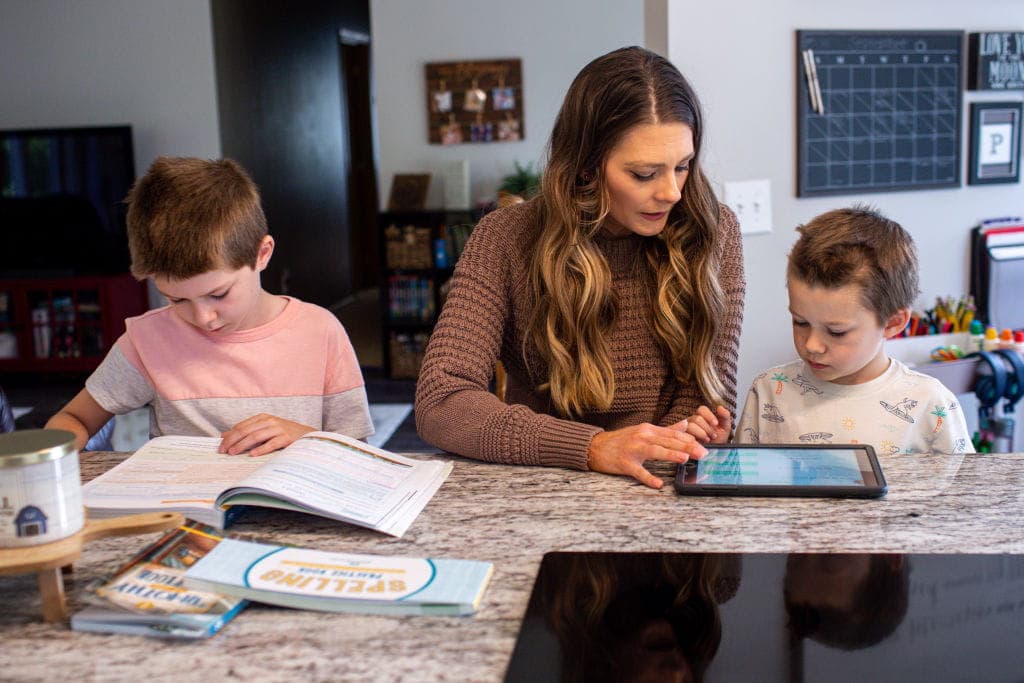

The number of homeschoolers has steadily increased nationwide since the COVID-19 pandemic - and recent data show the surge is likely here to stay. According to a study on school-aged children from the National Home Education Research Institute (NHERI), around 3.4 million – or over 6% – of such students are homeschooled across the United States. To put that number in perspective, there were only an estimated 13,000 homeschool students in the late 1970s. So, why are more parents electing to homeschool?
Choosing to Homeschool
Parents and students who choose to homeschool do so for a variety of reasons, including a desire to “customize or individualize” the learning environment or curriculum, achieve more academically, boost family relationships, ensure students’ safety, and teach a “particular set of values, beliefs, and worldview.”
The academic benefits of homeschooling are well-documented: Studies show students who are educated at home score 15 to 25 points higher than their public-school counterparts on standardized tests. Nearly 80% of “peer-reviewed studies on academic achievement show homeschool students perform statistically significantly better than those in institutional schools,” NHERI explained. Homeschoolers also “typically score above average on the SAT and ACT tests that colleges consider for admissions.”
Homeschool students’ academic success is not “notably related” to whether their parents were certified teachers, nor is the “degree of state control and regulation of homeschooling.”
Social, Emotional, and Mental Growth
One of the most common critiques of homeschooling is the concern over how well students are socialized. Critics often question whether homeschoolers have enough opportunities to interact with peers and develop strong social skills – but across peer-reviewed research, 87% of studies examining social, emotional, and psychological outcomes report that homeschoolers outperform those in traditional schools.
Homeschooling advocate Roanirt Alviarez argued that the stereotype of the socially awkward homeschool kid comes from antiquated ideas about education. “[T]he belief that daily interaction with same-age peers in a classroom automatically equates to strong social skills overlooks the complexity of socialization,” Alviarez wrote. “Socialization is not merely about being surrounded by people. It involves developing communication skills, empathy, adaptability, and the ability to navigate diverse relationships. Homeschooling offers unique opportunities to foster these abilities in meaningful ways.”
In the US, homeschoolers have access to a wide range of activities at which they can practice and develop their social skills, including 4-H, scouting, church ministries, sports teams, community theater, and volunteer work.
Values Matter
Many American parents have raised the alarm over left-leaning influence in public schools. The warnings gained so much traction that President Donald Trump issued an order titled “Ending Radical Indoctrination in K-12 Schooling” shortly after beginning his second term last year.
Still, rather than wait for changes to the public school system, a growing number of parents are turning to homeschooling as a way to avoid unwanted influence on their children. For example, a Christian parent who chooses to homeschool does not have to worry about their children being taught material that conflicts with their faith, and a liberty-minded parent who homeschools can teach his children about Adam Smith instead of Karl Marx.
As homeschooling becomes more mainstream, Washington has begun taking steps to support homeschool families. One of the most significant developments came from Trump’s One Big Beautiful Bill Act (OBBB): Taxpayers can now claim donations for K-12 education scholarships, which can be used to fund educational expenses – including homeschooling. As access to homeschooling expands, the number of families embracing it likely will, too.