

.jpg%20Food%20Inflation&w=1920&q=75)

In February 1977, then-President Jimmy Carter delivered his famous "sweater speech," urging Americans to conserve energy during a natural gas shortage by making personal sacrifices, whether by wearing an extra layer of clothing or turning down the thermostat. Carter marketed being uncomfortable as a patriotic duty.
Decades later, the American people have been once again asked to surrender the essentials and conveniences in the form of higher food and energy prices. In 2022, it was the Ukraine-Russia invasion. Four years later, it is the war in Iran. But while the Middle East conflict has rekindled the inflation flame, is the public grappling with food inflation? The debate is being waged among conservative circles on social media.
Food Inflation and the $20 Burrito
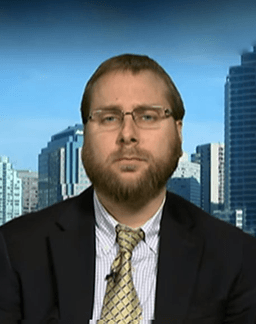
The Daily Wire's Matt Walsh has been on a tirade in the Xverse in recent days, handwringing about food inflation. He correctly pointed out that grocery prices have rocketed 30% this decade, and most users agreed. But Walsh ignited a firestorm of controversy by arguing that the current administration is more focused on the Iranian conflict than supermarket costs and that conservatives are denying the affordability issue altogether.

Free with the Daily Briefing
85EssaysUnravel the Constitution
Hamilton, Madison & Jay’s complete case for America, free and searchable in the Publius Reader.
Free with the Daily Briefing. Unsubscribe anytime.
Social media fights intensified when Joel Berry, Babylon Bee alumnus and producer of The Jeremy Boreing Show, stated that his family of eight cooked homemade burritos for less than $20. "I'm beginning to think the affordability crisis is really an 'I don’t know how to cook' crisis," he said on X.
Walsh responded that no Republican was purporting that the "affordability crisis is fake" during the Biden administration. "It's extremely transparent to everyone that the unwillingness to acknowledge these obvious economic challenges is at least partially politically motivated," Walsh added.
Out of nowhere, arguments broke out over $20 burritos. Ben Shapiro said if young people are paying $20 for a burrito, then they are "doing life wrong." The Hill personality Robby Soave wrote on X that burritos really do cost $20 and that he refuses to pay for lunch. Vice President JD Vance quipped about Fox News contributor Marc Thiessen’s weight: "If you've ever met him in person, it's quite obvious the man has never missed a burrito."
Do burritos really cost $20? If you order on DoorDash or Uber Eats, you are paying that much. If you are making a purchase in person, it might depend on the franchise or location. But what about the beginning of Walsh’s argument about food inflation?
Pandemic Hangover
A broad array of factors influences what consumers pay at the neighborhood grocery store: energy, transportation, labor, supply and demand, and regulations. The Federal Reserve is also culpable through the erosion of America’s purchasing power and ramping up the printing press, making everything require more units of currency for the same quantity.
Considering all the inputs that go into day-to-day food production, kudos to the supermarket chains that do a tremendous job of delivering the lowest prices possible to their customers.

That said, food inflation is vastly different today than a few years ago. From January 2021 to June 2022, the food category inside the consumer price index (CPI) surged by almost 19%. From January 2025 to June 2026, supermarket prices have risen by about 4%. The cost of some items has accelerated much faster over the last 18 months (beef), while others have fallen sharply (eggs).
Ultimately, much of the higher prices that shoppers see across aisles, shelves, and produce sections stem from the pandemic era. Despite President Donald Trump’s election campaign promises, nobody should have expected food costs to return to pre-crisis levels, unless there was some depression-style economic event.
Of course, fast food is an entirely different dish. The Big Mac Index is a popular economic measure of the purchasing power parity between two currencies. But traveling through time also highlights how much the classic McDonald's item has risen in price. In 2000, it was a little more than $2. Today, it is closing in on $6 – a 170% increase in a quarter century. Overall food inflation climbed 110% in the same period.
Luxury Big Macs
Whether a burrito is $5 or $20 is a moot point. In this day and age, fast food should not be considered a luxury item. Historically, a visit to the nearby Chipotle or Burger King was meant to be quick and cheap for a low- and middle-income family, not a fine-dining experience to celebrate a 15-year anniversary with friends and family.
This is what Matt Walsh and others are tapping into. John Smith and Peggy Sue realize that every time they leave their apartment, a buck buys a nickel’s worth, their paycheck buys less, and everything costs more despite various sacrifices, including wearing sweaters inside their homes in the winter.
When Americans were promised prices would be cut in half on day one and no more foreign wars, it might be hard for the average voter to be enthusiastic about Republicans heading into the midterm elections as they were in 2024.

.png&w=1920&q=75)