



China Has Eyes on Siberia
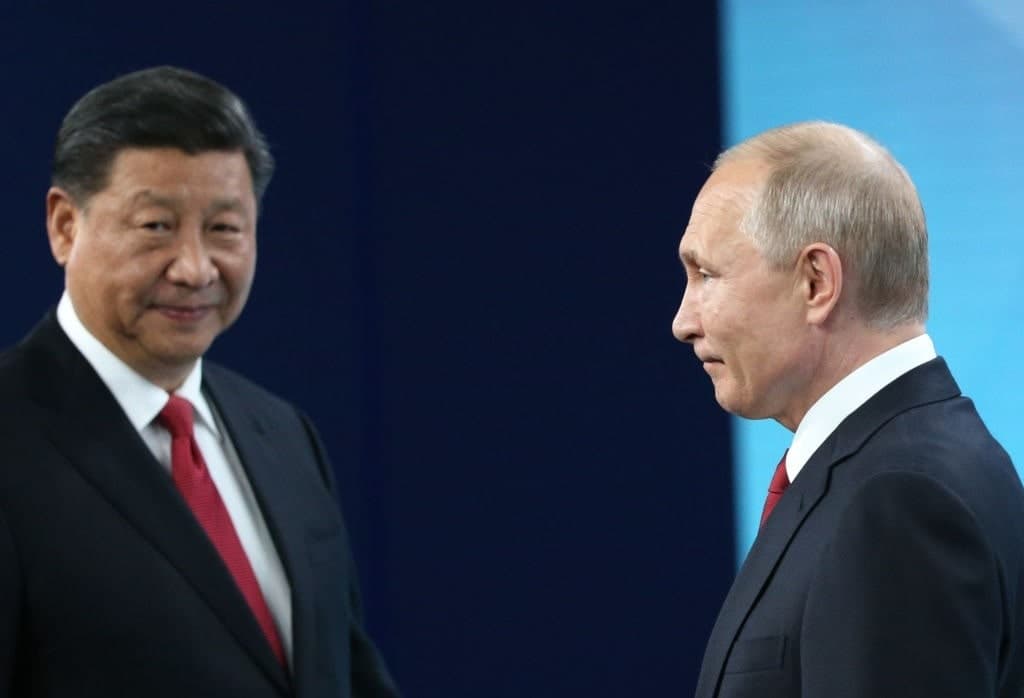
Unresolved grievances between Russia and China are deeply rooted and by no means new. Although Russian President Vladimir Putin likes to characterize the Moscow-Beijing relationship as "friendship without limits," Chinese President Xi Jinping is not quite as chummy. Just last fall, Sino-Russian exercises near Alaska showcased the coordinated and integrated naval capabilities of the two militaries. "The US military deployed 130 Army airborne soldiers with mobile rocket launchers [in September 2024] to the Aleutian Islands of western Alaska. The action comes after Russia and China conducted joint military exercises close to Alaska," The Daily Signalreported. Regardless of what appears to be a solid partnership between the Kremlin and the Chinese Communist Party (CCP), Lonergan presented the case:
"China's threats against Taiwan get a lot of attention. But a far more audacious plan is unfolding in Beijing […] This shift — driven by Chinese resource hunger, geopolitical opportunism, and Russia's weakening grip — could reshape the global order in ways the West has yet to grasp fully. Moreover, the staggering costs of invading Taiwan and Siberia's role in fueling China's economic growth make the northern pivot increasingly likely by 2027."
There is evidence that Lonergan is not alone in this novel notion. The Financial Times of London pointed out that, based on Russian military exercises using hypothetical scenarios where China invades Russia’s far east, "The war games, which were written by Russian officers between 2008 and 2014 and leaked to the Financial Times, offer an extraordinary window on the army's long-standing fears about Beijing's real intentions, according to experts who reviewed the files."
Examining the history of the Soviet Union's non-aggression pacts and Russia's friendship treaties, the Russian military has a legitimate reason to be suspicious. As Forbes observed, "Less than two decades after China and the Soviet Union signed their last friendship treaty [1950], the two countries engaged in a sharp series of border fights." Looking at the Sino-Russian relationship through a more contemporary lens, "Expansion-minded Chinese nationalists, coupled with China's increasing and barely concealed contempt for Russian weakness, have the power to erode Russia and China's current rapprochement in a matter of moments," Forbes alleged. Lonergan makes the point that the PRC "has invested massively in military modernization with the stated goal of being ready for a major conflict by 2027." He also draws a distinct cost-benefit preference for the People's Liberation Army to seize Siberia for its minerals, oil, and gas, as well as its abundance of fresh water, at relatively low cost compared to what would be unacceptable losses crossing the Taiwan Strait to invade the well-defended island. All of this is true. However, Lonergan's case is binary, with only two alternatives: invade Siberia or don't. This is a false choice. There are many other options whereby China could obtain access to the riches of Siberia at little cost and avoid armed conflict.
Russian Resource Might Be Easy Pickings
The CCP is well-positioned to take advantage of Russia's weakened economic position by purchasing, at below-market rates, any of the resources it desires from the Siberian trove of natural resources. China is known for its enduring patience, and acquiring Taiwan in a bid for reunification is a long-term goal predicated on Beijing's dominance in economic and military capabilities. The PRC does not have that now. Finding a way to trade for the riches in Siberia while continuing to build its military capability would be the more pragmatic solution. A potential dust-up between China and Russia, should it come to pass, would be a boon for the United States. An article in The SAIS Review of International Studies observed that the strategic relationship between China and Russia is a threat to US national security, suggesting "American strategic planners should consider undermining these ties as a strategic imperative. This goal remains achievable if pursued with vigor because Russia's 'special military operation' in Ukraine has exposed differences in worldviews between Moscow and Beijing." Lonergan's theory that the PRC is waiting for the opportune time to invade and occupy Siberia, coupled with Russia's innate cultural paranoia, might be just the wedge to split the "besties." The views expressed are those of the author and not of any other affiliate.

.jpg&w=1920&q=75)
.jpg&w=1920&q=75)