
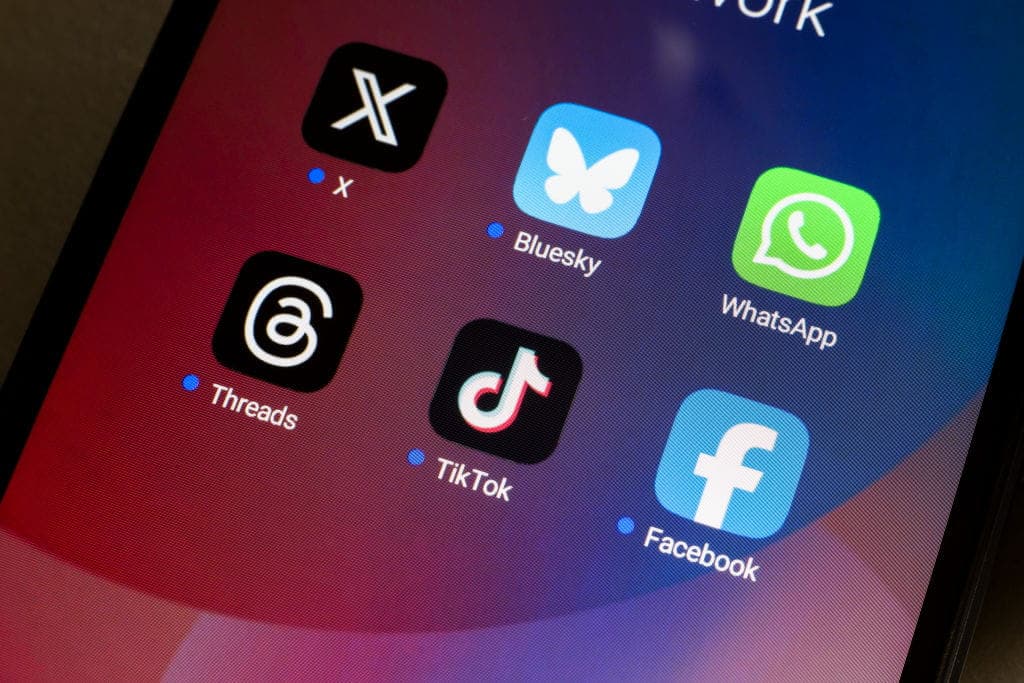

There never seems to be enough money to fill budget gaps, which means local governments have to try and find creative ways to work around the deficits. Unfortunately, getting creative almost always seems to mean finding more ways to tax people and businesses. The latest blue-state trend is taxing social media, a move that is now being taken to courts.
Social Media Taxes
Chicago officials have proposed a Social Media Amusement Tax, which they’ve included in the city’s 2026 spending plan. NetChoice, who is representing the tech industry, filed a lawsuit to block the tax. The company’s co-director Paul Taske, said: “This is a targeted strike against America’s most popular publications; it will not stand,” as WTTW News reported. The group further said in a statement that it violates “free speech rights, unfairly discriminates against digital publications, violates federal law and harms Chicago residents and their businesses.”
The budget explains the reason for the social media tax, saying the platforms have negative impacts on mental health, especially for younger people, and that those companies who profit from their services should “contribute fair share to fund additional public health and mental health services for Chicagoans.”
Illinois Governor JB Pritzker proposed a similar tax for his 2027 fiscal year budget that he said would generate $200 million. So what does the proposed social media tax look like? As Capitol News Illinois described:
“Social media companies would be taxed on a progressive scale starting with platforms with 100,000 to 499,999 users paying 10 cents per month for each user all the way up to platforms with at least 1 million users paying a $165,000 fee plus 50 cents for each user each month.”
It’s not Just in Illinois
At least nine states are joining the bandwagon to impose social media taxes. Minnesota introduced SF 3197, the Social Media Gross Receipts Tax proposal which uses the same taxing amounts. “According to the DOR revenue estimate, the tax would be expected to bring in $90-$100 million a year,” Minnesota Center for Fiscal Excellence reported.
Last year, Washington state proposed a social media tax to help combat the cost of mental illness treatment. According to the Washington State Legislature website, HB 2038 would establish “the youth behavioral health account and funding the account through the imposition of a business and occupation additional tax on the operation of social media platforms.”
Not all states are suggesting taxing social media sites based on the number of users in their states. Michigan Gov. Gretchen Whitmer (D) proposed taxing all digital advertising. “Lawmakers in California, Massachusetts, New York, Rhode Island, and Utah have proposed taxing tech giants’ digital advertising revenue,” according to State Affairs website.
In Utah, Senate Majority Whip Mike McKell proposed using the state’s 4.7% sales tax on social media companies’ earnings that uses advertisements targeting Utahns. “The tax would apply to companies that earn $1 million or more from targeted advertising in Utah or $100 million or more from such advertising globally, and that derive at least half their gross annual receipts from ad sales,” State Affairs explained.
“For too long, targeted advertising companies have monetized children’s vulnerability, mining their data, capturing their attention, and gathering revenue while avoiding accountability,” the GOP lawmaker said during a February Senate Revenue and Taxation Committee hearing. “Our children in Utah are not commodities.”
Legal Challenges
Law makers try to legitimize their plans by saying social media companies add to mental health issues in younger people and the funds generated from these taxes will help address that. “Social media algorithms have been proven to create mental health issues in adolescents and foster polarization and misinformation in society as a whole,” Gov. Pritzker said in February during his budget address.
Advocates for big tech argue that these taxes single out internet companies and violate federal e-commerce protections including First Amendment rights. There is also a warning that the taxes would make it more difficult for businesses, driving up their costs when they rely on advertising on social media platforms to reach their customers.

Amy Bos, vice president of government affairs at NetChoice, said in a statement referring to tax proposals in Illinois and Utah, "These misguided tax proposals will ultimately hurt lawmakers' constituents and their businesses.”
Julie Scelfo, founder and executive director of Mothers Against Media Addiction, told State Affairs, “The failure of the federal government to take timely action is the reason why states have now become the leaders in protecting kids.” She added, “Taxing the cause of the problem to try to offset the harms is exactly what we did after the big tobacco cases, and it’s exactly what we need to do now.”
But are these social media taxes legal? Some argue it goes against the First Amendment. The Minnesota Center for Fiscal Excellence stated:
“However, singling out social media companies to be taxed for this activity may introduce a different constitutional hurdle: one concerning the first amendment. A couple of our members have observed that since these companies are specifically providing customers association and expression in return for handing over their data, the tax is analogous to extending the use tax to newsprint and ink which the Supreme Court struck down in the 1970's.”
Also, as NetChoice’s complaint points out, a 1983 Supreme Court decision prohibits governments from taxing news organizations based on their audience size.
The debate over social media taxes raises a larger question: Where does it end? If lawmakers can single out one industry because they dislike its influence or believe it contributes to social problems, what prevents them from doing the same to other businesses in the future? Whether social media companies deserve criticism or not, many opponents argue that using the tax code to punish disfavored industries is a dangerous precedent that could ultimately lead to higher costs for consumers, fewer opportunities for businesses, and more government control over online speech.

.jpg%20Senate&w=1920&q=75)