

Both political parties have been signaling their commitment to addressing the so-called affordability crisis. A recent report suggests that well-intentioned initiatives to increase minimum wages, while supported by a majority of voters, generally have a negative economic effect on those most in need. Good, old-fashioned economics explains why supply and demand do not bend to utopian government efforts.
The Affordability Dilemma
Democrats may attract votes under the pretense of lifting constituents out of poverty by imposing artificial wage requirements on businesses, but statistics show the impossibility of such endeavors. Higher wages push prices up for everyone, disproportionately affecting the poorest consumers (including the unemployed or retired, who struggle to survive on fixed incomes). They also burden employers struggling with tight margins: Rapid increases in wage mandates can push restaurants and other businesses into bankruptcy, eliminate jobs, reduce tax revenues for social programs, and leave surviving competitors free to raise prices. These impacts do not help the affordability problem.
The report by the nonprofit Employment Policies Institute (EPI) concluded that trying to solve the affordability crisis by legally requiring businesses to pay higher wages “push[es] affordability further out of reach.” Artificially increasing wages may help workers in the short term, but business owners must either raise prices or absorb the increased costs themselves. When profit margins are overly squeezed, or customers leave because of higher prices, many businesses simply close.
EPI concluded in its report:
“A majority of American labor economists surveyed by EPI reported that higher minimum wages increase the overall cost of living, particularly for lower-income households. One review of U.S. minimum wage studies shows raising the minimum wage $1 above the current $7.25 federal rate could trigger price increases of up to 5.5%.
“These inflationary effects hurt those in lower income brackets more. Research by a Stanford University economist finds that minimum wage increases generate the largest price increases for the poorest 20 percent of households, who are least able to absorb higher costs.”
California’s Wage-Hike Debacle
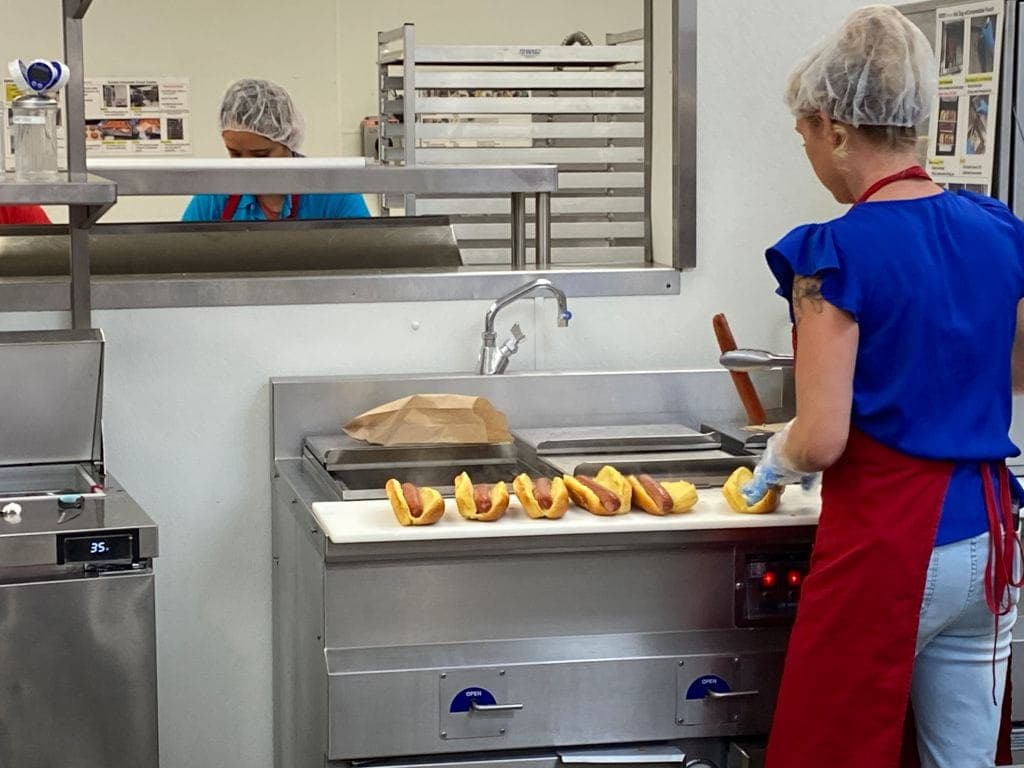
Yet many states have increased their minimum wage mandates by far more than a mere dollar, exponentially compounding business closures and inflation. California notably raised its minimum wage to $20/hour beginning in April 2024 for workers at restaurants with more than 60 locations nationwide. This was a $4/hour, or 25%, jump in wages. The California Globe reported: “Now, 16,000 fast food jobs have been lost and fast food prices are up more than 14.5%. And here is why: the $20 minimum wage harms California’s least skilled and least experienced workers, as they are no more productive, but are significantly more expensive, and results in harms to the business owners as well.”

The harms to business owners include lower net earnings and, thus, reduced tax receipts for deficit-plagued California. But the harm can also include the death of a business, knock-on effects to commercial leases, hollowed-out communities, and price competition. Merely four months after California virtue-signaled its concern for wage laborers by upping their earnings with other people’s money, the state experienced a 330% increase in new fast food restaurant closures – 1,040 businesses by the end of July 2024.
Concurrently, remaining restaurants raised prices to pass on the state-imposed costs to customers, who, as fast-food diners, are often not high-income earners. One study found that in June 2024, 1,942 Google reviews of fast-food restaurants in California included the keyword “expensive,” a 26% increase from March 2024.
A National Wage Problem
Higher wages cause layoffs. Workers then suffer stigma and discouragement, and may sign up to receive support from state coffers. Prices increase. Stores close. These impacts do not improve affordability for anyone. This doesn’t seem to faze progressive legislatures in many states.
EPI’s report found a direct correlation between wage hikes and affordability issues in major municipalities:
“In 2023, the top five states with the highest minimum wages were all among the top 10 states for highest cost of living. States with the lowest cost of living all had minimum wage set at $11 per hour or below.
“Recent data from metropolitan areas across the country shows high minimum wages are contributing to higher cost of living. According to the U.S. Bureau of Labor Statistics’ most recent annual consumer price index data, there is a clear positive trend between higher minimum wage mandates and the rising cost of food, housing, and transportation.”
EPI also reported that raising minimum wages also pushes up rents and childcare expenses. One 2023 study by the Congressional Budget Office predicted that raising the federal minimum wage to $17 by 2029 would result in an estimated 900,000 job losses by the end of 2030.
Nevertheless, many states are advancing legislation to raise minimum wages, often substantially. Vermont and Tennessee are considering $20-per-hour mandates. Maryland is weighing a $25/hour jump, and New York is proposing a $30/hour rate.
Like a dragon eating its tail, well-intentioned government initiatives to help the nation’s less fortunate may push them deeper into despair. That’s just how socialism unfolds, stifling entrepreneurs and trying to top-fix complex social and economic challenges. But the news is not all bad: More Americans may choose to start dining in, which is healthier for their bodies and their wallets. As the midterm elections approach, the nation’s affordability challenge may worsen before it improves.


.jpg&w=1920&q=75)
.png&w=1920&q=75)