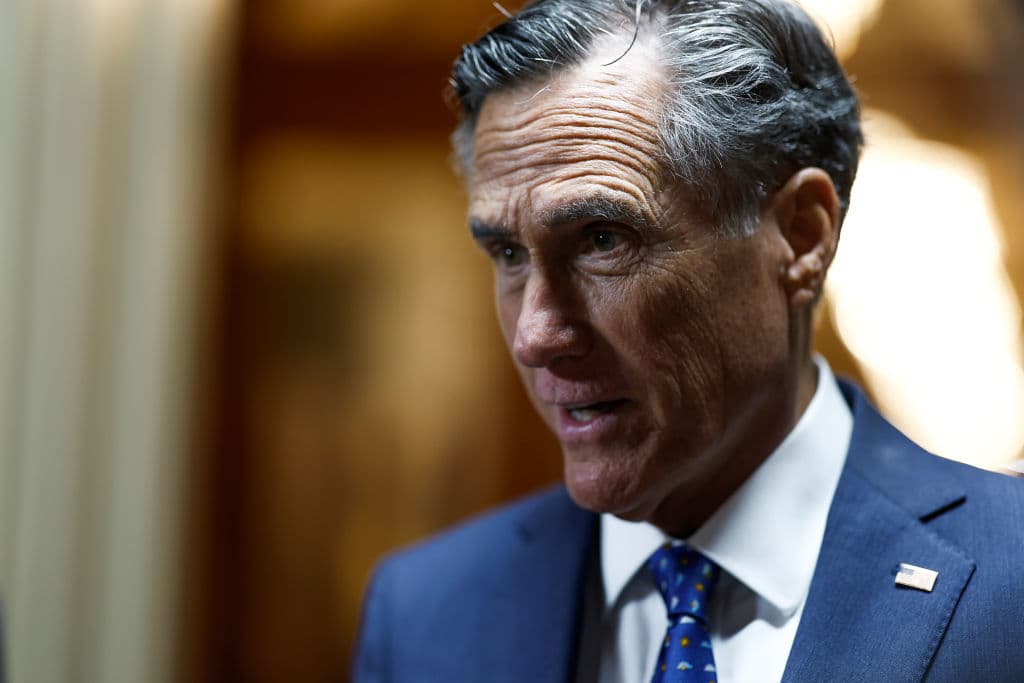
WASHINGTON, DC – FEBRUARY 13: Sen. Mitt Romney (R-UT) speaks with reporters during a series of the votes at the U.S. Capitol Building on February 13, 2023 in Washington, DC. Officials announced over the weekend that for the fourth time in two weeks U.S. forces had shot down a high flying object in North American airspace. (Photo by Anna Moneymaker/Getty Images)
Mark is Liberty Nation Editor-in-Chief after previously serving as Managing Editor for four years. Steeped in US Conservative policy and politics, he is the host of our flagship radio show airing across the country on the Radio America Network.
Mark Angelides
Sep 22, 2020
Like crazed mathematicians, people and pundits have been puzzling over whether the Republican-led Senate can get a potential associate justice voted in before the political winds change. With a 53-seat majority, the GOP has been sweating bullets that certain members may not fully back the swift nomination process. One such worry has been over former presidential candidate and Utah Senator Mitt Romney. But no more.
In a statement that must have quelled the fast-beating hearts of the Republican leadership, Romney wrote:
"I intend to follow the Constitution and precedent in considering the president's nominee. If the nominee reaches the Senate floor, I intend to vote based upon their qualifications."
This by no means signals that he will cast his vote in favor of President Donald Trump's soon-to-be-announced pick, but it signifies that, absent any great scandals or issues with jurisprudence, a smart choice by the president will be confirmed by the Senate. Romney continued:
"[The] historical precedent of election year nominations is that the Senate generally does not confirm an opposing party's nominee but does confirm a nominee of its own."
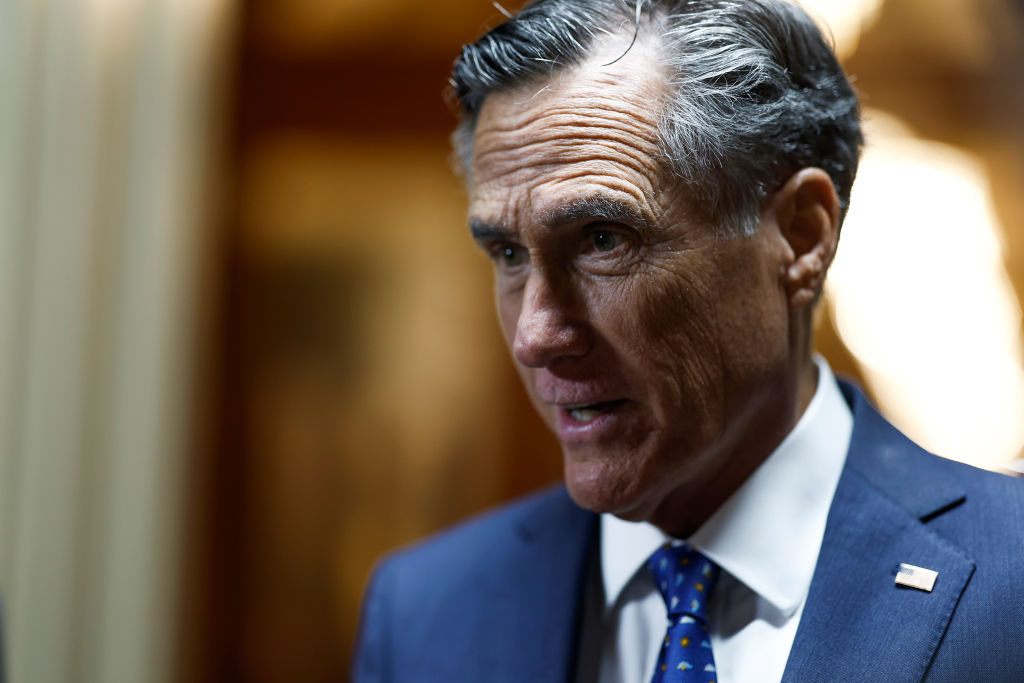
(Photo by Anna Moneymaker/Getty Images)
Perhaps waxing a little more eloquently than we are used to, Romney said that his decision was "not the result of a subjective test of 'fairness' which, like beauty, is in the eye of the beholder. It is based on the immutable fairness of following the law, which in this case is the Constitution and precedent."
The Hold-Outs
The senators who have so far refused to accept the possibility of voting are Lisa Murkowski of Alaska and Susan Collins of Maine. Both have indicated that they don't believe a vacancy this close to an election should be acted upon. Whether they will be won over by the eventual candidate and change their tune remains to be seen.
Other notables in the "undecided" camp, Chuck Grassley of Iowa and Colorado's Cory Gardner, are now off the fence and willing to support a vote. Monday night (Sept. 21), Gardner said:
"When a President exercises constitutional authority to nominate a judge for the Supreme Court vacancy, the Senate must decide how to best fulfill its constitutional duty of advice and consent. I have and will continue to support judicial nominees who will protect our Constitution, not legislate from the bench, and uphold the law. Should a qualified nominee who meets this criteria be put forward, I will vote to confirm."
And Miracles?
Even if Murkowski and Collins decide to not vote or vote against the candidate, that still leaves a majority for the GOP. Should the party lose one more senator, it would fall to Vice President Mike Pence to cast the deciding ballot. But what of Democrat support?
If it seems likely that the nomination will go though, it is not beyond the realm of possibility that a Democrat or two might jump ship and cast a positive vote. The fact that Trump's shortlist is heavily stacked with females, and females of color no less, could provide good optics for a senator looking to boost credentials.
It seems that this has moved beyond the stage of “could it happen” to a question of what date and how many votes.
~Read more from Mark Angelides.
Get Your Top Election Coverage Right Here on Liberty Nation
Free with the Daily Briefing85EssaysUnravel the Constitution
Mark is Liberty Nation Editor-in-Chief after previously serving as Managing Editor for four years. Steeped in US Conservative policy and politics, he is the host of our flagship radio show airing across the country on the Radio America Network.







.jpg&w=1920&q=75)
.jpg&w=1920&q=75)