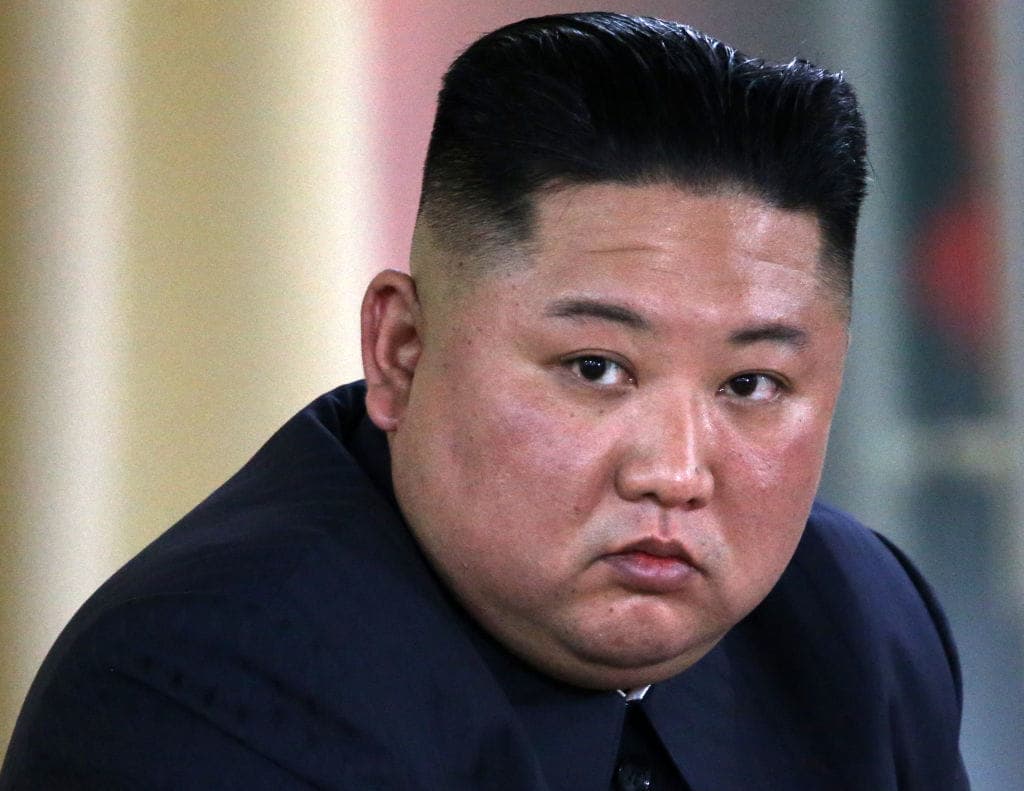

Though headlines around the world are focusing on Iran’s conflicts in the Middle East, North Korea has been quietly up to mischief in the Indo-Pacific. North Korea has taken the opportunity to carry out multiple missile tests while the attention of most of the world is on the Middle East and Ukraine. Additionally, North Korea is strengthening its military and diplomatic ties to Russia and China in order to portray itself as a world power with which to be reckoned.
North Korea and Intercontinental Ballistic Missiles
North Korea may not be making front-page-above-the-fold news, but it is nonetheless going about its business, being a threat to its neighbors. As Liberty Nation News observed regarding the Director of National Security’s latest threat assessment: “The assessment goes on to explain that North Korea successfully tested intercontinental ballistic missiles capable of targeting the entire US homeland.” North Korea has had one of its most active months for missile testing since January 2024. According to Reuters, on April 19, “North Korean leader Kim Jong Un oversaw Sunday's ballistic missile test launches as part of efforts to evaluate the performance of warheads carrying cluster bombs and fragmentation mines, state media KCNA [Korean Central News Agency] reported on Monday (April 20).”
These missile launches are the fourth such test this month and the seventh missile tests this year. All such launches are against United Nations’ resolutions, but the Democratic People’s Republic of Korea (DPRK) has never paid much attention to the relevant UN Resolution 1718 (2006). The resolution specifically states that the “DPRK shall suspend all activities related to its ballistic missile program and in this context re-establish its pre-existing commitments to a moratorium on missile launching…”
The most recent ballistic missile testing by the DPRK was unique since it tested warheads carrying cluster munitions and graphite-bomb payloads. According to the US Naval Institute News (USNI):
“North Korea leader Kim Jong Un, who oversaw the test firing, expressed satisfaction over the results, saying that the development and introduction of different cluster bomb warheads can meet the operational demand of the Korean People’s Army in a more effective way and of weighty significance to boost the country’s striking capability. The North Korean leader encouraged the defense science research groups to continuously progress in the modernization of new technologies.”
The cluster munitions are designed for anti-personnel as well as destroying armored vehicles. Using ballistic missile warheads that release bomblets at altitude maximizes the munition's spread. Again, according to USNI News, the five tactical ballistic missiles were launched from an undisclosed location towards an island 85 miles away and struck a target area of approximately 31 acres. Graphite bombs are used to disable electrical grids, causing blackouts in the target area. According to the Air Force Academy, these munitions were used in Operation Desert Storm, disabling roughly 85% of Iraq’s electricity supply.
According to The New York Times, North Korea is learning lessons from the Middle East conflict with Iran. “That North Korea is testing similar weapons signals that the country is trying to learn from the Mideast war, much as it has from Russia’s war against Ukraine, and that it is incorporating those lessons into its own war plans, military experts said,” the NYT observed.
Kim Jong Un Continues to Support Russia
While working to continuously improve its ballistic missile capability, North Korea is also improving its military relationships with Russia and China – and Kim Jong Un has reaffirmed his support for Russia’s unprovoked invasion of Ukraine. Again, from Reuters: “North Korean leader Kim Jong Un said his country would continue to support Russia's policies and discussed bolstering military ties with Moscow, state media KCNA reported, as analysts said such cooperation looked set to endure beyond the war in Ukraine.” In a visit to North Korea, Russian Defense Minister Andrei Belousov attended a memorial ceremony honoring North Korean participants in the Ukraine war who lost their lives. Reports are that 14,000 North Korean soldiers went to Ukraine to fight in Russia’s Kursk region; six thousand have been killed.
North Korea is also working to cement closer ties to China. At the beginning of April, Chinese Foreign Minister Wang Yi visited Pyongyang for the first time in seven years. The Associated Press reported that Wang met with DPRK Foreign Minister Choe Son Hui, and that the discussions covered “international and regional issues.” The KCNA reported that the two diplomats agreed to “strengthen strategic communications between their agencies handling foreign policy.”
The DPRK’s expanding and strengthening mutual support alliances with Russia and China persist as North Korea attempts to gain greater geopolitical prominence in the Indo-Pacific. Despite the subdued headlines on North Korea’s provocative ballistic missile testing, Pyongyang is and will continue to be an ever-present threat to the region and its neighbors.
~
The views expressed are those of the author and not of any other affiliate.

.jpg&w=1920&q=75)