

.jpg&w=1920&q=75)

In today’s busy and technologically filled world, it’s hard to find two seconds to just get away from the hectic parts of our lives. New advancements are supposed to make life easier, but instead we end up finding more things to do and less time to decompress and relax. More people are looking for ways to unplug from modern conveniences, and bringing back and establishing family traditions, such as for Mother’s Day, is a good start.
Family Traditions
Traditions are an important part of life and growth, even though some family customs may seem irritating and boring. They bring together the group, honoring ancestors and keeping beliefs alive for future generations. They are also a way to disconnect from the stressors of everyday life while bringing family members closer together, even if it’s just for a dinner or going to a farm to cut down a Christmas tree. But family traditions are more than just spending time together; they provide health benefits as well.
Research published in ScienceDaily and conducted by investigators at the Children's Evaluation and Rehabilitation Center at Albert Einstein College of Medicine of Yeshiva University, affiliated with The Children's Hospital at Montefiore, showed that, “Children who regularly sing, play, story-tell and eat dinner with their families tend to have higher social-emotional health.” Furthermore, “Researchers believe that being cared for in stimulating and nurturing environments in early life, with regular participation in predictable family routines, reflects greater family organization and can provide a sense of security and belonging. It also may positively impact children's SEH [social-emotional health] before school entry and contribute to their future school and life success.”
The study found that kids who participated in five family routines are “more than twice as likely to have high SEH and for each additional routine that a parent and child do together, there is an almost 50 percent greater likelihood of having high SEH.”
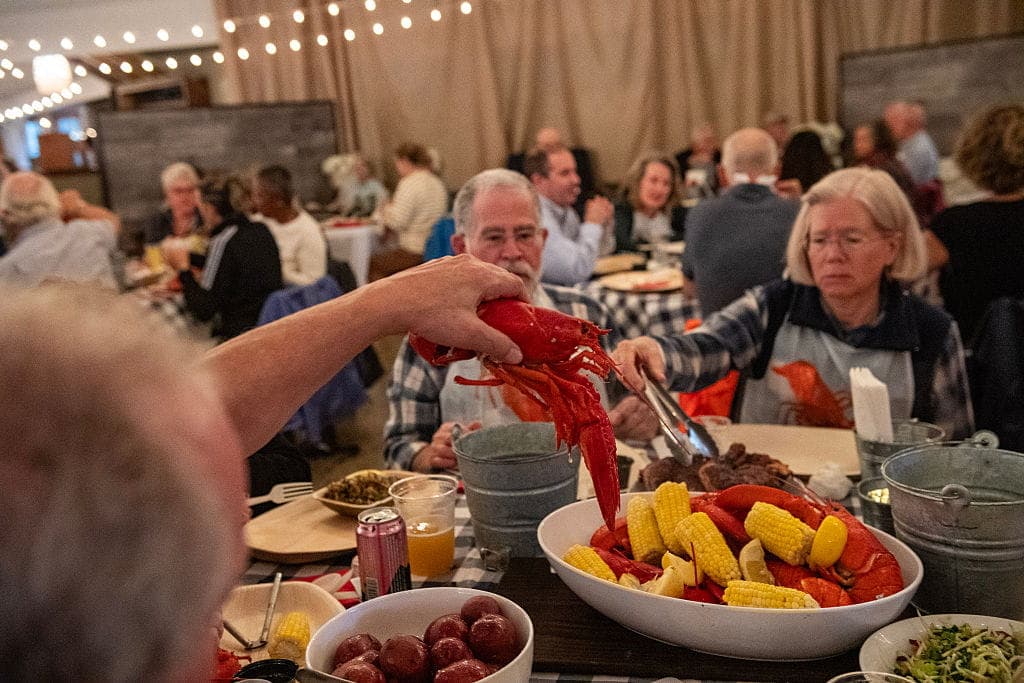
Family traditions are starting to make a comeback, with some households bringing back or reinventing activities from generations past. Some of these ideas include baking using old family recipes, family game nights, traditional letter writing, crafts, and family dinners. These activities don’t need a specific day to enjoy while others, such as Mother’s Day, happen just once a year.
Mother’s Day History and Celebrations
The US has a long and convoluted history of Mother’s Day traditions. Before coming to America, celebrations began with Greeks hosting festivals in honor of mother goddesses Rhea and Cybele. In medieval Britain, there was “Mothering Sunday,” which took place on the fourth Sunday of Lent, when people would return to the church of their childhood for a special service.
The American version started from a protest of the Civil War. Ann Marie Reeves Jarvis defied both sides of the war by giving aid and support to soldiers and their families, no matter which side they fought on. In 1865, she organized a Mother’s Friendship Day in Pennsylvania. Jarvis had a daughter named Anna who was inspired by her mother’s community service and wanted to make Mother’s Day a national holiday.
Her mother had once said in a prayer during a Sunday School service, “I hope and pray that someone, sometime, will found a memorial mothers day commemorating her for the matchless service she renders to humanity in every field of life. She is entitled to it.”
Anna started a letter writing campaign to every state, and was rewarded when, in 1914, President Woodrow Wilson deemed the second Sunday of each May as a national holiday to celebrate mothers. Her elation didn’t last long though, as the holiday soon turned into a commercialized opportunity for businesses to make money. Irritated by the turn of events, she wrote:
“To have Mother’s Day the burdensome, wasteful, expensive gift day that Christmas and other special days have become, is not our pleasure. If the American people are not willing to protect Mother’s Day from the hordes of money schemers that would overwhelm it with their schemes, then we shall cease having a Mother’s Day—and we know how.”
Obviously, the threat never came to fruition and Mother’s Day continued to flourish. Today, it is the 5th most popular holiday in the US according to Visual Capitalist, and traditions continue to thrive. For that one specific day, moms are cherished and celebrated. Young children create handmade crafts and cards. Older children take their mothers out to dinners or perhaps cook a family meal. Daughters and moms may go to a spa, get their nails done, or go on a shopping spree.
Maybe that is why traditions continue to survive no matter how much technology changes around us. In a world where conversations are often reduced to text messages and families can sit in the same room staring at different screens, traditions force people to slow down and reconnect, even if only for a few hours. Whether it’s a handwritten Mother’s Day card tucked into a bouquet of flowers, a favorite family recipe passed down through generations, or simply gathering around the dinner table together, those small rituals become the glue holding families together when the outside world feels increasingly disconnected and chaotic.
Happy Mother’s Day.



.jpg&w=1920&q=75)