


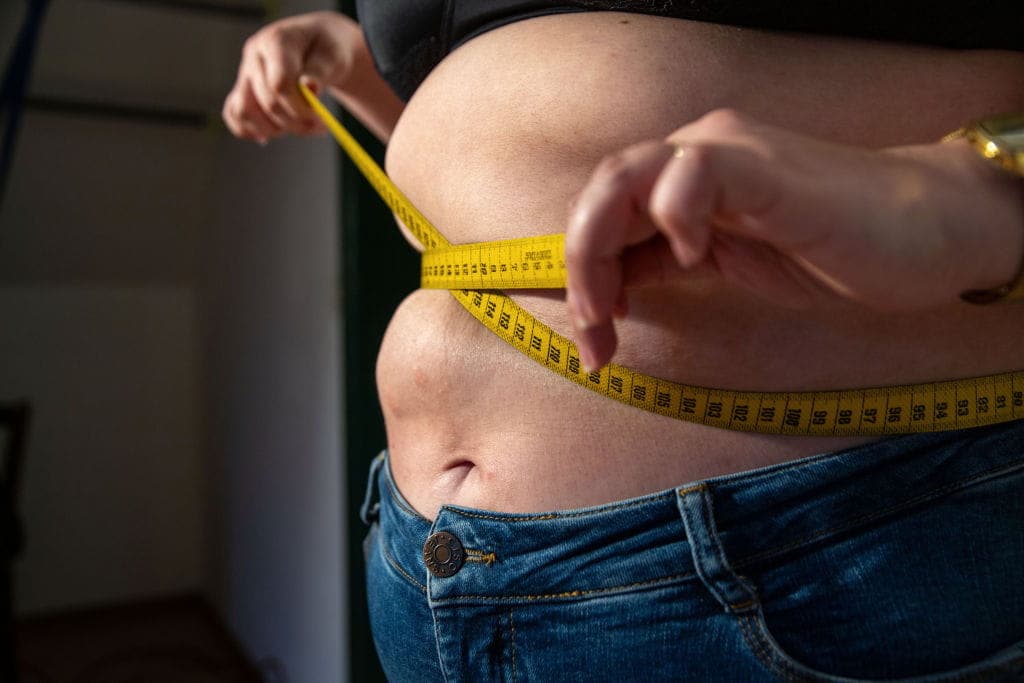

As we age, our bodies change. That’s a fact of life, and there doesn’t seem to be much that we can do about it. That little poof around the middle shows up and appears to be there to stay. Even though we may exercise and eat right, those stubborn muffin tops just don’t seem to trim down like they used to. It’s just another part of aging, right? Researchers looked into the connection between belly fat and old age and found some concerning links.
The Hip Fracture Connection
Each year, about 300,000 Americans aged 65 and older experience a hip fracture, and many of them will die within a year of the injury. “One in three adults aged 50 and over dies within 12 months of suffering a hip fracture,” The Conversation reported. “Older adults have a five-to-eight times higher risk of dying within the first three months of a hip fracture compared to those without a hip fracture. This increased risk of death remains for almost ten years.”
A UConn study, published in Obesity Pillars, observed the impact of using a topical testosterone gel to treat such injuries in older women. “Hip fracture is nearly three times more common in women than men and is the leading cause of loss of independence for older women,” the study observed.
Researchers studied a group of 66 women who were over the age of 65 and recovering from a recent hip fracture. They had a DXA scan that measures the body composition, including fats, before the trial. Each group participated in exercise therapy, but just one received the testosterone gel. Six months later, those without the gel showed no change in the total percentage of body fat. However, the others, who were given testosterone, showed less visceral fat – a type of fat that is found deeper inside the human body and lines the abdominal walls - while the other group actually experienced an increase in the dangerous fat, which “normally happens after while recovering from a hip fracture,” the study explained.
“If you have [an] injury and just generally as we age, we expect an increase in visceral fat,” Jacob Earp, assistant professor of kinesiology in the College of Agriculture, Health and Natural Resources, said. “This really bucked that trend and caused selective reduction of fat in that visceral compartment.”
Dangerous Belly Fat and Aging
Remember that muffin top mentioned earlier? It is likely due to subcutaneous fat, which is not as dangerous. It is fat that is stored just under the skin and doesn’t usually have detrimental health impacts. In fact, as UConn pointed out, we all need some fat to be healthy. However, visceral fat is another story. It is stored in the gut and is much less obvious. While subcutaneous fat makes its home just under the skin, visceral fat surrounds vital organs. It has been linked to a plethora of health issues, including diabetes and cardiovascular disease. As we age, the way fat is distributed in our bodies changes as well, meaning we might be getting more visceral belly fat than we are aware of. And when someone has a traumatic injury such as a hip fracture, they become more sedentary, allowing the visceral fat to accumulate even more.
“As men and women age, there’s an unhealthy redistribution of fat from the more innocuous regions into the visceral compartment,” Earp explained. And exercise alone doesn’t seem to target the problem. “Doing these blanket weight loss strategies is not always the healthiest approach, especially because muscle weight will be lost along with fat, and maintaining muscle is extremely important as we age," Earp added.
A study by UK Research and Innovation looked at visceral fat and health. Researchers studied imaging from more than 21,000 people in the UK Biobank and found that the invisible belly fat actually ages people. It accelerates stiffening and inflammation of the heart, among other health issues. The study was led by scientists from the Medical Research Council Laboratory of Medical Science in London, UK, and they also found differences between men and women.
Hormones Can Make a Difference
“Male-type fat distribution (fat around the belly, often called ‘apple’ shaped) was particularly predictive of early aging in men,” the study explained. “In contrast, a genetic predisposition to female-type fat (fat on the hips and thighs, often called ‘pear’ shaped) was protective against heart aging in women.” Researchers also found that higher estrogen levels in premenopausal women could indicate slowing of heart age.
Testosterone can help reduce visceral fat, as shown in the study involving older women who’d had hip fractures. Also, not all fat is bad, and there’s some good news for women who have a little extra around the hips and thighs. This type of fat may actually protect women and have its own health benefits.
Aging may still bring a few unwelcome surprises around the waistline, but researchers are finding that where fat settles matters more than many people realize. The dangerous visceral fat packed around internal organs appears to be the bigger threat to long-term health, especially as mobility declines with age. Meanwhile, women who naturally carry a little more weight around the hips and thighs might have a small silver lining after all. Studies suggest that this “pear-shaped” fat distribution could actually help protect the heart. So, while many women have spent years trying to battle those curves, science now says the body may have had a reason for putting them there in the first place.



.jpg&w=1920&q=75)