


With just under three years to go until the next presidential election, hopeful candidates are in the throes of laying out their claims. While Vice President JD Vance is the clear frontrunner for the GOP nod (for now), the Democratic Party field appears ready for a 2028 bout of internecine warfare, exacerbated beyond personality profiles by a fundamental rift widening in the core electorate.
Leaders of the 2028 Pack
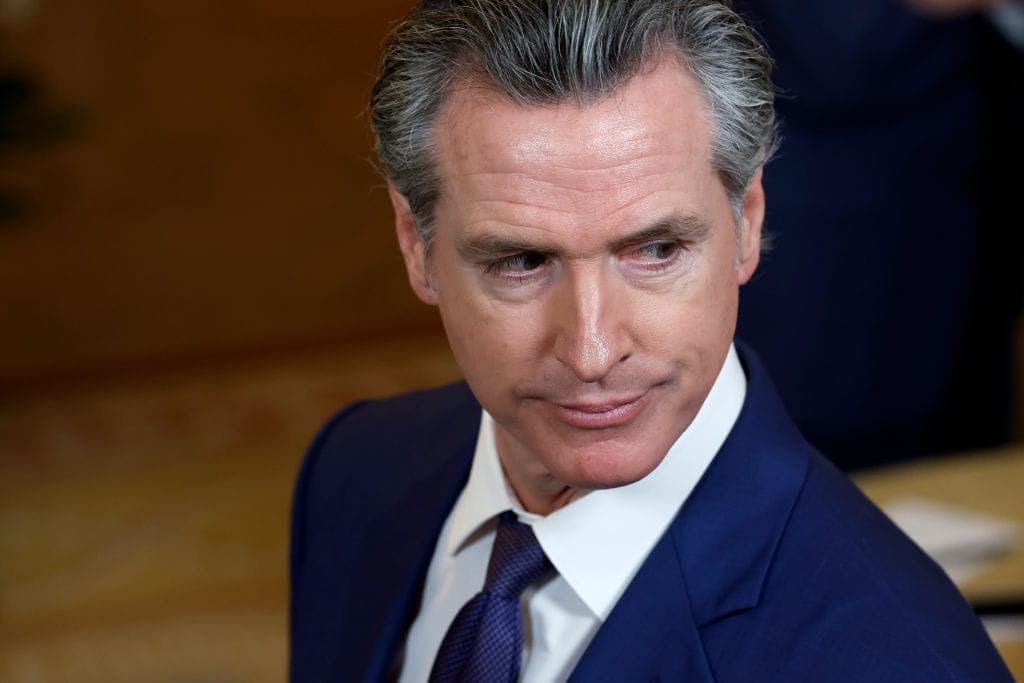
The waning days of last summer were all about California Gov. Gavin Newsom. From a successful social media onslaught to impromptu appearances in decidedly red states, it seemed that the Golden State politico was gearing up to claim the mantle well ahead of time. And yet more recent polling suggests that former VP Kamala Harris is on the ascent. Of the last ten major surveys, Harris has landed pole position in seven, and her overall point lead keeps increasing.
But is she really what Democrat-leaning voters want?
CNN’s data guru, Harry Enten, recently dropped a polling bomb suggesting that 58% of Americans believe the Democratic Party is “too liberal.” Certainly, within that figure is a large chunk of Republicans and independents, but to expand by ten points since 2013 indicates that at least some of those must be Democrat voters. And this is where the leftward lurch of the party may be creating a 2028 issue.
According to CNN surveys, 42% of Democrats under the age of 35 now identify as “Democratic Socialists,” perhaps proving that the continued popularity of Sen. Bernie Sanders (I-VT) and New York City Mayor Zohran Mamdani is not a flash in the pan. For Democrat voters of all ages, that figure is 33%. As this significant wing of the party expands, it raises the question of which contender would be able to navigate the progressive waves.
Don’t California My (Insert State Here)!
As the governor of the most liberal state in the country, Newsom has portrayed himself as both the poster child for progressive thought and the no-nonsense executive of the largest US state economy. Over the last year, he has positioned himself as the de facto leader of the Democratic Party in all but name.
His support of progressive policies would no doubt serve him well among the more left-leaning of the Democrat cadre, and yet elections are not won simply in the coastal states. To gain enough Electoral College votes to secure a win, he would need to rally the Blue Dog Democrats – naturally not those in Congress, but certainly those who reside in the seven crucial swing states.
This could be a tough slog for a man who champions just about every leftist and far-left policy to emanate from his state, and perhaps explains why his once-thriving nascent campaign has hit the skids. But where does that leave Kamala Harris?
Harris: Be the Hype
The former vice president is forever tied to her boss, President Joe Biden. She has yet to accept that she lost the 2024 due to any other reason than the 107 days she had to campaign. Biden was elected as a moderate, bridging the gap between progressives and more conservative Democrats (who do still exist). However, once in office, he either jettisoned his moderate positions or was too weak to resist the party’s pull to the left.
As Liberty Nation News’ Tim Donner noted in 2021:
“He wins the election. His party controls both branches of Congress by the thinnest of margins. But as soon as he is inaugurated, the 46th president immediately surrenders to the most progressive forces in his party by supporting almost their entire wish-list and marginalizing the precious few moderates brave enough to still call themselves Democrats.”
For better or worse, Harris entered office on a “centrist” ticket and then ran as swiftly as she could to the far-left fringes of the Overton window. Real Clear Politics gives her an aggregate polling lead of 5.4% over any other potential 2028 contender – coming in at roughly 29% support. For comparison, Vance has a 30-point lead, with around 45% support.

As a senator, Harris had one of the most liberal voting records; as VP, she oversaw a dramatic shift toward the far left. Her possible election hopes rest on the notion that she can be the progressive champion to the youthful Democratic Socialists while still maintaining the illusion that she governed down the center.
The betting markets have Harris at 12/1 to win the nomination – way behind Newsom, Pennsylvania Gov. Josh Shapiro, and New York’s Rep. Alexandria Ocasio-Cortez. But even if she beats these odds, her chance of winning the ultimate race is a staggering 20 to 1 against.
Sometimes, you just can’t dismiss your past.



.jpg%20Ukraine&w=1920&q=75)